
Create your Domestic Partnership Document from scratch

Start Building Now
Title decoration

Here's how it works

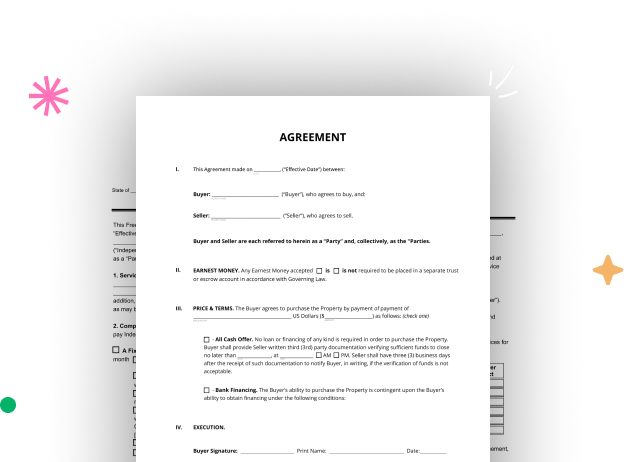
01. Start with a blank Domestic Partnership Document
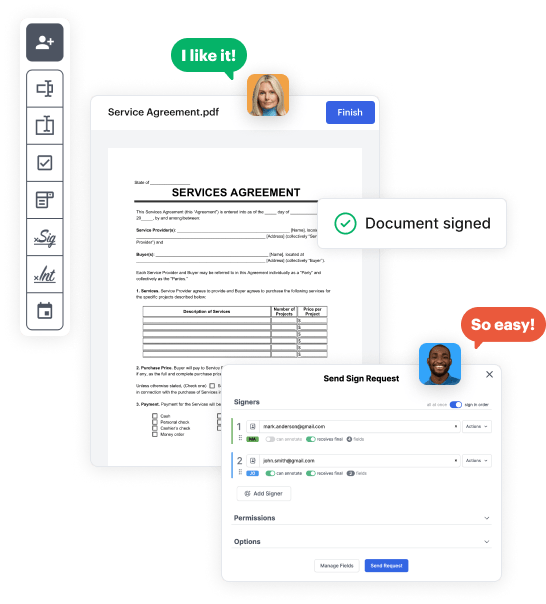
Open the blank document in the editor, set the document view, and add extra pages if applicable.
02. Add and configure fillable fields
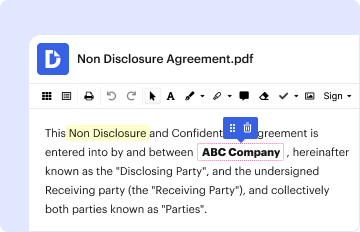
Use the top toolbar to insert fields like text and signature boxes, radio buttons, checkboxes, and more. Assign users to fields.
03. Distribute your form
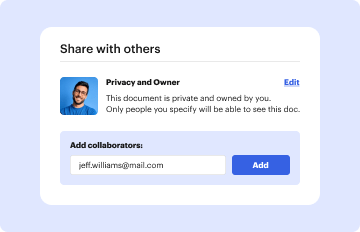
Share your Domestic Partnership Document in seconds via email or a link. You can also download it, export it, or print it out.

Design your Domestic Partnership Document in a matter of minutes

Form edit decoration

Step 1: Access DocHub to set up your Domestic Partnership Document.

Begin signining into your DocHub account. Explore the advanced DocHub functionality free for 30 days.

Step 2: Go to the dashboard.

Once logged in, go to the DocHub dashboard. This is where you'll build your forms and manage your document workflow.

Step 3: Create the Domestic Partnership Document.

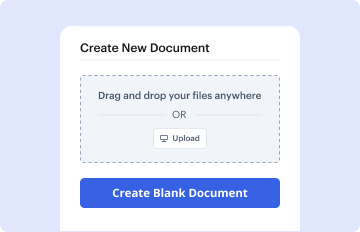
Hit New Document and select Create Blank Document to be taken to the form builder.

Step 4: Set up the form layout.

Use the DocHub toolset to add and arrange form fields like text areas, signature boxes, images, and others to your form.

Step 5: Insert text and titles.

Include needed text, such as questions or instructions, using the text field to lead the users in your document.

Step 6: Customize field properties.

Alter the properties of each field, such as making them mandatory or formatting them according to the data you plan to collect. Designate recipients if applicable.

Step 7: Review and save.

After you’ve managed to design the Domestic Partnership Document, make a final review of your form. Then, save the form within DocHub, export it to your chosen location, or distribute it via a link or email.


be ready to get more

Build your Domestic Partnership Document in minutes

Start creating now

Got questions?

We have answers to the most popular questions from our customers. If you can't find an answer to your question, please contact us.
Contact us
Both persons are 18 years of age or older. Neither you nor your partner is married or related by blood in a manner that would bar their marriage in New York State. Both of you have a close and committed personal relationship, live together, and have been living together on a continuous basis.
Registration of a domestic partnership allows the partnership to be legally recognized by the state. Once a domestic partnership is registered, rights and benefits allowed to domestic partners under the law will be available.
This is an official document that publicly declares their commitment to each other. In some states, like Oregon, Colorado, and Wisconsin, domestic partnerships are registered at the county level. Other states, like New Jersey, Hawaii, and Nevada, have their own specific domestic partnership laws.
So, an unregistered domestic partnership is simply a committed relationship where the couple owns property together. One of the biggest confusions for people believing theyre in an unregistered domestic partnership when theyre not is when a couple lives together but doesnt share any assets or property.
The domestic partnership is a legal relationship between two people of the same or opposite sex who live together and share a domestic life, but are not married or joined by a civil union nor are blood relatives.
be ready to get more

Build your Domestic Partnership Document in minutes

Start creating now

Related Q&A to Domestic Partnership Document

Qualified Domestic Partner means a person who is in a domestic partnership that meets the criteria of California Family Code Section 297 and is formalized through registration with the California Secretary of State pursuant to California Family Code Sections 197 et.
Reside together and share the common necessities of life. Not be married to anyone. Be at least eighteen (18) years of age or older. Not be related by blood so close as to bar marriage in the State of California and are mentally competent to consent to contract.
However, a domestic partner is not considered a spouse under federal law. As a result, if you elect to have your partner covered under your plan, you will pay income tax and Social Security payroll tax on the portion of the insurance premium that your employer contributes to your partners policy.

Additional resources on building your forms


