
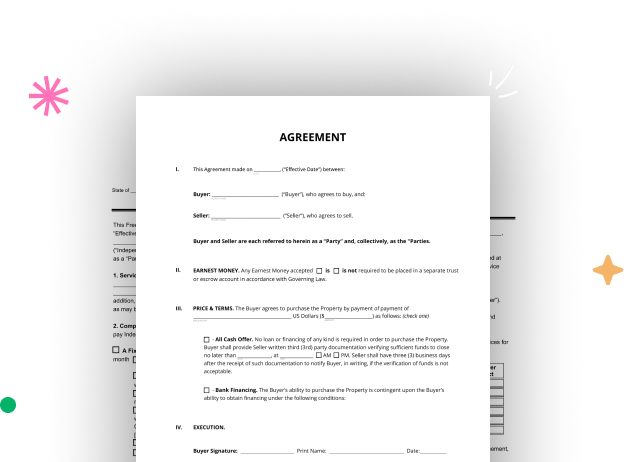



Create your US Federal law Jury Instruction from scratch

Start Building Now
Title decoration

Here's how it works

01. Start with a blank US Federal law Jury Instruction
Open the blank document in the editor, set the document view, and add extra pages if applicable.
02. Add and configure fillable fields
Use the top toolbar to insert fields like text and signature boxes, radio buttons, checkboxes, and more. Assign users to fields.
03. Distribute your form
Share your US Federal law Jury Instruction in seconds via email or a link. You can also download it, export it, or print it out.

Create US Federal law Jury Instruction from the ground up by following these detailed guidelines

Form edit decoration

Step 1: Open DocHub and get going.

Start by setting up a free DocHub account using any offered sign-up method. If you already have one, simply log in.

Step 2: Register for a free 30-day trial.

Try out the whole set of DocHub's advanced tools by signing up for a free 30-day trial of the Pro plan and proceed to craft your US Federal law Jury Instruction.

Step 3: Build a new empty form.

In your dashboard, click the New Document button > scroll down and choose to Create Blank Document. You’ll be redirected to the editor.

Step 4: Organize the document’s view.

Utilize the Page Controls icon marked by the arrow to switch between two page views and layouts for more convenience.

Step 5: Start adding fields to design the dynamic US Federal law Jury Instruction.

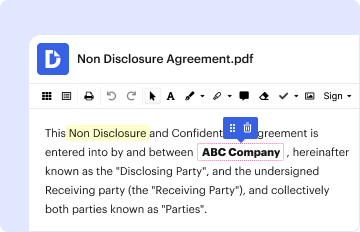
Explore the top toolbar to place document fields. Insert and arrange text boxes, the signature block (if applicable), embed images, etc.

Step 6: Prepare and customize the incorporated fields.

Arrange the fields you incorporated per your desired layout. Customize each field's size, font, and alignment to make sure the form is user-friendly and neat-looking.

Step 7: Finalize and share your template.

Save the finalized copy in DocHub or in platforms like Google Drive or Dropbox, or craft a new US Federal law Jury Instruction. Distribute your form via email or use a public link to reach more people.


be ready to get more

Build your US Federal law Jury Instruction in minutes

Start creating now

Got questions?

We have answers to the most popular questions from our customers. If you can't find an answer to your question, please contact us.
Contact us
Jury instructions are instructions for jury deliberation that are written by the judge and given to the jury. At trial, jury deliberation occurs after evidence is presented and closing arguments are made.
Any party may request in writing that the court instruct the jury on the law as specified in the request. The request must be made at the close of the evidence or at any earlier time that the court reasonably sets. When the request is made, the requesting party must furnish a copy to every other party.
For jury instructions to be effective, they must be clear and simple. Sentences should be short; instruc- tions should contain no more than a few sentences, cover only one topic, and be directly related to the circumstances of the case (they should not be abstract statements of the law).
The jury must return its verdict to a judge in open court. The verdict must be unanimous.
(a) When Depositions May be Taken; When Leave Required. (1) A party may take the testimony of any person, including a party, by deposition upon oral examination without leave of court except as provided in paragraph (2).
be ready to get more

Build your US Federal law Jury Instruction in minutes

Start creating now

Related Q&A to US Federal law Jury Instruction

The comparable Judicial Council instruction (number 202) reads: Some evidence proves a fact directly, such as testimony of a witness who saw a jet plane flying across the sky. Some evidence proves a fact indirectly, such as testimony of a witness who saw only the white trail that jet planes often leave.
The judge will instruct the jury in each separate case as to the law of that case. For example, in each criminal case, the judge will tell the jury, among other things, that a defendant charged with a crime is presumed to be innocent and the burden of proving his guilt beyond a reasonable doubt is upon the Government.
Persons normally qualified to serve may be excused on the grounds of illness or if undue hardship would result. The jury in criminal cases comprises 12 jurors, except in the Yukon and the NWT, where there are 6. The jurys verdict must be unanimous and based on evidence presented in court.


