

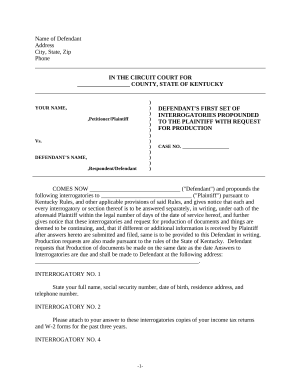
Improve your template operations with Defendant to Plaintiff Discovery Forms

Your workflows always benefit when you can obtain all of the forms and documents you need on hand. DocHub gives a a huge library of documents to relieve your day-to-day pains. Get a hold of Defendant to Plaintiff Discovery Forms category and quickly find your form.

Start working with Defendant to Plaintiff Discovery Forms in several clicks:

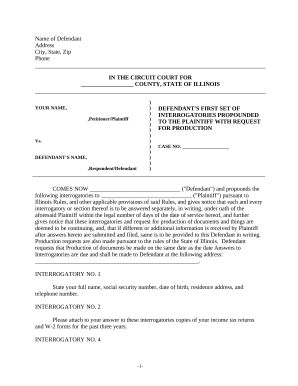
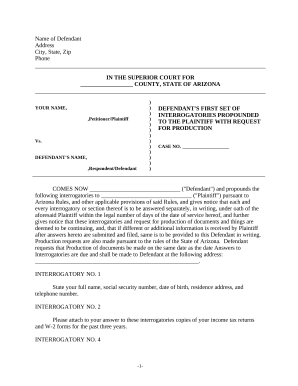
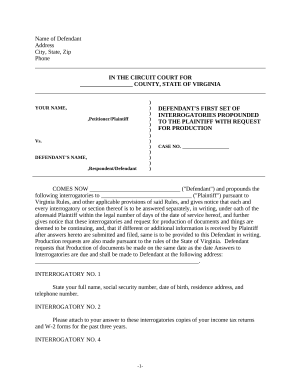
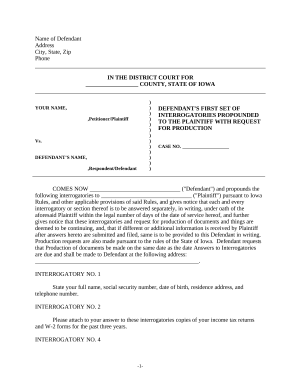
  1. Access Defendant to Plaintiff Discovery Forms and locate the document you require.
  2. Click Get Form to open it in our online editor.
  3. Begin adjusting your document: add more fillable fields, highlight paragraphs, or blackout sensitive info.
  4. The application saves your changes automatically, and once you are all set, you can download or share your file with other contributors.

Enjoy seamless document administration with DocHub. Explore our Defendant to Plaintiff Discovery Forms collection and discover your form right now!


Video Guide on Defendant to Plaintiff Discovery Forms management

video background

Commonly Asked Questions about Defendant to Plaintiff Discovery Forms

Prosecutors must also provide the defendant copies of materials and evidence that the prosecution intends to use at trial. This process is called discovery, and continues from the time the case begins to the time of trial.
What Happens Once You Receive an Interrogatory? All of the questions must be responded to in writing and it must be done under oath. Often, once you answer the questions, the other side will use the answers to gather more information.
In addition to taking depositions, either party may submit written questions, called interrogatories , to the other party and require that they be answered in writing under oath.
Interrogatories are a frequently used discovery device, consisting of written questions propounded by one party to anotherwhether an opposing party or co-party. Interrogatories may relate to any matter, not privileged, relevant to the claims and defenses of any party, and proportional to the needs of the case.
Interrogatories are a discovery device used by a party, usually a Defendant, to enable the individual to learn the facts that are the basis for, or support, a pleading with which he or she has been served by the opposing party.
General Information: Discovery is the formal process by which the parties to a case in court exchange information about the case. This includes information about the witnesses and evidence to be presented at trial. Its purpose is to make the parties aware of the evidence which may be presented at trial.
Your answers to the interrogatories should usually be short, clear, and direct and should answer only the question that is being asked. This is not the time to set out your entire case or defense to the other side. Take the time to make sure your answers are correct and truthful.
Interrogatories are a collection of written questions you can send to the opposing party in a lawsuit. The other party must then respond in writing while under oath. The number of interrogatory questions you can send is typically limited to 30 to 45 at a time.
