Handle Defendant Request Forms quickly online

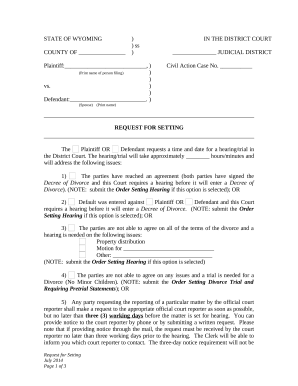
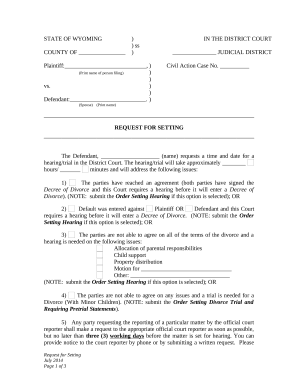
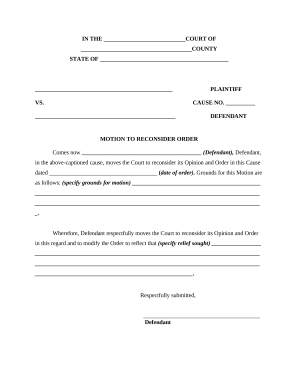
Document management can overpower you when you can’t locate all of the forms you require. Fortunately, with DocHub's extensive form categories, you can get all you need and swiftly take care of it without changing between applications. Get our Defendant Request Forms and begin working with them.

How to use our Defendant Request Forms using these basic steps:

  1. Examine Defendant Request Forms and choose the form you require.
  2. Review the template and click Get Form.
  3. Wait for it to upload in the online editor.
  4. Adjust your document: include new information and images, and fillable fields or blackout certain parts if needed.
  5. Prepare your document, preserve modifications, and prepare it for sending.
  6. When you are ready, download your form or share it with your contributors.

Try out DocHub and browse our Defendant Request Forms category without trouble. Get your free profile right now!


Video Guide on Defendant Request Forms management

video background

Commonly Asked Questions about Defendant Request Forms

response: a written pleading filed by a defendant to respond to a complaint. The most common is an answer, but there are other types of responses possible.
On a separate page or pages, write a short and plain statement of the answer to the allegations in the complaint. Number the paragraphs. The answer should correspond to each paragraph in the complaint, with paragraph 1 of the answer corresponding to paragraph 1 of the complaint, etc.
After a summons with notice is served, the defendant will demand that the plaintiff serve a complaint. The plaintiff must then have the complaint served within 20 days after being served with the demand, or the case may be dismissed. SUPREME COURT, CIVIL BRANCH New York County 60 Centre Street New York State Unified Court System Self-Rep Forms Commence2 New York State Unified Court System Self-Rep Forms Commence2
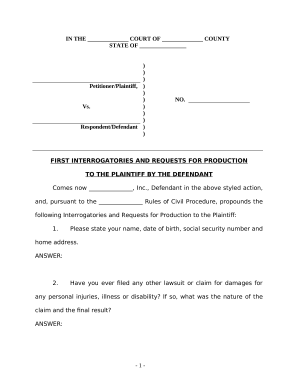
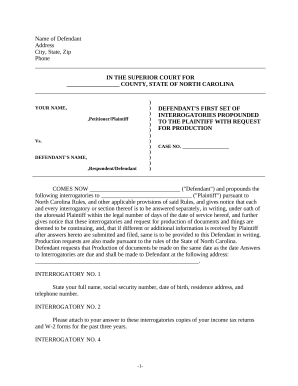
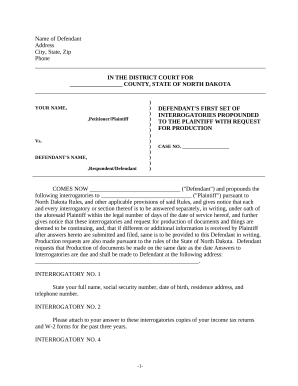
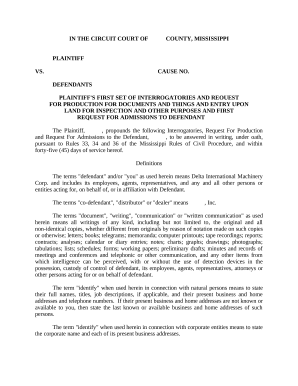
Ben is preparing a request to ask a defendant to respond in writing to a series of questions, and this is known as an interrogatory. Interrogatories are a formal method of discovery in legal proceedings where one party can pose written questions to the other party, and the recipient is required to respond in writing
Interrogatories are a discovery tool that the parties can use to have specific questions about a case answered before trial. Interrogatories are lists of questions sent to the other party that s/he must respond to in writing. What are interrogatories and how are they used? - WomensLaw.org WomensLaw.org laws trial what-are-inte WomensLaw.org laws trial what-are-inte
Interrogatories are a discovery device used by a party, usually a Defendant, to enable the individual to learn the facts that are the basis for, or support, a pleading with which he or she has been served by the opposing party.