Defendant plaintiff 2026

Get Form
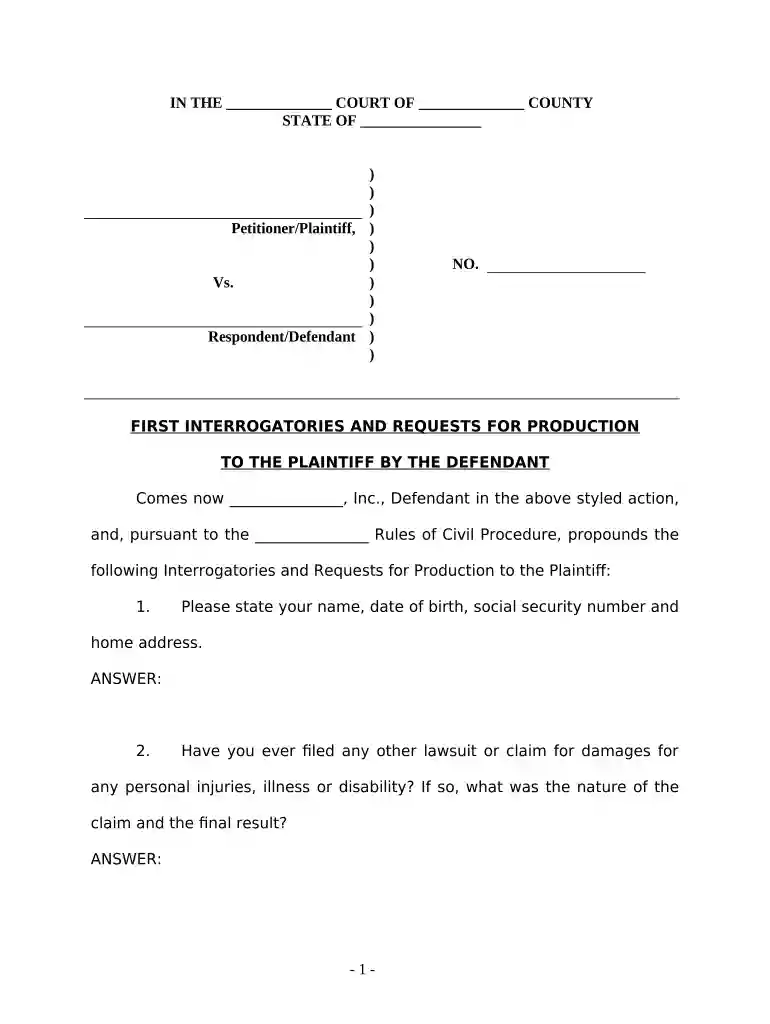
plaintiff vs defendant Preview on Page 1

Here's how it works

01. Edit your plaintiff vs defendant online
Type text, add images, blackout confidential details, add comments, highlights and more.

02. Sign it in a few clicks
Draw your signature, type it, upload its image, or use your mobile device as a signature pad.

03. Share your form with others
Send what is a plaintiff via email, link, or fax. You can also download it, export it or print it out.

Definition and Meaning of Defendant and Plaintiff

In legal terminology, a defendant and a plaintiff represent opposing parties in a civil lawsuit. The plaintiff is the individual or entity that initiates the lawsuit by filing a complaint with the court, claiming to have suffered harm due to the actions or negligence of the defendant. The defendant, conversely, is the party being accused or sued. Understanding the roles of these two parties is essential for navigating the legal system effectively.

  • Plaintiff: This party seeks a legal remedy, typically in the form of monetary compensation or specific performance as a result of the defendant's actions.
  • Defendant: This party responds to the allegations, providing a defense against the claims made by the plaintiff.

The interactions between these two parties form the basis of the legal proceedings, determining the flow and outcome of the case.

Key Elements of the Defendant and Plaintiff Relationship

The relationship between the defendant and plaintiff encompasses various elements that shape the legal process. These include:

  • Filing a Complaint: The plaintiff must file a formal complaint outlining their claims and the desired relief. This document serves as the foundation for the lawsuit.
  • Response by Defendant: Once served, the defendant has a designated period to respond to the complaint, either admitting or denying the allegations.
  • Discovery Process: Both parties engage in discovery, where they exchange information pertinent to the case, including documents, testimonies, and expert opinions.

This environment of interaction is not merely adversarial; it also emphasizes procedural fairness to ensure just outcomes.

Legal Use of the Defendant and Plaintiff Designation

In the courtroom, the legal designations of defendant and plaintiff hold significant weight. These titles affect various aspects of the case, including:

  • Burden of Proof: The plaintiff bears the burden of proof to substantiate their claims, requiring them to provide sufficient evidence.
  • Legal Representation: Both parties typically engage legal counsel to navigate the complexities of the law and present effective arguments.

The formal nature of these roles exemplifies the structured processes in civil litigation, emphasizing the importance of legal representation and evidence gathering.

Examples of Plaintiff Versus Defendant Cases

Understanding how plaintiff and defendant interact can be illustrated through real-world examples, which highlight the various contexts in which these roles apply:

  1. Breach of Contract: In a case where a business (plaintiff) sues a supplier (defendant) for failing to deliver goods as stipulated in a contract.
  2. Personal Injury: An individual (plaintiff) files a lawsuit against another (defendant) for damages resulting from a car accident due to the defendant’s negligence.
  3. Landlord-Tenant Disputes: A landlord (plaintiff) suing a tenant (defendant) for failure to pay rent.

These instances showcase how the dynamics of the defendant and plaintiff are relevant across various legal scenarios.

State-Specific Rules Governing Defendant and Plaintiff Interactions

Different jurisdictions may impose unique rules guiding the interactions between defendants and plaintiffs, impacting procedure and outcomes. Variations can include:

  • Filing Deadlines: Different states have distinct limitations periods for filing lawsuits, which must be adhered to by the plaintiff.
  • Discovery Rules: Some jurisdictions may have stricter regulations regarding what information must be shared between parties during discovery.

Recognizing these state-specific nuances is crucial for compliance and effective legal strategy.

Important Terms Related to Defendant and Plaintiff

Knowledge of specific terminology enhances understanding of legal proceedings involving defendants and plaintiffs. Key terms include:

  • Counterclaim: A claim made by the defendant against the plaintiff within the same legal action.
  • Interrogatories: Written questions sent by one party to another as part of the discovery process, aiming to gather information relevant to the case.
  • Judgment: The final decision by the court regarding the case, determining the outcome for both parties.

Familiarity with these terms aids in navigating legal discussions and documents effectively.

be ready to get more

Complete this form in 5 minutes or less

Get form

Got questions?

We have answers to the most popular questions from our customers. If you can't find an answer to your question, please contact us.
Contact us
In the trial court, the first name listed is the plaintiff, the party bringing the suit. The name following the v is the defendant.
In a civil case, the defendant is the person or entity being sued. They are responsible for defending themselves against the plaintiffs claims. For example, in a car accident case, the defendant is the person who caused the accident (and/or their insurance company).
In a civil case, the plaintiff is the party who initiates a lawsuit by filing a complaint against the defendant or respondent (depending on the type of civil case). The plaintiff seeks a legal remedy, such as damages or injunctive relief, and bears the burden of proof to establish the claims made in the action.
The side bringing the case is the side that bears the burden of proof, and thus always goes first. This is the prosecuting attorney in a criminal case, or the plaintiff in a civil case. The defense then follows with their opening statement.
The Plaintiff is the person who files the case with the court. The Defendant is the person who the Plaintiff is filing a complaint against. Once a case is opened, this never changes. Any future filings by either party should always list the Plaintiff and Defendant just as the case was originally filed.

Security and compliance

At DocHub, your data security is our priority. We follow HIPAA, SOC2, GDPR, and other standards, so you can work on your documents with confidence.

Learn more
ccpa2
pci-dss
gdpr-compliance
hipaa
soc-compliance
be ready to get more

Complete this form in 5 minutes or less

Get form