Transform your file managing with Child Visitation Agreements

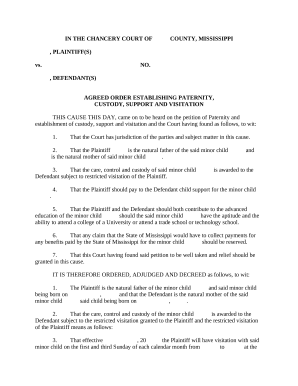
Your workflows always benefit when you can easily discover all of the forms and documents you will need on hand. DocHub supplies a vast array of form templates to alleviate your daily pains. Get hold of Child Visitation Agreements category and quickly browse for your form.

Start working with Child Visitation Agreements in a few clicks:

  1. Gain access to Child Visitation Agreements and locate the form you need.
  2. Click Get Form to open it in our online editor.
  3. Start modifying your form: add more fillable fields, highlight sentences, or blackout sensitive info.
  4. The application saves your modifications automatically, and after you are all set, you are able to download or distribute your form with other contributors.

Enjoy smooth file managing with DocHub. Discover our Child Visitation Agreements online library and look for your form today!


Video Guide on Child Visitation Agreements management

video background

Commonly Asked Questions about Child Visitation Agreements

In New York, two main types of custody are physical and legal. Within each category, two primary custody arrangements exist sole and joint (or shared) custody. Physical custody refers to the right of a parent to reside and take care of their children daily. Essentially, its the parent the child primarily lives with.
The 2-2-3 plan as well as the 2-2-5 plan are the two most popular shared child custody agreements. Both require alternating days with one of the parents. The alternating week arrangement, in which the child spends 1 week with either parent and the following week with the other, is also common.
A New York court can make orders about the childs custody only until the child is 18 years old. The Court gives custody based on what is best for the child, this is called the best interest of the child. If there is no court order, then both parents have equal rights to physical and legal custody of the child.
Typically, a child of school age usually will have visits with a non-custodial parent every other weekend. Based on the age of the child and other factors, these visits may or may not be overnight visits.
The most common arrangements are for either sole custody, joint custody, or shared custody. With sole custody, a custodial parent has a child or children living with them a vast majority of the time. They also have sole decision making with respect to major decisions affecting the children.
New York does not have specific legal statutes for 50/50 custody. They dont automatically apply a 50-50 custody rule. Therefore, parents must prove to the court that equal parenting time would be in the childs best interests.
Custody orders stay in place until a child docHubes 18 or is emancipated. A judge may order a visitation or custody arrangement that doesnt align with a childs preference. For example, a child may not want to have visits with an estranged parent. Theres no set age when a child can refuse visitation. Can Children Express Preference in West Virginia Custody Proceedings? divorcenet.com resources a-childs-prefer divorcenet.com resources a-childs-prefer
Parents are obligated to follow a custody orders terms until a child docHubes 18 or is emancipated. A custodial parent can face legal consequences for preventing visits between a child and the noncustodial parent. A child who refuses visitation puts a parent in a perilous situation.