Type text, add images, blackout confidential details, add comments, highlights and more.
02. Sign it in a few clicks
Draw your signature, type it, upload its image, or use your mobile device as a signature pad.
03. Share your form with others
Send it via email, link, or fax. You can also download it, export it or print it out.
How to Use or Fill Out Opposing Counsel with Our Platform
Ease of Setup
DocHub User Ratings on G2
Ease of Use
DocHub User Ratings on G2
Click ‘Get Form’ to open the opposing counsel document in the editor.
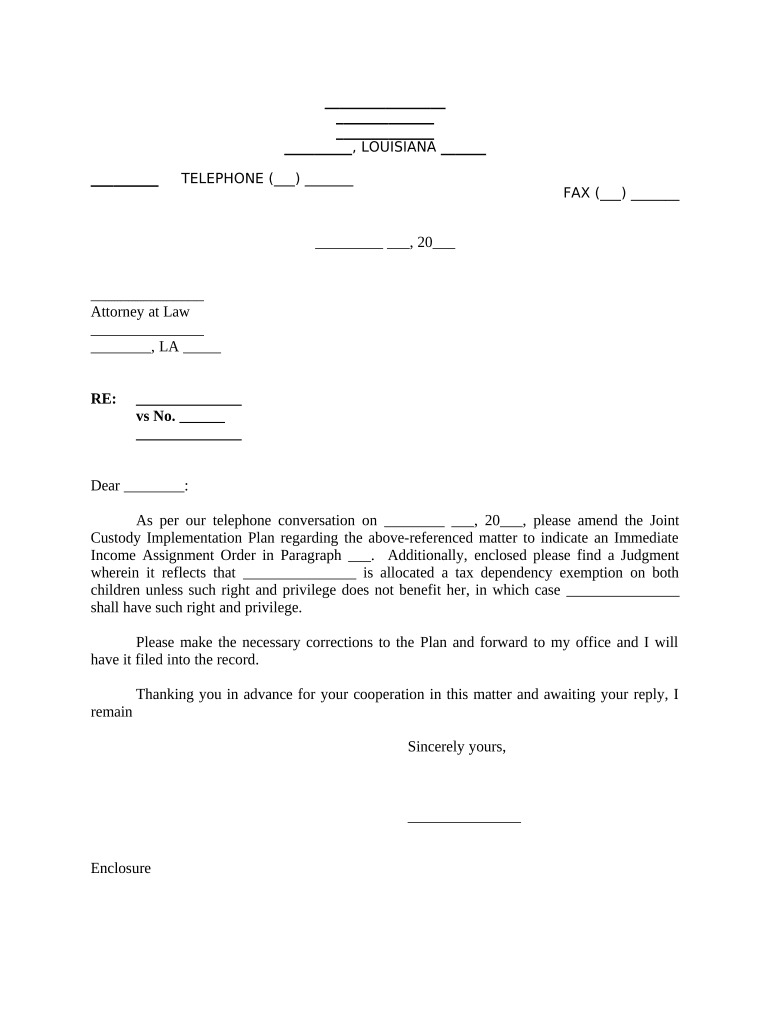
Begin by entering your contact information at the top of the form, including your name, address, telephone number, and fax number. Ensure all details are accurate for effective communication.
In the body of the letter, clearly state the date and reference any previous conversations regarding amendments to the Joint Custody Implementation Plan. This establishes context for your request.
Specify the changes needed in Paragraph ___ of the plan. Clearly articulate that an Immediate Income Assignment Order is required, ensuring clarity in your request.
Mention any enclosures, such as a Judgment regarding tax dependency exemptions. This provides supporting documentation for your amendments.
Conclude with a polite closing statement expressing gratitude for cooperation and indicate that you await their reply.
Start editing your opposing counsel document today for free and streamline your workflow!
Opposing counsel or councilOpposing counsel in spanishOpposing counsel synonymOpposing counsel meaning in lawOpposing counsel abbreviationOpposing counsel depositionOpposing counsel not responding to my lawyerReasons to file a complaint against an opposing attorney
Security and compliance
At DocHub, your data security is our priority. We follow HIPAA, SOC2, GDPR, and other standards, so you can work on your documents with confidence.
32 CFR 776.43 - Fairness to opposing party and counsel.
(a) A covered attorney shall not: (1) Unlawfully obstruct a partys access to evidence or unlawfully alter, destroy, or conceal a document or other materialRead more
A lawyer shall not: (a) unlawfully obstruct another partys access to evidence or unlawfully alter, destroy or conceal a document or other material havingRead more
Cookie consent notice
This site uses cookies to enhance site navigation and personalize your experience.
By using this site you agree to our use of cookies as described in our Privacy Notice.
You can modify your selections by visiting our Cookie and Advertising Notice.