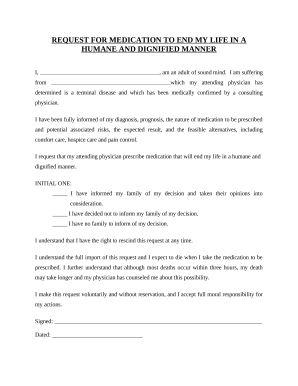
Handle Advanced Healthcare Directives effortlessly online

Document managing can overwhelm you when you can’t find all of the forms you require. Fortunately, with DocHub's considerable form library, you can discover all you need and promptly handle it without switching among applications. Get our Advanced Healthcare Directives and start utilizing them.

How to use our Advanced Healthcare Directives using these simple steps:

  1. Examine Advanced Healthcare Directives and select the form you require.
  2. Preview the template and click on Get Form.
  3. Wait for it to upload in our online editor.
  4. Edit your form: add new information and images, and fillable fields or blackout some parts if necessary.
  5. Fill out your form, conserve alterations, and prepare it for delivering.
  6. When ready, download your form or share it with your contributors.

Try out DocHub and browse our Advanced Healthcare Directives category without trouble. Get a free profile today!


Commonly Asked Questions about Advanced Healthcare Directives

An advance directive, sometimes called a living will, is a written document that tells your health care providers who should speak for you and what medical decisions they should make if you become unable to speak for yourself.
Traditionally, there are two main kinds of advance directives: the living will and the Durable Power of Attorney for Healthcare. The state California also allows the use of a POLST (Physicians Orders For Life‑Sustaining Treatment).
A living trust may be better than a will if: You want to maintain privacy over your property or assets. You have several real estate properties. You have docHub financial assets.
By planning ahead, you can get the medical care you want, avoid unnecessary suffering and relieve caregivers of decision-making burdens during moments of crisis or grief. You also help reduce confusion or disagreement about the choices you would want people to make on your behalf.
Stated simply: A do-not resuscitate order says that if your heart stops beating, or if you stop breathing, you dont want to be resuscitated. An advance directive is more general. You can specify your wishes if you are incapacitated.
Cons of a Living Will It can be complicated to research all the specific interventions you could be subject to and decide whether to accept or deny each treatment. You likely wont be able to address every potential situation that could arise if you become incapacitated.
The short answer is that a living will is a type of advance directive, while advance directive is a broad term used to describe any legal document that addresses your future medical care. Living wills are advance directives, but not all advance directives are living wills.
Living will. A living will is a written, legal document that spells out medical treatments you would and would not want to be used to keep you alive, as well as your preferences for other medical decisions, such as pain management or organ donation.
The most common types of advance directives are the living will and the durable power of attorney for health care (sometimes known as the medical power of attorney). Types of Advance Directives - American Cancer Society cancer.org making-treatment-decisions t cancer.org making-treatment-decisions t