01. Edit your federal sentencing guidelines worksheet online
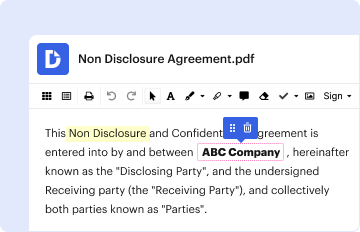
Type text, add images, blackout confidential details, add comments, highlights and more.
02. Sign it in a few clicks
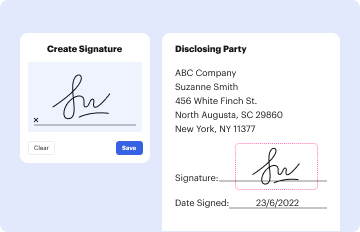
Draw your signature, type it, upload its image, or use your mobile device as a signature pad.
03. Share your form with others
Send sentencing worksheet via email, link, or fax. You can also download it, export it or print it out.
How to use or fill out Worksheets for Individuals - United States Sentencing Commission - ussc with DocHub
Ease of Setup
DocHub User Ratings on G2
Ease of Use
DocHub User Ratings on G2
Click ‘Get Form’ to open it in the editor.
Begin with Worksheet A. Enter the defendant's name and district/office details at the top. Fill in the docket number and count numbers as required.
For each count of conviction, input the applicable base offense level from Chapter Two. Include any specific offense characteristics and provide explanations for your determinations.
Proceed to Victim-Related Adjustments. List applicable sections and adjustments, ensuring to enter '0' if none apply.
Continue with Role in the Offense Adjustments, following similar instructions as above for entering adjustments.
Calculate the Adjusted Offense Level by summing Items 1 through 4. If necessary, complete Worksheet B for multiple counts.
For Worksheet C, document criminal history points based on prior sentences and categorize accordingly.
Finally, complete Worksheet D by summarizing adjusted offense levels and detailing sentencing options as per guidelines.
Start using our platform today to efficiently fill out your Worksheets for Individuals!
Fill out Worksheets for Individuals - United States Sentencing Commission - ussc online It's free
These worksheets are available to assist the courts in applying the federal sentencing guidelines in an individuals case, including determining the applicable offense level, criminal history score, and guideline range.
What is a sentencing document?
WHAT IS A SENTENCING MEMO AND WHY WRITE ONE? Sentencing Memo Defined: The Sentencing Memorandum is written by defense counsel to the judge in an effort. to present a more complete picture of the defendant other than the crime itself. - Prisonology.
What are the U.S. Sentencing Commission guidelines?
The United States Federal Sentencing Guidelines are rules published by the U.S. Sentencing Commission that set out a uniform policy for sentencing individuals and organizations convicted of felonies and serious (Class A) misdemeanors in the United States federal courts system.
What is the purpose of a sentencing report?
In the report, the officer provides a sentencing recommendation, which includes an analysis and justification. The process entails a careful analysis of the nature and circumstances of the offense, the history and characteristics of the defendant, and the applicable statutes and advisory sentencing guidelines.
What is an example of a sentencing guideline?
For example, if the defendant has an Offense Level of 20 and a Criminal History Category of I, the applicable guideline range is 3341 months of imprisonment. Therefore, a sentence of imprisonment of at least thirty-three months, but not more than forty-one months, is within the applicable guideline range.
Related Searches
United states sentencing Commission Guidelines ManualSentencing Guidelines WorksheetFederal sentencing CommissionFederal sentencing guidelines calculatorFederal sentencing guidelines chartFederal sentencing guidelines chart PDFUnited States sentencing guidelines tableFederal sentencing guidelines 2026
Security and compliance
At DocHub, your data security is our priority. We follow HIPAA, SOC2, GDPR, and other standards, so you can work on your documents with confidence.
A determinate sentence is the same as a fixed sentence. Its for a fixed period. A final sentence puts an end to a criminal case. An indeterminate sentence is the opposite of a specified period for imprisonment.
Who qualifies for 2 point reduction for federal inmates?
Sentence reduction based on criminal history Zero-Point Offender Category Offenders with no prior convictions or irrelevant historical convictions may qualify for a two-level sentence reduction. However, serious offenses such as violent crimes, terrorism-related offenses, or civil rights violations do not qualify.
What are four factors considered in sentencing?
There are many factors that come into play in this decision. The Severity of the Crime. Not all federal crimes are equal in severity. The Defendants History. One of the biggest red flags for judges is if the defendant has a prior criminal record. Mandatory Minimums. The Purpose of the Sentence.
Related links
Worksheet
Prohibits discrimination on the basis of sex in the admission of education programs or activities receiving federal financial assistance including employment.Read more
Cookie consent notice
This site uses cookies to enhance site navigation and personalize your experience.
By using this site you agree to our use of cookies as described in our Privacy Notice.
You can modify your selections by visiting our Cookie and Advertising Notice.