
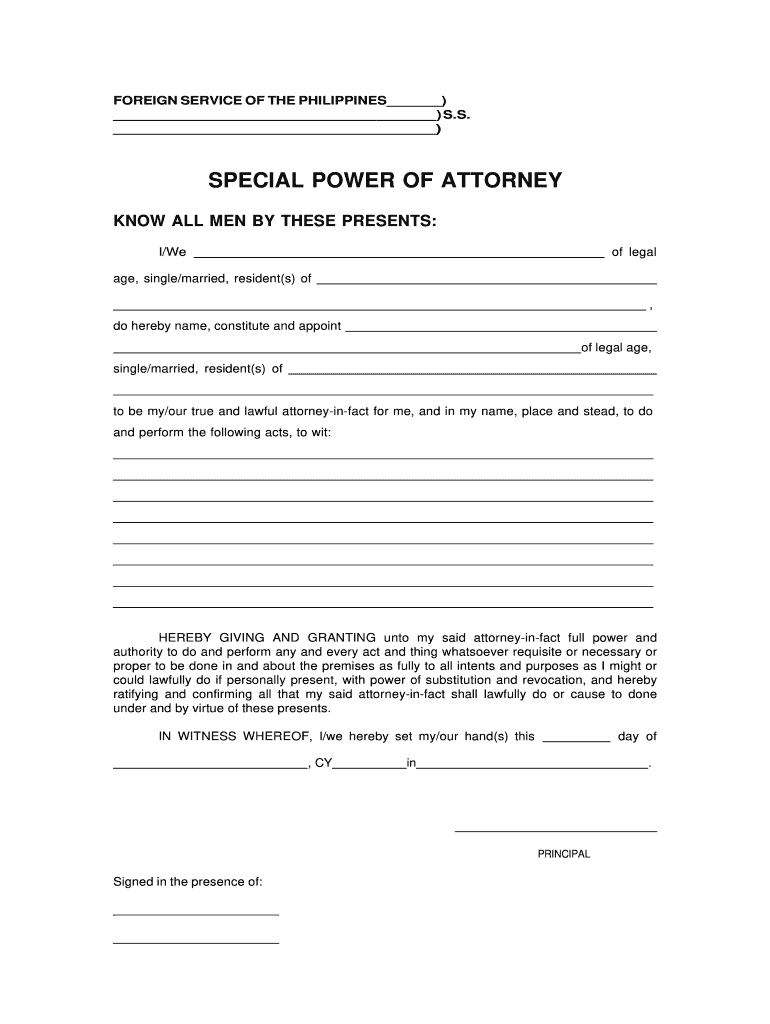







Definition and Importance of a Special Power of Attorney in the Philippines
A Special Power of Attorney (SPA) is a legal document that grants an appointed individual, known as the attorney-in-fact, the authority to act on behalf of another person, known as the principal, in specific legal matters. This document is commonly used in various scenarios, such as real estate transactions, banking matters, and other financial dealings when the principal is unable to manage tasks personally. The SPA allows the attorney-in-fact to perform actions as if the principal were present, including the ability to enter into agreements, manage properties, and make decisions concerning the principal's affairs.
Key aspects of a special power of attorney include:
- Specificity: The powers granted are explicitly defined, limiting the scope of authority granted to the attorney-in-fact. This ensures that actions taken are within the principal’s intent.
- Legitimacy: An SPA must be notarized to be legally binding, providing a record of the principal's consent and the document's authenticity.
- Revocation: The principal retains the right to revoke the SPA at any time, provided they are of sound mind and able to express their intentions.
Steps to Complete the Sample Special Power of Attorney in the Philippines
Creating a Special Power of Attorney involves several critical steps to ensure that it is legally valid and aligns with the principal's wishes.
-
Gather Required Information: Collect the full names, addresses, and contact information of both the principal and the attorney-in-fact. Clearly outline the specific powers you wish to grant.
-
Draft the Document: Use a standardized SPA format or template to draft the document. The main components should include:
- The title "Special Power of Attorney"
- A statement identifying the principal and attorney-in-fact
- A detailed list of powers granted
- Date of execution and signature lines for both parties
-
Notarization: For the SPA to be considered valid, it must be notarized. This involves signing the document in the presence of a notary public, who will then affix their seal as a witness to the signing.
-
Distribute Copies: After notarization, provide copies of the SPA to the attorney-in-fact and retain a copy for your records. Ensure that any institution or individual relying on the SPA receives a copy.
-
Monitor the Use of Powers: It is crucial for the principal to monitor actions taken under the SPA. If any issues arise or if the arrangement is no longer desired, the principal can revoke the SPA.
Examples of Situations that Require a Special Power of Attorney
A Special Power of Attorney is particularly useful in diverse circumstances where an individual might need to delegate authority. Here are several examples:
- Real Estate Transactions: When buying or selling property, a principal may appoint an attorney-in-fact to sign documents, negotiate terms, and handle closing procedures.
- Banking Responsibilities: If a principal cannot attend to banking matters personally, they may authorize an attorney-in-fact to manage accounts, deposit or withdraw funds, and perform financial transactions.
- Legal Representation: An individual may designate an attorney-in-fact to represent them in legal proceedings or sign legal documents on their behalf, particularly if they are abroad or incapacitated.
- Healthcare Decisions: While a healthcare power of attorney specifically addresses medical decisions, a special power of attorney can also allow for medical-related actions and decisions when the principal is unable to do so themselves.
These examples illustrate the varied applications of an SPA, emphasizing its importance in facilitating legal and financial affairs.
Important Elements of a Special Power of Attorney
Understanding the critical components of a Special Power of Attorney ensures that the document fulfills legal requirements while effectively serving the interests of the principal. Key elements include:
- Principal and Attorney-in-Fact Information: Clearly identify both parties involved, including their full legal names, addresses, and identification numbers.
- Specific Powers Granted: Itemize each power granted with clarity, delineating the scope and limits of authority bestowed upon the attorney-in-fact.
- Effective Date: Indicate when the powers take effect. This could be immediately upon signing or upon certain conditions being met (e.g., the principal's incapacity).
- Revocation Clause: Include provisions for revoking the power, thus empowering the principal to withdraw the granted authority at any time.
- Signature and Notarization: Ensure that the signature of the principal is present, alongside the date, and accompany it with the notary's acknowledgment to establish legitimacy.
These elements play a significant role in defining the functionality and enforceability of the SPA, protecting the rights and intentions of the principal.
Legal Use and Compliance for Special Power of Attorney in the Philippines
It is essential to recognize that the legal stipulations governing a Special Power of Attorney vary by jurisdiction and context. In the Philippines, the use of an SPA is governed by civil law principles and regulations. Important considerations for legal compliance include:
- Notarization Requirement: The SPA must be notarized for it to be valid. Unnotarized documents may not be legally recognized in many situations.
- Specific Legal Language: The document must use precise language that delineates the powers and responsibilities without ambiguity, ensuring clarity of intent.
- Adherence to Local Laws: Different regions may have specific statutory requirements or forms. Familiarity with local laws is crucial for compliance and legality.
- Informed Consent: The principal must be competent to understand and agree to the authority being granted. If there are doubts about capacity, legal advice may be necessary.
Failure to adhere to these legal requirements may render the SPA invalid, leading to potential disputes or challenges in the authority exercised by the attorney-in-fact.




