Definition & Meaning of Louisiana Pilot Car Permit
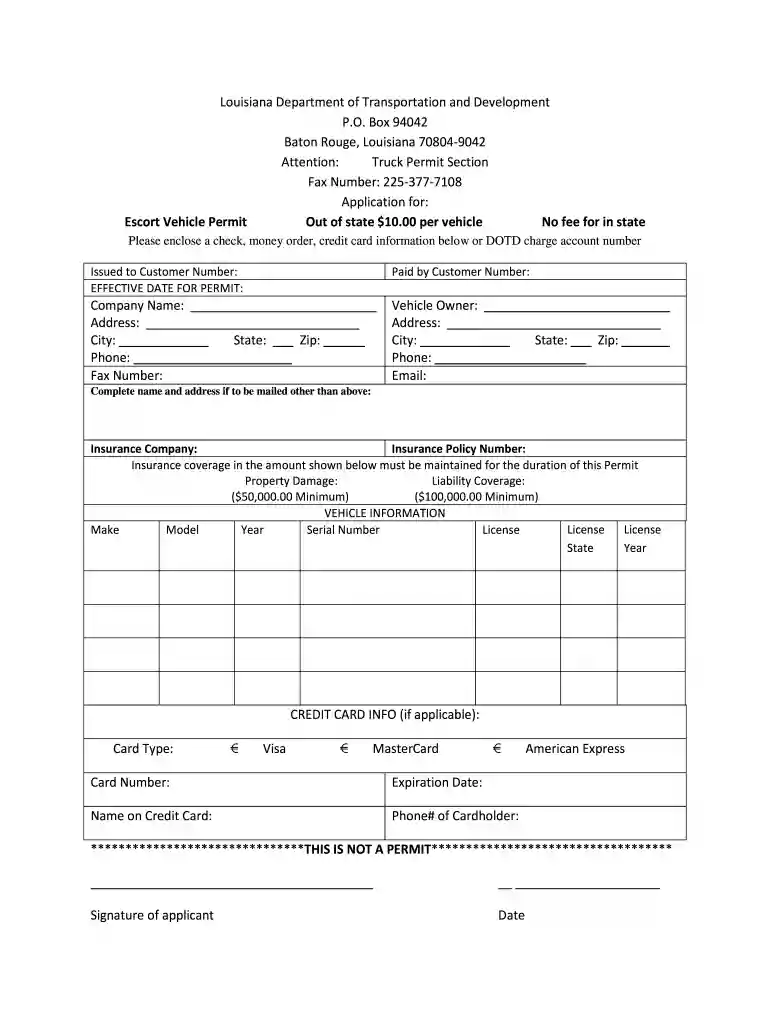
The Louisiana pilot car permit is an official document issued by the Louisiana Department of Transportation and Development (DOTD), allowing designated vehicles to escort oversized or heavy loads on public roadways. A pilot car, also known as an escort vehicle, plays a crucial role in ensuring the safe transport of oversize and overweight loads, providing guidance and managing traffic around the load during transit.
- Primary Purpose: The main objective of a pilot car is to warn and instruct other drivers about an oversized load’s presence, ensuring safe passage through various terrains and road conditions.
- Utility for Transporters: By regulating the movement of oversized loads, pilot cars help maintain roadway safety and minimize the risk of accidents or delays.
How to Obtain the Louisiana Pilot Car Permit
Acquiring a Louisiana pilot car permit requires navigation through a systematic process involving proper documentation and compliance with state regulations.
- Determine Eligibility: Ensure that you meet the criteria for operating as a pilot vehicle in Louisiana, such as vehicle specifications and operator qualifications.
- Gather Required Documentation: Compile necessary documents, including:
- Proof of insurance that meets Louisiana pilot car insurance requirements
- Vehicle registration details
- A valid driver's license for the pilot car operator
- Submit Application: Complete the application form for the Louisiana pilot car permit, which can often be done online or via mail.
- Pay Associated Fees: Fees will vary based on the type of permit being requested. It’s essential to verify the cost associated with your application.
- Await Approval: Once submitted, the application will undergo processing. Monitoring the status during this period can prevent any delays.
Key Elements of the Louisiana Pilot Car Permit
The Louisiana pilot car permit includes various critical elements that ensure compliance with state and federal regulations. Understanding these elements is essential for operators and carriers alike.
- Identification Information: Permits typically contain details such as the names of the pilot car operator and the company, contact information, and the vehicle's identification.
- Load Specifications: The permit will specify the dimensions and weight of the load being escorted, including height, width, length, and weight.
- Routes and Restrictions: The document may outline approved routes for transport, including any restrictions on specific roads or times, especially concerning traffic safety.
- Signature Line: A designated area for official confirmation, indicating that the permit is officially recognized by the state.
State-Specific Rules for the Louisiana Pilot Car Permit
Louisiana has specific rules and regulations that govern the use of pilot cars, which operators must adhere to for lawful operation.
- Vehicle Requirements: A pilot car must meet certain specifications, including having safety equipment such as flags, signs, and beacons.
- Training and Certification: Operators often need to have pilot car certification to ensure they understand the responsibilities and safety protocols involved in escorting oversized loads.
- Visibility Requirements: The pilot vehicle must be clearly marked and visible to oncoming traffic. This typically involves the use of specific signage that complies with state standards.
- Communication Protocols: Maintaining communication with the lead vehicle carrying the oversized load and with law enforcement or traffic control may be mandated.
Important Terms Related to Louisiana Pilot Car Permit
Understanding the terminology associated with pilot car permits is crucial for effective communication and compliance within the industry.
- Escort Vehicle: Another name for a pilot car, it refers to the vehicle designated to accompany and guide oversized loads.
- Amber Light Permit: A permit that allows the use of amber lights on escort vehicles, enhancing visibility and safety during escort operations.
- Louisiana Escort Permit: A broader category that includes permits for all vehicles designated for traffic control in the vicinity of oversized loads.
Steps to Complete the Louisiana Pilot Car Permit Application
The application process for a Louisiana pilot car permit is detailed and involves several important steps to ensure compliance and efficiency.
- Complete the Application Form: Accurately fill out all sections of the application, providing necessary information about the applicant and the vehicle.
- Attach Required Documents: Include copies of relevant documentation, such as proof of insurance and vehicle registration.
- Review and Submit: Double-check the application for accuracy and completeness before submitting it to the DOTD.
- Payment of Fees: Make sure to include any required fees as part of the application submission to avoid delays in processing.
- Track Application Status: After submission, maintaining communication with the DOTD can help track the approval status and address any questions that arise during processing.
Legal Use of the Louisiana Pilot Car Permit
The legal use of a Louisiana pilot car permit encompasses adhering to regulations that govern oversized transportation, which are important for safety and compliance.
- Compliance with Regulations: Ensuring all operational activities comply with both state and federal regulations regarding pilot cars.
- Penalties for Non-Compliance: Operating without the required permit can lead to significant fines, legal repercussions, and jeopardization of future permit approvals.
- Use of Proper Signage: Adhering to legal requirements regarding signage and lights used on the pilot car is essential for lawful operations.