Farbar contract 2026

Get Form
farbar contract 2024 Preview on Page 1

Here's how it works

01. Edit your farbar contract 2024 online
Type text, add images, blackout confidential details, add comments, highlights and more.

02. Sign it in a few clicks
Draw your signature, type it, upload its image, or use your mobile device as a signature pad.

03. Share your form with others
Send farbar contract via email, link, or fax. You can also download it, export it or print it out.

Definition & Meaning of the Farbar Contract

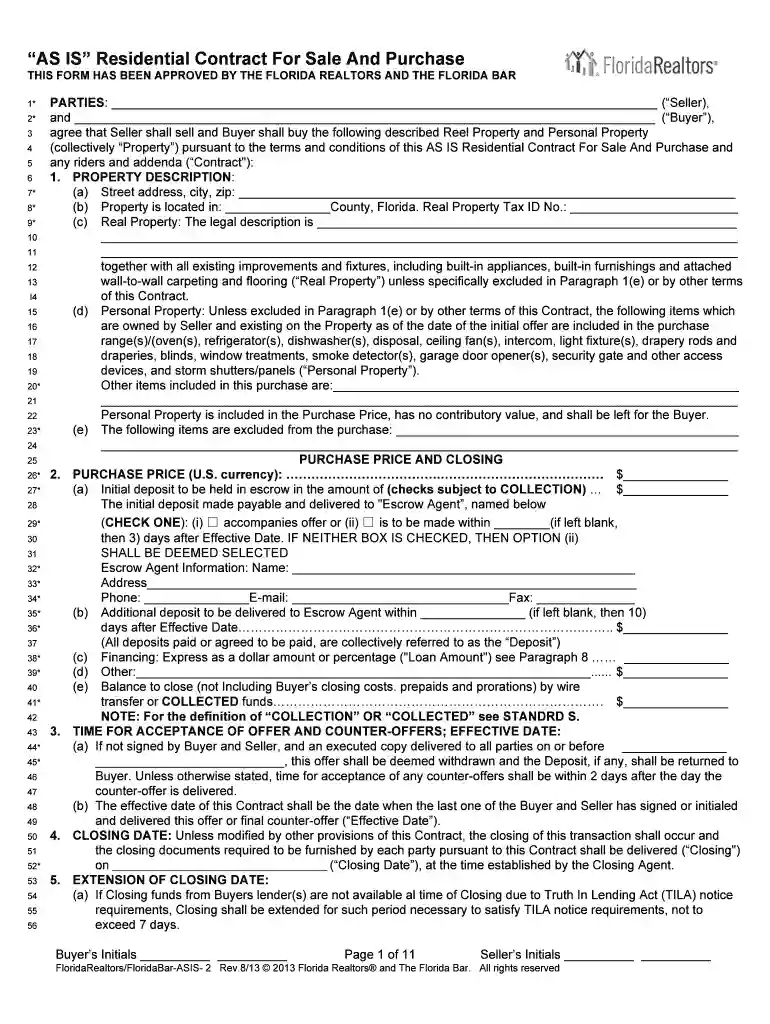
The Florida Association of Realtors and the Florida Bar (FAR/BAR) created the farbar contract, which serves as a standard document for residential real estate transactions in Florida. This contract is integral for outlining the responsibilities and obligations of both buyers and sellers throughout the purchase process. Additionally, it is designed to ensure clarity and legal compliance, minimizing potential disputes.

The farbar contract includes critical sections such as property description, purchase price, and closing conditions. It emphasizes the condition of the property being sold "as is," meaning sellers are not responsible for making repairs or providing warranties. This is a crucial consideration for buyers, as it influences inspection processes and negotiation strategies. By providing comprehensive terms upfront, the farbar contract aims to foster transparency and protect all parties involved.

Importance of the Farbar Contract in Real Estate Transactions

  • Legal Protection: The farbar contract is a legally binding agreement that safeguards the rights of both buyers and sellers.
  • Standardized Format: By using a standardized form, real estate professionals can ensure conformity with state laws, thus reducing errors and misunderstandings.
  • Comprehensive Coverage: The contract covers all essential aspects of a real estate transaction, from financing options to dispute resolution.

Key Elements of the Farbar Contract

Several pivotal components characterize the farbar contract, each serving a distinct purpose in the transaction process.

  • Property Description: Clearly identifies the real estate subject to the contract, delineating boundaries and any included fixtures.
  • Purchase Price: Details the agreed-upon price for the property, often accompanied by provisions for deposits and payment methods.
  • Closing Procedures: Outlines necessary steps for closing the sale, including the timeline and responsibilities of each party.
  • Contingencies: Specifies conditions that must be met for the deal to proceed, such as financing approval, property inspections, and appraisal results.
  • As-Is Clause: States that the buyer accepts the property in its current condition, important for mitigating the seller's liability regarding property defects.

Additional Elements to Consider

  • Disclosures: Requires sellers to disclose any known issues with the property, ensuring buyers are informed before finalizing the purchase.
  • Maintenance Responsibilities: Clarifies maintenance duties before and after closing, which can impact property management for both parties.
  • Default and Remedies: Defines what constitutes a breach of contract and outlines potential remedies available to affected parties, ensuring preparedness for possible disputes.

How to Use the Farbar Contract Effectively

Utilizing the farbar contract begins with understanding its structure and purpose. Each section must be carefully reviewed and completed to ensure that all pertinent details are accurately documented.

  1. Initiate the Contract: Begin by filling out the property description and identifying all parties involved in the transaction.
  2. Agree on Terms: Discuss and negotiate key elements like purchase price and contingencies to reflect what has been mutually agreed upon.
  3. Document Additional Stipulations: Include provisions for disclosures or special requests that may not be standard in the template, ensuring both parties’ interests are protected.
  4. Review and Sign: Both parties should thoroughly review the contract before signing to confirm that it reflects all agreed-upon terms and conditions.
  5. Distribution of Copies: After signatures are obtained, ensure that all involved parties receive a copy of the finalized document for their records.

Tips for Effective Use of the Farbar Contract

  • Consult Professionals: Engaging a real estate attorney or agent in the review process can provide insights and protect against potential legal issues.
  • Maintain Clarity: Ensure that all terms are written clearly to avoid ambiguity that could lead to disputes later.
  • Use Addendums: In the event of additional agreements or changes post-signing, use addendums to officially document these modifications.

Steps to Complete the Farbar Contract

Completing the farbar contract involves a systematic approach to ensure that all necessary information is accurately captured.

  1. Obtain the Standard Form: Download or access an official farbar contract template, which is available through real estate boards or legal sources.
  2. Fill in Buyer and Seller Information: Enter the full names and contact details of all parties involved.
  3. Property and Financing Details: Provide precise information about the property, including the address, legal description, and purchase price. Address financing arrangements if applicable.
  4. Review Contingencies: Clearly outline any financing, inspection, or appraisal contingencies that must be satisfied for the sale to proceed.
  5. Final Review and Signatures: Have both parties review the completed contract carefully before signing. Ensure that changes or additions are documented and agreed upon.

Importance of Thoroughness in Completion

  • Avoid Legal Complications: Inaccuracies or omissions can lead to legal challenges or disputes, underscoring the importance of thoroughness.
  • Clarify Expectations: A well-completed contract sets clear expectations and responsibilities, reducing confusion down the line.

Legal Use of the Farbar Contract

The farbar contract is specifically designed to meet state laws and regulations in Florida, ensuring that it is legally enforceable. Its establishment by two reputable organizations—the Florida Bar and the Florida Association of Realtors—adds to its credibility and acceptance in legal circles.

Compliance with Florida Real Estate Laws

  • Adherence to State Statutes: The contract must comply with the Florida Statutes governing real estate transactions, which provide a legal framework for operating within the state.
  • Incorporation of Legal Language: The inclusion of necessary legal language helps protect against misinterpretation or misuse during legal proceedings.

Ensuring Proper Use

  • Legal Review: Having an attorney review the contract can ensure compliance with state laws and protect against unforeseen liabilities.
  • Updated Versions: Regularly accessing the most current version of the farbar contract is critical, as real estate laws and forms may change periodically.

By understanding and properly utilizing the farbar contract, individuals engaged in real estate transactions can safeguard their interests while adhering to legal requirements. This structured approach not only minimizes risks but facilitates a smoother transaction process overall.

be ready to get more

Complete this form in 5 minutes or less

Get form

Got questions?

We have answers to the most popular questions from our customers. If you can't find an answer to your question, please contact us.
Contact us
A FAR-BAR contract is attractive to many because it is designed to include all the required information in easily accessible language. The contract will set out settled facts such as the sale price, the closing date, and any acknowledged necessary repairs, plus establishing timelines in which they might be done.Oct 6, 2021
The FARBAR contract is a standardized residential real estate purchase agreement jointly developed by the Florida Association of Realtors (FAR) and the Florida Bar. It is designed to streamline real estate transactions, making them more efficient and transparent for all parties involved.
The four main types of real estate contracts are Purchase Agreements (for buying/selling), Lease Agreements (for renting), Assignment Contracts (transferring contract rights, often in wholesaling), and Power of Attorney (allowing someone to sign on your behalf). These cover different transaction types, from property transfer to temporary occupancy and legal representation. Heres a breakdown of each: Purchase Agreement: A contract between a buyer and seller detailing the terms (price, contingencies, closing date) for a property sale. Lease Agreement: An agreement between a landlord and tenant for renting property, outlining rent, duration, and rules. Assignment Contract: Transfers rights (like the right to buy) from one party to another, common in real estate investing. Power of Attorney (POA): Grants someone else the legal authority to act on your behalf in real estate transactions, useful if you cant be present. Other related real estate contracts include Listing Agreements (with agents) and Option Contracts, but the four above are foundational for transactions. AI can make mistakes, so double-check responsesWhat Are the Four Types of Real Estate Contracts? - MVSK Law FirmFeb 7, 2023 The four types of real estate contracts include purchase agreements, assignment contracts, lease agreements, and power Mazzoni Valvano Szewczyk Karam4 Types of Real Estate Contracts for Beginners | MashvisorJul 9, 2019Mashvisor
The acronym FARBAR came about because it was created by the Florida Association of Realtors (FAR) in collaboration with the Florida BAR association. The actual name of the contract is Residential Contract For Sale and Purchase. This is quite a mouthful and as such nearly everyone refers to it as the FARBAR.
While contract types vary, four fundamental categories often cited are Bilateral/Unilateral (based on promises), Express/Implied (based on formation), Executed/Executory (based on performance), and specialized agreements like NDAs, Sales, or Employment Contracts, with government and construction often using Fixed-Price, Cost-Plus, or TM models. Here are four common ways to classify contracts: Formation (Express vs. Implied) Express Contracts: Terms are clearly stated, either verbally or in writing (e.g., a signed lease). Implied Contracts: Formed through the actions, conduct, or circumstances of the parties, not explicit words (e.g., ordering food at a restaurant). Promise Structure (Bilateral vs. Unilateral) Bilateral Contracts: A promise for a promise, where both parties exchange commitments (e.g., a sales agreement). Unilateral Contracts: A promise for an action; one party promises to pay if the other performs a specific act (e.g., a reward for finding a lost pet). Performance Status (Executed vs. Executory) Executed Contracts: All obligations have been fully performed by all parties. Executory Contracts: One or both parties still have outstanding obligations to fulfill. Specific Business Applications (Examples) Non-Disclosure Agreements (NDAs): Protect confidential information. Employment Contracts: Define job roles, pay, and termination conditions. Sales Contracts: Govern the sale of goods or services. Government/Construction Contracts (Fixed-Price, Cost-Plus, TM): Common in large projects to set pricing for work. For legal advice, consult a professional. Part 16 - Types of Contracts | Acquisition.GOV Subpart 16.2 - Fixed-Price Contracts * 16.201 General. (a) Fixed-price types of contracts provide for a firm price or, in approprAcquisition.GOV (.gov)Types of Contracts Different Contracts ExplainedApr 7, 2021 in a unilateral contract there is one party that makes a promise while the other party performs an act. for example JosYouTube Business Law Institute

Security and compliance

At DocHub, your data security is our priority. We follow HIPAA, SOC2, GDPR, and other standards, so you can work on your documents with confidence.

Learn more
ccpa2
pci-dss
gdpr-compliance
hipaa
soc-compliance

People also ask

What is florida farbar contract? The Florida FAR/BAR contract is a standardized real estate sales contract developed jointly by the Florida Association of Realtors (FAR) and the Florida Bar (BAR) to facilitate real estate transactions in Florida.

florida farbar contract 2023 pdf