
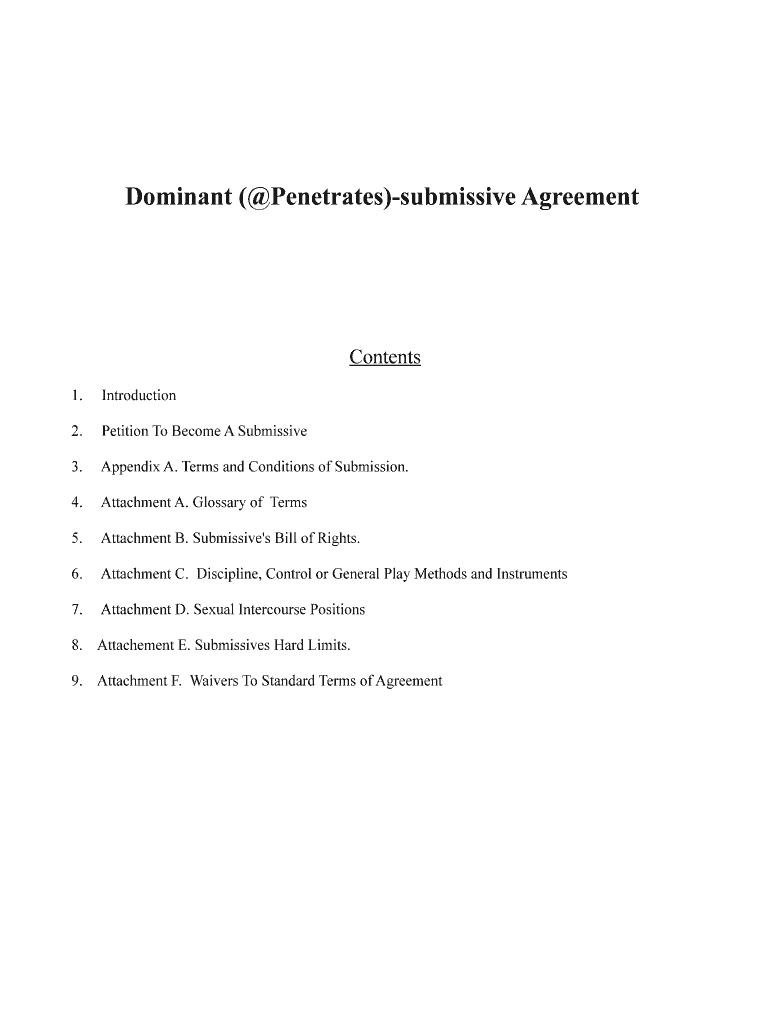







Definition and Meaning of DS Contract
The term "DS contract" typically refers to a Dominant-submissive agreement in the context of BDSM relationships. This contract serves as a mutual understanding between the parties involved, outlining the expectations, commitments, and boundaries within the relationship. It is essential for establishing clear communication, ensuring consent, and fostering mutual respect.
A DS contract is often characterized by several key components:
-
Roles and Responsibilities: Clearly defined roles for the Dominant and submissive, detailing their specific duties and obligations within the relationship.
-
Limits and Safewords: Specification of hard and soft limits, as well as agreed-upon safewords to ensure that the submissive's boundaries are respected during scenes.
-
Communication Protocols: Guidelines for maintaining open lines of communication, which are crucial for addressing concerns and desires across the relationship.
-
Discipline and Rewards: Terms outlining the methods of discipline for the submissive and any rewards for compliance or exceptional performance.
Understanding these elements is crucial for anyone entering into a DS contract, as they promote a safe and consensual environment.
Key Elements of a DS Contract
A well-structured DS contract includes several vital components that provide clarity and structure to the relationship. Each element plays a significant role in facilitating a healthy power exchange dynamic.
-
Consent: Affirmation from both parties that they willingly enter into the agreement, acknowledging their understanding of its terms.
-
Duration and Review: Specification of the contract's duration, including any agreed-upon intervals for review and renegotiation of terms.
-
Confidentiality: Provisions concerning the confidentiality of the relationship and the importance of discretion regarding shared experiences and personal details.
-
Emergency Protocols: Guidelines for how to handle emergencies or unexpected situations that may arise during the exploration of BDSM practices.
-
Termination Clause: Conditions under which either party may terminate the contract, ensuring that both individuals can exit the agreement safely.
Including these elements helps to solidify expectations and fosters trust, making for a healthier relationship dynamic.
Types of DS Contracts
Different types of DS contracts can cater to the varying needs and styles of Dominant-submissive relationships. Understanding the distinctions can help individuals choose the most appropriate type for their relationship.
-
Standard DS Agreement: This type outlines basic roles, limits, and responsibilities without extensive detail. It is suitable for beginners or shorter-term relationships.
-
Detailed Contracts: These documents cover specific protocols, multiple scenarios, and extensive clauses regarding behavior, expectations, and limits. Suitable for serious BDSM practitioners.
-
Temporary Contracts: Agreed to for a specified duration or defined number of sessions, providing flexibility and room for experimentation.
-
Performance Contracts: These focus on specific tasks or behaviors the submissive agrees to undertake, often including rewards for compliance and consequences for breaches.
Selecting the right type of DS contract can help facilitate a smoother and more fulfilling relationship, accommodating different levels of experience and commitment.
Examples of DS Contract Clauses
In drafting a DS contract, clarity in the clauses is crucial. Here are some example clauses that can be included:
-
Roles: "The Dominant shall guide and lead the submissive in scenes, providing safe boundaries while exploring submissive desires."
-
Limits: "The submissive has defined hard limits on X, Y, and Z, and any activities beyond these limits shall not be engaged in without express permission."
-
Safeword Usage: "The established safeword is 'red' for immediate cessation of activities, and 'yellow' for a slowdown or check-in."
-
Confidentiality: "Both parties agree that the details of their relationship, including actions discussed and performed, shall remain confidential."
These clauses set clear expectations and promote a respectful and consensual partnership.
Common Pitfalls in DS Contracts
While forming a DS contract, individuals must be aware of common pitfalls that may arise:
-
Lack of Clarity: Vague terms can lead to misunderstandings and unmet expectations. Each point should be explicitly detailed and agreed upon.
-
Assumptions: Assuming that both parties are on the same page can result in conflict. Active communication is essential for alignment and understanding.
-
Neglecting Revisions: Failing to revisit the contract regularly to accommodate changes in the relationship can lead to resentment or misunderstandings.
-
Ignoring Emotions: Emotional readiness and the psychological aspects of DS relationships should be prioritized. Contracts should reflect mutual feelings and concerns.
By being cognizant of these potential issues, couples can strengthen their agreements and enhance their experiences.




