




01. Edit your dietitian referral form template online
Type text, add images, blackout confidential details, add comments, highlights and more.

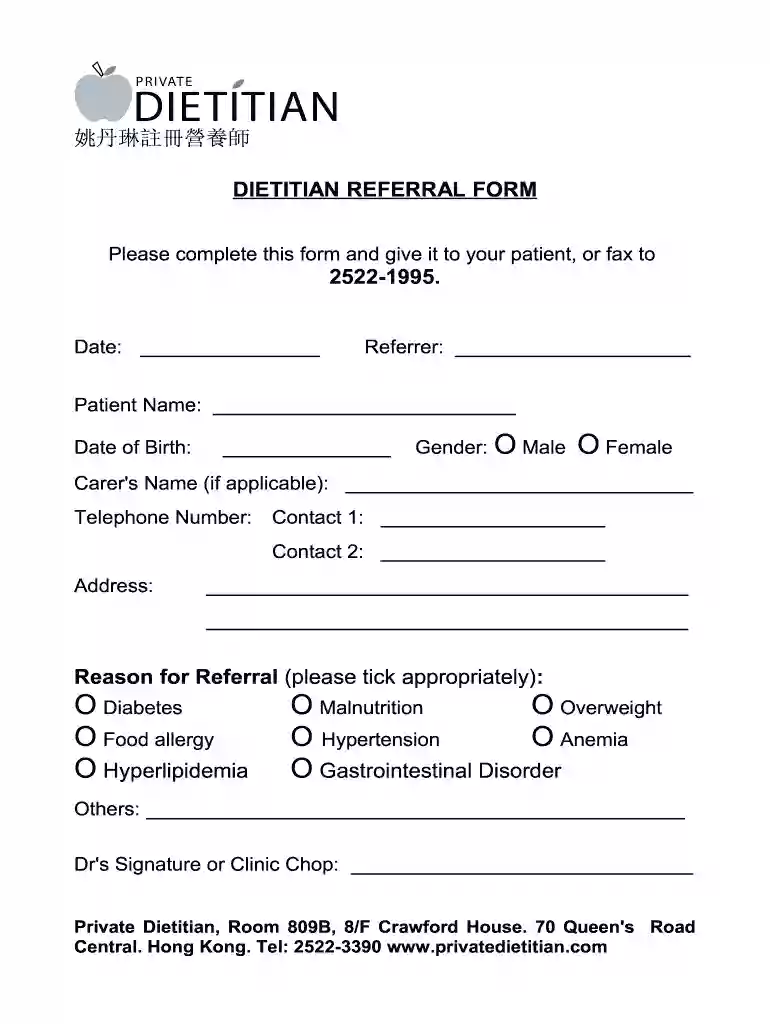
Type text, add images, blackout confidential details, add comments, highlights and more.

Draw your signature, type it, upload its image, or use your mobile device as a signature pad.

Send nutrition referral form via email, link, or fax. You can also download it, export it or print it out.
The dietitian referral form is a critical document used in the healthcare field to facilitate referrals from healthcare providers to registered dietitians. This form serves to ensure that patients receive the necessary nutritional guidance tailored to their medical condition or dietary needs. Typically, it contains essential sections such as patient information, the reason for referral, treatment goals, and relevant medical history. By using this form, healthcare providers can ensure a structured approach to referring patients for nutritional care, thus enhancing communication between healthcare teams.
Understanding the purpose of a dietitian referral form is crucial for healthcare providers. It streamlines the referral process, enhances clinical collaboration, and aids in improving patient outcomes. When utilized effectively, the form acts as a bridge, allowing dietitians to understand the specific needs and conditions of their new clients.
Completing a dietitian referral form involves several key steps to ensure accurate information is conveyed about the patient. Here are the general steps involved in filling out the form:
Patient Information: Enter the patient’s full name, date of birth, and contact details. Accurate information helps in identifying the patient and ensuring proper follow-up.
Referring Provider Details: Fill in your name, title, and contact information as the referring healthcare provider. This section typically includes the facility name and address.
Medical History: Provide a brief medical history relevant to the dietary concerns. This may include current conditions (e.g., diabetes, hypertension) and medications that might impact nutritional needs.
Reason for Referral: Clearly state the reason for the referral. Common reasons include managing specific health issues, dietary restrictions, and nutritional deficiencies.
Treatment Goals and Expectations: Indicate what you hope the dietitian will achieve through this referral. Examples include weight management, improved blood sugar control, or developing meal plans.
Signature and Date: Conclude by signing and dating the form to confirm that all information is accurate.
By following these steps, healthcare providers can ensure that they provide comprehensive information, enabling dietitians to deliver effective dietary interventions.
The dietitian referral form is structured to capture specific information that enhances the referral process. Key elements typically included in the form are:
Incorporating these elements enables the dietitian to tailor their approach according to the patient's unique circumstances, promoting personalized care.
Various healthcare professionals utilize the dietitian referral form to ensure patients receive the appropriate nutritional care. Key users include:
The form’s versatility allows a broad range of healthcare providers to utilize it effectively, ensuring that patients receive comprehensive nutritional support tailored to their health circumstances.


Real-world scenarios exemplifying the use of the dietitian referral form demonstrate its practical application in clinical settings:
Case Study: Diabetes Management: A primary care physician sees a patient struggling with glycemic control. After assessing the situation, the physician completes the dietitian referral form, emphasizing the need for meal planning and carbohydrate counting to stabilize blood sugar levels.
Case Study: Cancer Treatment Support: An oncologist refers a patient experiencing significant weight loss during chemotherapy. By utilizing the dietitian referral form, the oncologist provides details about the patient’s preferences and intolerances, ensuring the dietitian can create an appropriate nutritional plan.
These examples highlight how the dietitian referral form streamlines the process of obtaining specialized care, ultimately enhancing patient outcomes by informing dietitians of essential patient details and health goals.
The dietitian referral form must comply with various legal standards to ensure that patient information is handled with respect to privacy and data security. In the U.S., healthcare providers must follow regulations outlined by the Health Insurance Portability and Accountability Act (HIPAA), which mandates proper handling of medical records and personal health information.
It is crucial that the referral form is signed by the referring provider, indicating informed consent for sharing patient information with the dietitian. This legal requirement not only protects patient rights but also ensures accountability among healthcare providers. Using the form legally, with an emphasis on confidentiality, helps to build trust between patients and providers while facilitating efficient information exchange needed to deliver effective nutritional care.
At DocHub, your data security is our priority. We follow HIPAA, SOC2, GDPR, and other standards, so you can work on your documents with confidence.
RECENT WEIGHT CHANGE. Trend in weight status is critical for assessing inadequate intake (loss) or fluid retention (gain). FOR DIABETICS.Read more
Monday - Friday 9 a.m.-5 p.m.. For emergencies, call x6111, or 911 if off campus. 31 Campus Ave Lewiston, Maine 04240. PHONE.Read more


