







Definition and Overview of Throw a Thon
Throw a thon is a fundraising event that revolves around sporting activities where participants collect sponsorships for each successful attempt they make, typically in basketball. Similar to other athletic fundraising events, the primary goal is to engage participants in a competitive format while raising funds for specific purposes, such as to support teams, programs, or charitable causes. In the context of basketball, a throw a thon often takes the form of a free throw shooting contest, where players aim to make as many successful shots as possible out of a predetermined number.
Key Features of a Throw a Thon
- Purpose: The event serves to raise funds for various causes, such as youth sports programs or community projects.
- Participation: Open to players of all skill levels, allowing inclusivity within the community.
- Sponsorship: Sponsors commit to contributing a set amount for each successful throw made, encouraging players to perform their best.
- Competition Format: Players typically have a defined number of attempts, usually one hundred, to maximize their engagement and fundraising potential.
Organizing a Successful Throw a Thon Fundraiser
Planning a throw a thon involves several logistical steps to ensure the event runs smoothly and achieves its fundraising goals. Organizers must consider venue, equipment, promotion, and participant registration. Every aspect is crucial for creating an enjoyable and impactful experience.
Steps to Plan and Execute the Event
- Define Objectives: Establish clear goals for the event, including fundraising targets and intended beneficiaries.
- Choose a Venue: Seek a community gym or sports facility that accommodates the expected number of participants and spectators.
- Create Sponsorship Levels: Develop a structured sponsorship model that incentivizes higher contributions for greater performance, such as set amounts for successful shots or total contributions.
- Promote the Event:
- Utilize social media, local newspapers, and community bulletin boards.
- Encourage participants to gather support from their friends and family to increase donations.
- Set Up Equipment: Ensure access to basketballs, a scorekeeper, and any necessary technology for tracking attempts, tallies, and funds raised.
Developing Documentation and Tools
To enhance participant experience and streamline the process, several documents and templates are necessary. Having standardized tools allows for efficient management of the event.
Essential Templates for Event Management
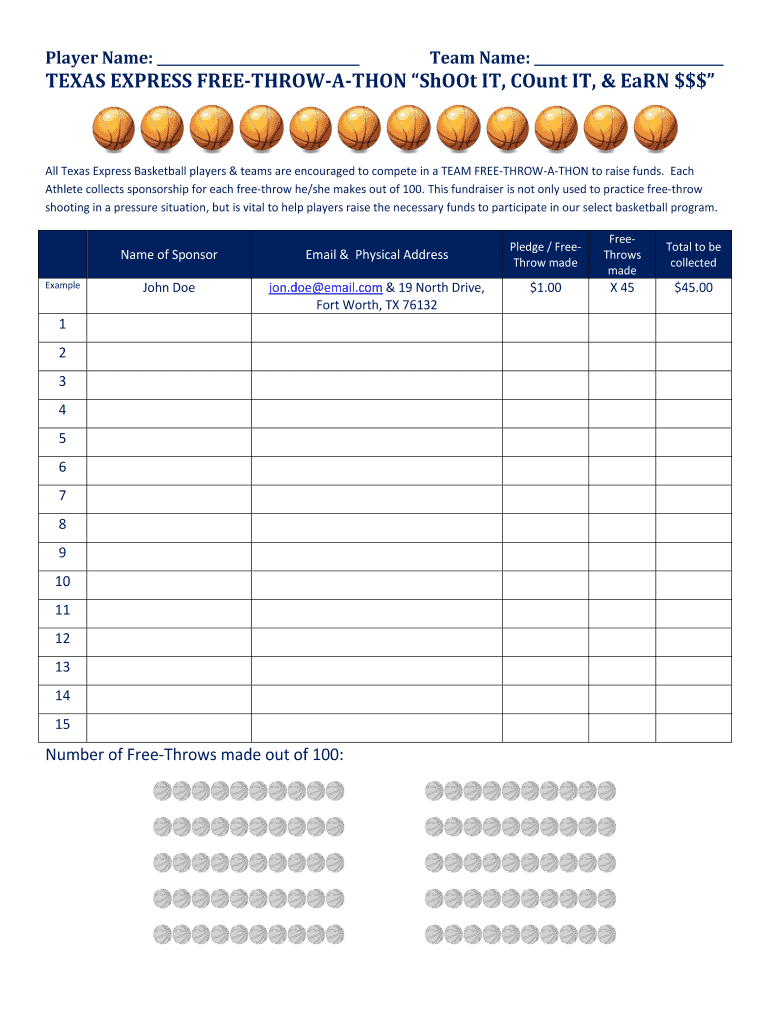
- Free Throw A Thon Pledge Sheet: This editable document enables participants to record their sponsors' commitments and amounts pledged per successful shot, ensuring clarity for both players and sponsors.
- Shooting Tally Sheet: Provides a straightforward layout to track the number of successful throws during the event, reflecting the achievement of each participant and contributing towards overall fundraising efforts.
- Printable Fundraiser Event Poster: Design materials that communicate essential information such as date, time, location, and purpose. This tool can be placed throughout the venue and in local communities to draw attention.
Engaging Participants and Collecting Pledges
In a throw a thon, creating excitement and an atmosphere of friendly competition plays an important role in overall success. Further, tracking and acknowledging participant achievements fosters ongoing engagement throughout the event.
Strategies for Participant Involvement
- Kick-off Meeting: Host an informational session prior to the event to motivate participants and explain how the fundraising process works.
- Incentives: Consider small prizes or recognition for participants who achieve specific milestones, such as the most funds raised or the highest shooting percentage.
- Real-time Updates: Utilize social media or a dedicated website to share live results and engage the community, encouraging further sponsorship through transparency and excitement.
Understanding Legal and Regulatory Considerations
When conducting a throw a thon fundraiser, it is essential for organizers to understand the legal implications surrounding fundraising activities.
Relevant Legal Frameworks and Compliance
- Permits: Check local regulations regarding permits for fundraising events, especially when held in public spaces.
- Fundraising Laws: Familiarize with state-specific laws governing fundraising, as there may be requirements for registration or specific guidelines to follow.
- Non-Profit Considerations: If funds are being raised for a non-profit entity, ensure adherence to requirements for transparency in fundraising practices.
Monitoring and Evaluating Success
Post-event analysis is critical for understanding the effectiveness of the throw a thon. Through this reflection, organizers can gather insights to improve future events.
Assessment Techniques
- Financial Review: Compare total funds raised against your initial objectives to assess success.
- Participant Feedback: Collect input from participants to understand what worked well and what can be improved. Surveys can be beneficial here.
- Report Outcomes: Share the final results with all stakeholders, highlighting contributions and achievements, to reinforce community spirit and transparency for future events.
By implementing these strategies, organizers can create an impactful and successful throw a thon, engaging both participants and the wider community while effectively raising funds for worthy causes.




