
Behavior rating form 2026

Get Form
behavior rating form Preview on Page 1

Here's how it works

01. Edit your behavior rating form online
Type text, add images, blackout confidential details, add comments, highlights and more.
02. Sign it in a few clicks
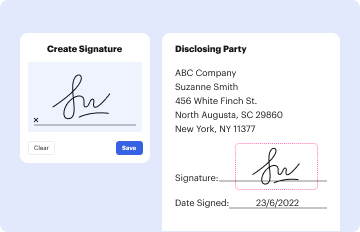
Draw your signature, type it, upload its image, or use your mobile device as a signature pad.
03. Share your form with others
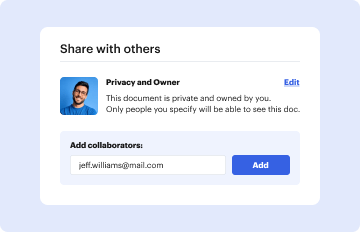
Send nisonger child behavior rating form via email, link, or fax. You can also download it, export it or print it out.

How to use or fill out behavior rating form with our platform

Form edit decoration
9.5
Ease of Setup
DocHub User Ratings on G2
9.0
Ease of Use
DocHub User Ratings on G2
  1. Click ‘Get Form’ to open the behavior rating form in the editor.
  2. Begin by entering the child's name and date of birth at the top of the form. This information is crucial for identifying the child being rated.
  3. Next, fill in your name as the rater and specify your relationship to the child. This context helps in understanding the perspective of the ratings.
  4. In Section I, describe any special circumstances that may have influenced the child's behavior recently. This provides valuable context for your ratings.
  5. Proceed to Section II, where you will rate positive social behaviors. Circle the appropriate score for each behavior based on your observations over the last month.
  6. In Section III, assess problem behaviors by circling a score that best describes how often each behavior occurred. Remember to circle zero if you are unsure about a specific item.
  7. Finally, transcribe your ratings onto the score sheet provided at the end of the form to calculate subscale scores for various behavioral categories.

Start using our platform today to easily complete and manage your behavior rating forms online for free!

be ready to get more

Complete this form in 5 minutes or less

Get form

Got questions?

We have answers to the most popular questions from our customers. If you can't find an answer to your question, please contact us.
Contact us

Yes, electronically drawing your signature is acceptable, but only if you use a tool that complies with industry regulations and policies. Try DocHub, which guarantees eSignature validity under ESIGN and UETA requirements. All you need to eSign your child rating form is an account with DocHub and an internet connection. Once you open your paperwork in our editor, click Sign and choose the Draw option.

With DocHub, there are several convenient ways to edit your child behavior rating form online. You can drag and drop the form and edit it directly at the DocHub website or use our browser extension to fill out your form right away. On top of that, you can edit your PDF on your smartphone, as DocHub is compatible with all the accessible mobile platforms.

The Behavior Rating Scale (BRS) is a collaboratively created tool for quantitatively measuring the intensity, frequency, or duration of specific behaviors. The student's support team meets to define the target behaviors in specific terms, which are specific actions on which a research team wishes to collect data.
Direct Behavior Rating (DBR) refers to the rating of one or more specified behavior(s) at least daily and the sharing of that information with someone other than the rater.
Direct Behavior Rating (DBR) is a behavior assessment method that educational professionals, such as school psychologists and teachers, use to monitor student behavior. It is characterized by: Recording a rating immediately after a specified observation period.

Security and compliance

At DocHub, your data security is our priority. We follow HIPAA, SOC2, GDPR, and other standards, so you can work on your documents with confidence.

Learn more
ccpa2
pci-dss
gdpr-compliance
hipaa
soc-compliance

People also ask

Behavior rating scales are among the most common assessment methods used by school psychologists, with over 75% of school psychologists reporting inclusion of either parent or teacher scales in the majority of recent referral cases (Shapiro & Heick, 2004).
Behavior and Emotional Rating Scale (BERS)3 is a 52 item strength-based assessment used to evaluate the behavioral and emotional strengths of youth. Items are rated on a 4 point scale (0 = not at all like your child, 1 = not much like your child, 2 = somewhat like your child, 3 = very much like your child).
A behavioral rating scale is an assessment instrument completed by a clinician or a third party (e.g., significant other, teacher, parent, peer) that includes items that assess one or more targeted client behaviors.

nisonger child behavior