




01. Edit your penn medicine medical records release form online
Type text, add images, blackout confidential details, add comments, highlights and more.

Type text, add images, blackout confidential details, add comments, highlights and more.

Draw your signature, type it, upload its image, or use your mobile device as a signature pad.

Send patient medical file via email, link, or fax. You can also download it, export it or print it out.
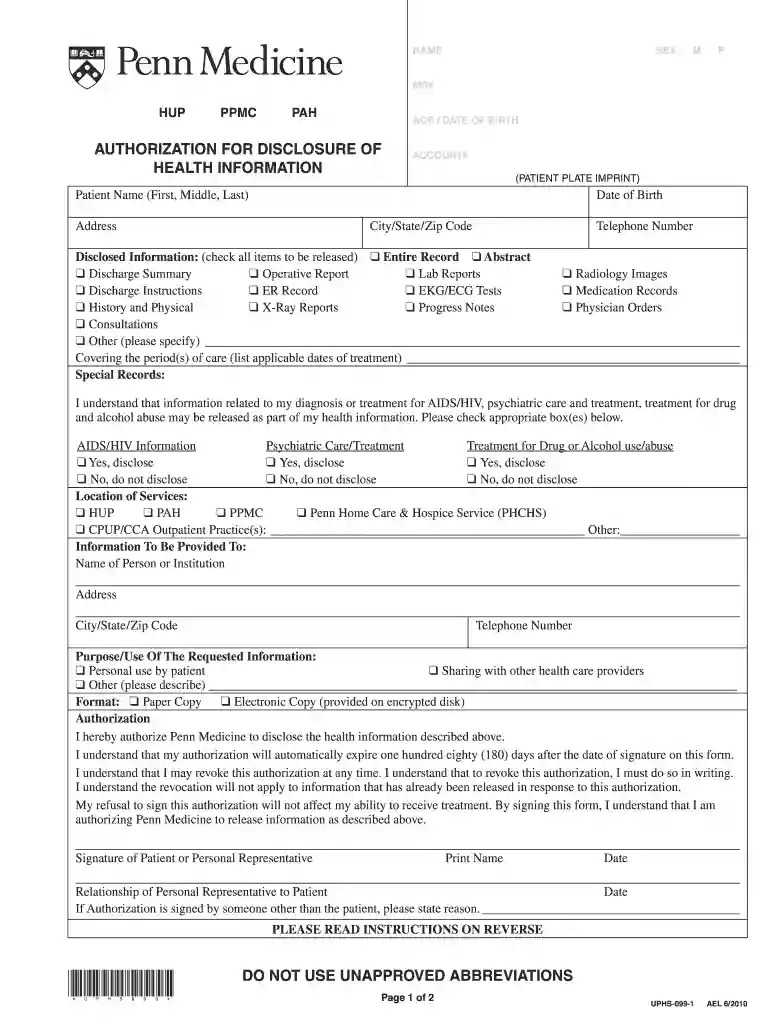
The Penn Medicine medical release form is an essential document that allows patients to authorize the release of their medical records. This form is critical for individuals needing to share their health information with other healthcare providers, insurance companies, or authorized third parties. Completing this form ensures compliance with regulations governing the confidentiality of patient medical files, including the Health Insurance Portability and Accountability Act (HIPAA).
The Penn Medicine medical release form includes several key sections that need to be filled out accurately. These sections typically include:
Patient Identification: This section requires the complete name, date of birth, and contact information of the patient. It may also include an identification number specific to Penn Medicine.
Types of Information to be Disclosed: Patients can specify the medical records they wish to be released, such as lab reports, treatment records, or psychiatric evaluations. This flexibility allows for tailored requests based on individual needs.
Purpose of Disclosure: Patients must indicate why they are requesting the release of their medical records. Common purposes include obtaining a second opinion, applying for disability benefits, or coordinating care with another provider.
Signatures and Authorization: The form requires the signature of the patient or their legal representative, affirming that they understand what they are authorizing. For minors, a parent or guardian must sign.
Filling out the Penn Medicine medical release form correctly is crucial for its acceptance. To complete the form, follow these steps:
Gather Patient Information: Ensure all personal and health-related information is accurate before filling out the form.
Select Information Types: Clearly check the boxes for the types of records you wish to disclose. This could range from all records to specific tests or consultations.
Specify the Disclosing Parties: Indicate the names and contact information of the individuals or entities receiving the information. This ensures medical data goes to the correct destination.
Sign and Date the Form: It’s essential that the patient or their authorized representative signs and dates the form at the bottom. This verification step confirms consent.
Submit the Form: Finally, follow the instructions for submitting the form, which may include faxing it to the appropriate department at Penn Medicine or mailing it directly. The contact details for where to send the completed form are usually found on the document.
The Penn Medicine medical release form adheres to strict regulations set forth by HIPAA. This law protects patient information and ensures that health records are only shared with authorized parties. Key compliance considerations include:
Informed Consent: Patients must fully understand what they are consenting to when signing the form. This includes awareness that they can revoke their authorization at any time.
Revocation Process: The form should include information on how a patient can revoke their consent for the release of information. This process must be straightforward to protect patient rights.
Duration of Authorization: Typically, the authorization remains effective until the specified date, at which point it must be renewed if ongoing access is required. Patients should inquire about the expiration period when signing the form.
Understanding who can authorize the release of medical records is crucial for compliance. The general guidelines include:
Adult Patients: Individuals aged eighteen or older can sign the form themselves.
Minors: For patients under eighteen, a parent or legal guardian must complete and sign the form. This can vary depending on state laws regarding the release of minors' health information.
Authorized Representatives: In cases where a patient is unable to sign due to medical conditions, a legally designated agent can provide consent. Documentation proving this authority may be required.
Once the form is completed, it must be submitted correctly to ensure prompt processing. Various submission methods may be outlined, which can generally include:
Faxing: The form can often be sent via fax to the designated Penn Medicine department. The fax number is typically listed on the form itself.
Mailing: Patients may also choose to mail the completed form. It is advisable to send it via certified mail for tracking purposes.
In-Person Delivery: Some departments may allow individuals to deliver the form in person, which can expedite processing.
Making sure to follow the specific submission guidelines will help avoid unnecessary delays in receiving medical records or sharing them with other required parties.
We've got more versions of the penn medicine medical records release form form. Select the right penn medicine medical records release form version from the list and start editing it straight away!
| Versions | Form popularity | Fillable & printable |
|---|---|---|
| 2010 | 4.9 Satisfied (515 Votes) |
At DocHub, your data security is our priority. We follow HIPAA, SOC2, GDPR, and other standards, so you can work on your documents with confidence.
I hereby authorize Penn Medicine to disclose the health information described above. I understand that my authorization will automatically expire one hundredRead more
A request to the Department of Health (Department) for medical records must be completed by submitting a valid Authorization for Release of Records form
Apr 29, 2015 erans medical records to be available digitally to their health care providers shouldnt be something beyond the ca- pabilities of theRead more


