






Definition and Purpose of the Texas Community Survivorship Agreement Form
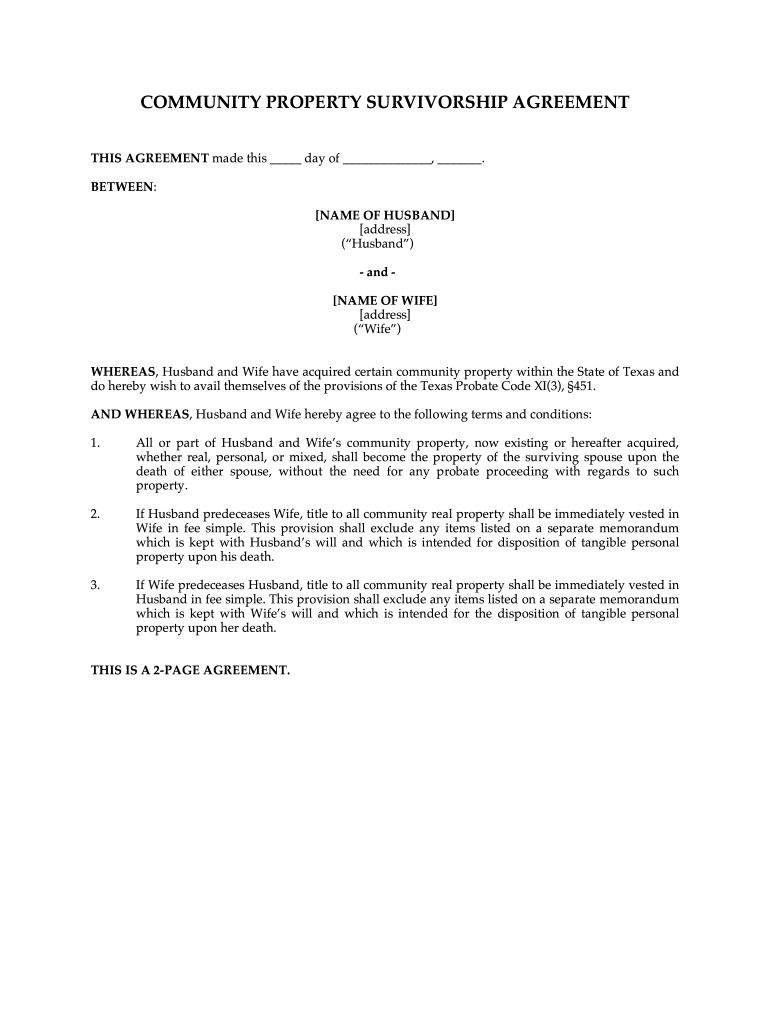
A Texas community survivorship agreement form is a legal document that outlines how property owned jointly by a husband and wife in a community property state will be handled upon the death of one spouse. This type of agreement is essential for ensuring that community property automatically transfers to the surviving spouse without the need for probate. It secures the rights of both parties, providing clarity and protection concerning their shared assets. By utilizing this form, couples can designate what happens to their community property—typically all real estate and certain personal property—upon one spouse's passing.
Key Features of the Agreement
- Automatic Transfer of Ownership: The primary function of this agreement is to facilitate the direct transfer of property from the deceased spouse to the surviving spouse, thereby avoiding lengthy probate procedures.
- Conditions Specified in the Agreement: The form outlines specific conditions under which property rights apply, such as which spouse's interest is affected upon death. This can include provisions for exceptions, like items identified in a separate memorandum related to individual wills.
- Legal Recognition in Texas: This form is recognized legally in Texas, ensuring that it adheres to state laws governing community property and survivorship agreements.
How to Use the Texas Community Survivorship Agreement Form
Using the Texas community survivorship agreement form involves several practical steps to ensure compliance and clarity in managing property. This document is typically used in situations involving married couples who own substantial community property.
Steps to Consider
-
Obtain the Form: The first step is to secure the Texas community survivorship agreement form. This can often be done through legal resources, estate planning websites, or by consulting with an attorney.
-
Complete the Form Accurately: Both spouses must provide accurate information regarding their identities, the nature of their relationship, and a detailed list of the property being included in the agreement.
-
Review Legal Requirements: Ensure that the document complies with Texas state laws regarding community property and survivorship.
-
Execute the Agreement: Both parties should sign the document in the presence of a notary public to ensure its legal standing and to prevent disputes in the future.
-
Keep Copies: Each spouse should retain a copy of the agreement for personal records, and it may also be wise to keep a copy in a safe location, such as with legal counsel.
Steps to Complete the Texas Community Survivorship Agreement Form
Completing the Texas community survivorship agreement form requires careful attention to detail and several specific steps. Below is a structured approach to ensure all necessary components are covered.
Step-by-Step Instructions
-
Gather Personal Information:
- Full legal names of both spouses
- Current addresses
- Date of marriage
-
List Community Property:
- Provide a detailed list of all community property, including addresses and descriptions of real property, vehicles, and other significant assets.
-
Define Survivorship Terms:
- Clearly outline the terms of survivorship, specifying that upon the death of either spouse, the remaining community property will automatically transfer to the surviving spouse.
-
Include Relevant Notices:
- Indicate any exceptions or specific limitations on the transfer of property, like items identified in wills or previously agreed-upon terms not to be affected by this agreement.
-
Sign and Notarize:
- Both spouses must sign the document in front of a notary public, who will also sign and stamp the document, making it a legally binding agreement.
Who Typically Uses the Texas Community Survivorship Agreement Form
The Texas community survivorship agreement form is primarily used by married couples who wish to secure their community property rights upon the death of a spouse. Here are some scenarios where this form is particularly relevant:


Typical Users
- Married Couples: Most commonly, this form is utilized by spouses who own community property together, ensuring a smooth transition of ownership without probate complications.
- Estate Planners: Attorneys and estate planning professionals frequently advise clients to use this form as part of a broader estate plan.
- Individuals with Significant Joint Assets: Couples who jointly own substantial real estate or business assets can benefit greatly from explicitly defining survivorship rights to prevent disputes among heirs.
Important Terms Related to the Texas Community Survivorship Agreement Form
Understanding the critical terminology associated with the Texas community survivorship agreement form is crucial for proper execution and comprehension of its implications.
Key Terms Explained
- Community Property: Assets acquired during the marriage that belong jointly to both spouses, which includes income, property, and real estate.
- Right of Survivorship: The legal right of the surviving spouse to inherit the deceased spouse's share of community property automatically upon their death.
- Probate: The legal procedure through which a deceased person’s estate is administered, which can often be lengthy and complicated.
- Affidavit of Survivorship: A document that may be needed to formalize the transfer of property ownership, particularly in real estate matters, confirming that one spouse has died and the terms of their property interest.
Legal Use of the Texas Community Survivorship Agreement Form
The Texas community survivorship agreement form serves a significant legal purpose in the realm of estate planning and property rights, providing clear directives that align with Texas law.
Legal Framework
- Enforceability: This form is enforceable under Texas law, making it a recognized legal instrument for property transfer without the necessity for probate.
- Compliance with State Law: The agreement must meet specific legal standards set forth by Texas law regarding community property and survivorship rights, including signatures and notarization.
- Protection Against Disputes: Proper execution of the agreement helps safeguard against potential disputes between family members or heirs, as it clarifies ownership and rights.
By utilizing the Texas community survivorship agreement form effectively, couples can ensure that their intentions regarding their shared property are honored and executed legally.