






Definition and Purpose of a Settlement Statement Template
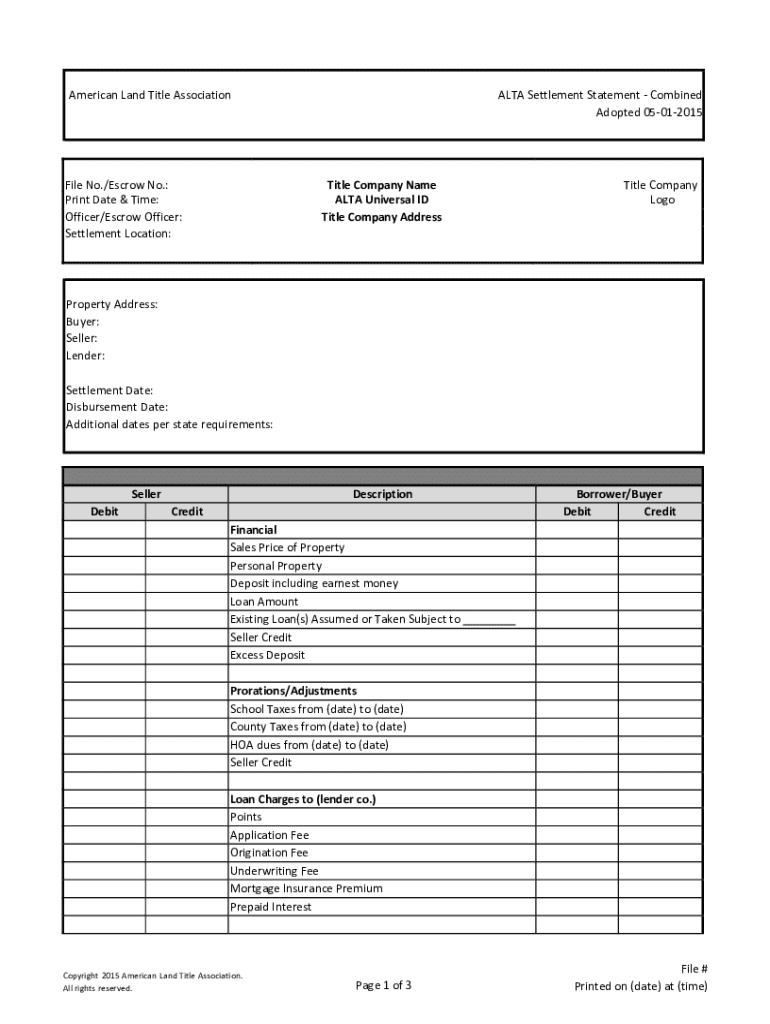
A settlement statement template is a crucial document used in real estate transactions, serving as a comprehensive summary of financial details between buyers and sellers. It outlines debits and credits related to the property purchase, detailing various costs such as loan fees, title insurance, taxes, and closing costs. This structured format not only clarifies the financial responsibilities of each party but also ensures transparency throughout the transaction process.
The template typically follows a standardized layout that corresponds with regulations, such as those established by the American Land Title Association (ALTA). By using a standardized template, all parties involved can easily understand the costs associated with the transaction and can cross-check the amounts to ensure accuracy. The template also serves as an essential tool for record-keeping and future reference, particularly when disputes arise regarding financial obligations.
Key Components of a Settlement Statement Template
- Buyer and Seller Information: Includes names, addresses, and contact details.
- Property Details: Description of the property being sold, including the tax identification number.
- Financial Summary: Detailed listing of debits (amounts owed by the buyer) and credits (amounts owed to the seller) including specific transaction-related fees.
- Closing Costs: Breakdown of costs associated with closing the deal, such as inspections, appraisals, attorney fees, and title searches.
- Disbursement Instructions: Information on how and when payments will be made to all parties involved.
How to Use the Settlement Statement Template
The settlement statement template is a multifaceted tool that can streamline the final steps in a real estate transaction. To effectively utilize this template, follow these steps:
-
Gather Necessary Information: Before filling out the template, collect all pertinent data related to the transaction, including financial figures, contact information, and documents pertaining to costs.
-
Input Buyer and Seller Details: Clearly enter names and addresses of both the buyer and seller at the top of the document. Providing accurate information is critical for formal identification and communication purposes.
-
Detail Property Information: Include a thorough description of the property, covering location and pertinent identifiers such as parcel numbers or legal descriptions.
-
Outline Financial Transactions: Break down all costs associated with the sale. This involves inputting details from multiple parties, including lenders, title companies, and real estate agents.
-
Review and Confirm Accuracy: Once the template is filled out, all parties should review it to confirm that all figures are correct and consistent with prior agreements.
Steps to Complete the Settlement Statement Template
Completing the settlement statement template is an organized process that necessitates attention to detail. Here is a sequence of steps to guide you through the completion process:
-
Download or Access the Template: Start with a blank template or a pre-existing document tailored to your transaction. Many platforms, including DocHub, offer customizable templates.
-
List All Costs Involved: Prepare a comprehensive list, including:
- Loan origination fees
- Title insurance premiums
- Survey fees
- Recording fees
- Attorney fees
-
Allocate Costs: Determine which costs are to be borne by the buyer or the seller. It is crucial to allocate these costs accurately based on the terms negotiated in the purchase agreement.
-
Ensure Compliance with Regulations: Verify that the template aligns with local and federal regulations, including any state-specific requirements or laws surrounding real estate transactions.
-
Finalize and Distribute: After confirming the details with both parties, finalize the document. Ensure that copies are distributed to all parties involved, including lawyers and mortgage lenders.
Who Typically Uses the Settlement Statement Template
The settlement statement template is utilized by a variety of professionals and individuals within real estate transactions. Key users include:
- Real Estate Agents: They facilitate the sale and use the template to ensure all financial details are accurately represented.
- Buyers and Sellers: Individuals directly involved in the real estate transaction benefit from the transparency and clarity provided by the statement.
- Title Companies: They typically prepare the final settlement statement and ensure compliance with relevant laws.
- Lenders: Mortgage brokers and banks rely on the statement to outline loan details and associated settlement costs.


Importance of Collaboration in Completing the Document
- Transparent Communication: By involving all parties in completing the template, everyone has an opportunity to clarify figures and responsibilities.
- Reduced Disputes: Clear documentation helps mitigate disputes over costs and responsibilities.
- Validation of Accuracy: Collaboration ensures that the information reflects the financial agreement accurately.
Examples of Using the Settlement Statement Template
Real-world scenarios highlight the effectiveness of a settlement statement template in various contexts. Here are a few examples:
-
First-Time Homebuyer Transactions: A first-time buyer utilizes the template to understand all costs associated with their purchase, which aids in their budgeting process.
-
Investment Property Sales: Investors employ this template to ensure they capture all associated renovation and closing costs, calculating their return on investment accurately after the property sells.
-
Short Sales: In situations where the sale price is less than the amount owed on the mortgage, the template can help clarify the financial obligations of the seller and any potential deficiencies post-sale.
These scenarios underscore the template’s role in providing clarity and ensuring that all parties are on the same page regarding the financial implications of a real estate transaction.
Legal Use of the Settlement Statement Template
Understanding the legal framework surrounding the use of a settlement statement template is crucial. Several important aspects include:
-
Compliance with the RESPA: The Real Estate Settlement Procedures Act mandates that all lenders and brokers provide a settlement statement at the closing of a real estate transaction, ensuring transparency about the costs involved.
-
Record of Transactions: The settlement statement serves as an official document, recording the completion of the sale and the financial exchange between parties, which is critical for future legal or tax inquiries.
-
Enforceable Contracts: While the settlement statement itself is not a contract, it refers to terms negotiated and agreed upon in the sales contract, making it an important legal document in your real estate file.
Maintaining compliance with legal standards is essential for protecting the interests of all parties involved. It not only promotes fairness in transactions but also upholds the integrity of the real estate market.