




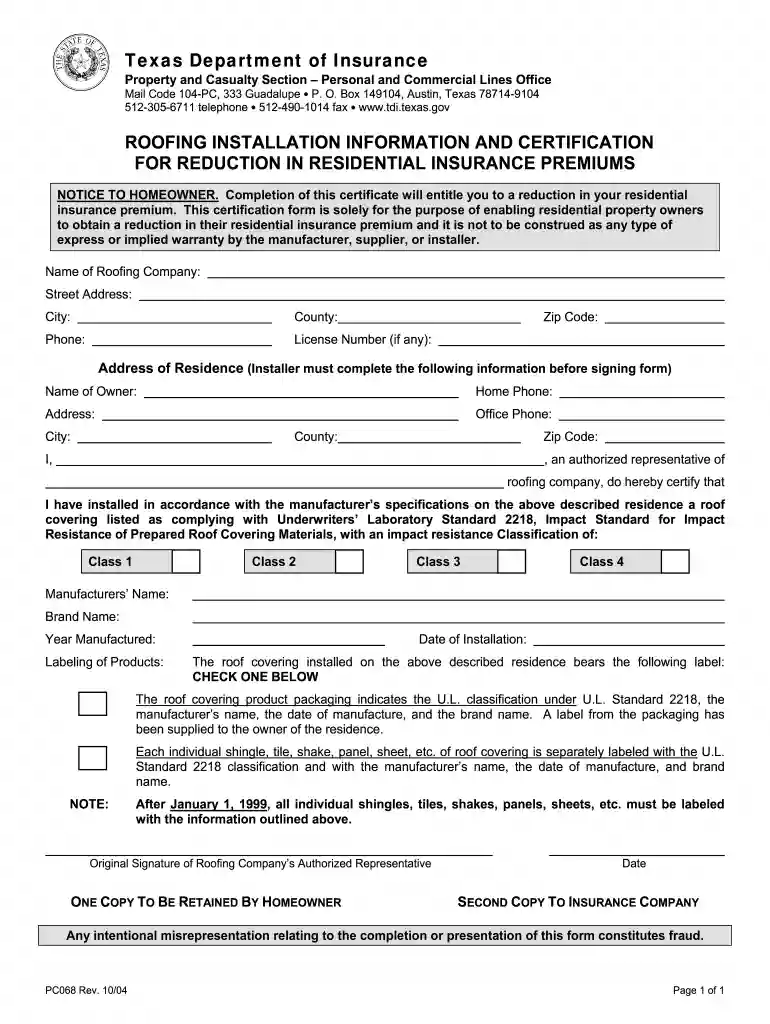
01. Edit your class 4 roof certificate online
Type text, add images, blackout confidential details, add comments, highlights and more.

Type text, add images, blackout confidential details, add comments, highlights and more.

Draw your signature, type it, upload its image, or use your mobile device as a signature pad.

Send class 4 shingles insurance discount form via email, link, or fax. You can also download it, export it or print it out.
The class 4 roof certificate signifies that a roofing system has met specific standards for impact resistance, particularly in hail-prone areas. This certification is crucial for homeowners seeking a reduction in their insurance premiums due to enhanced safety measures for their roofs. The certificate indicates compliance with standards set by Underwriters Laboratories (UL), specifically the UL 2218 standard. It is essential for insurers, as they may offer discounts based on the roof's classification, with class 4 roofs generally providing the best protection against hail damage.
A comprehensive class 4 roof certificate includes several critical components that ensure clarity and compliance. These components commonly include:
Homeowners interested in obtaining a class 4 roof certificate can follow these steps:
Having a class 4 roof certificate can significantly impact your insurance premiums. Many insurance companies offer substantial discounts to customers who have roofs certified for their impact resistance. This reduction can lead to significant savings over time. Additionally, it can increase the property's resale value and appeal to potential buyers who are concerned about future repair costs due to hail damage.
It is common for homeowners to have questions about the class 4 roof certificate, especially regarding its implications. Here are some frequently asked questions:
How can I verify if my roof qualifies? Speak with your roofing contractor or check the manufacturer's specifications for your roofing materials to ensure they are impact rated.
Are there specific insurers that recognize this certification? Most major insurers are familiar with the class 4 designation and offer discounts, but it’s advisable to check with your specific provider.
Can I use this certification for other purposes beyond insurance discounts? Yes, it may also be useful if you decide to sell your home, as potential buyers may prefer properties with upgraded roofing systems.
The class 4 roof certificate is more than a piece of documentation; it represents a homeowner's effort to protect their investment and potentially save on insurance costs. By understanding the benefits and processes involved in obtaining this certification, homeowners can make informed decisions about their roofing materials and contractors. In an era of extreme weather events, investing in a class 4 roof is a prudent choice for many homeowners across the United States.
At DocHub, your data security is our priority. We follow HIPAA, SOC2, GDPR, and other standards, so you can work on your documents with confidence.
The Construction Technology programs at Cosumnes River College are preparing students for work in new construction, remodel, and energy auditing industries.Read more
Any UL Classified Mule-Hide TPO roofing system is Classified for Class 4 Impact Resistance when the following conditions are met: 1. Minimum 80 mil (nominalRead more
This form can show that a property has impact-resistant roofing. Some insurance companies may offer an insurance premium discount for buildings withRead more


