

Alachua county unlawful detainer form 2026

Get Form
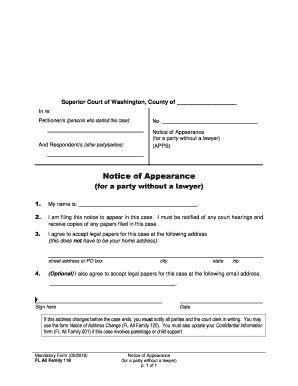
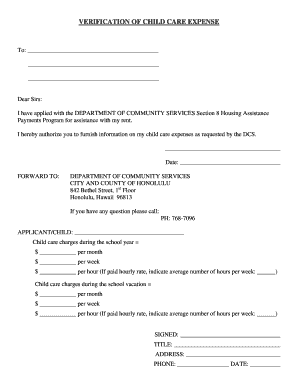
alachua county unlawful detainer form Preview on Page 1

Here's how it works

01. Edit your form online
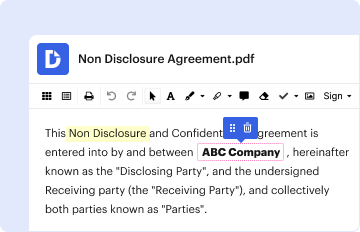
Type text, add images, blackout confidential details, add comments, highlights and more.
02. Sign it in a few clicks
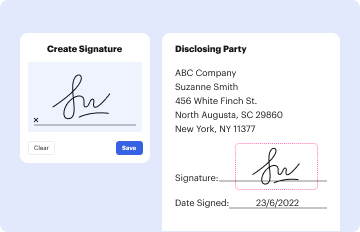
Draw your signature, type it, upload its image, or use your mobile device as a signature pad.
03. Share your form with others
Send it via email, link, or fax. You can also download it, export it or print it out.

How to use or fill out alachua county unlawful detainer form with our platform

Form edit decoration
9.5
Ease of Setup
DocHub User Ratings on G2
9.0
Ease of Use
DocHub User Ratings on G2
  1. Click ‘Get Form’ to open it in the editor.
  2. Begin by entering your personal information in the designated fields, including your name, address, and contact details. Ensure accuracy as this information is crucial for processing.
  3. Next, provide details about the property involved in the unlawful detainer action. This includes the address and any relevant identifiers that distinguish the property.
  4. In the section regarding the reason for eviction, clearly state your grounds for filing. Be concise but thorough to ensure clarity in your claims.
  5. Review all entered information carefully. Use our platform's editing tools to make any necessary adjustments before finalizing your submission.
  6. Once satisfied with the form, utilize our signing feature to electronically sign where required. This step is essential for validating your submission.
  7. Finally, save and download a copy of your completed form for your records. You can also share it directly from our platform if needed.

Start using our platform today to simplify filling out your Alachua County unlawful detainer form!

be ready to get more

Complete this form in 5 minutes or less

Get form

Got questions?

We have answers to the most popular questions from our customers. If you can't find an answer to your question, please contact us.
Contact us
Form 63 contains the form of the summons for eviction and Form 64 the additional summons to be used if unpaid rent is also sought. If the court rules that the landlord is entitled to evict the tenant and/or recover damages for unpaid rent, the court will sign a judgment in the landlords favor.
Ejectment is used when a person can claim a legal or equitable right to your property, while eviction is used when a tenant violates a lease. Unlawful detainer actions are only used when a person has no legal right to the property and no lease or agreement to pay rent.
When initiating an eviction, landlords in Florida are responsible for court filing fees, which range from approximately $185 to $400, and service of process fees to deliver the eviction notice, typically between $50 and $100. They may also incur attorney fees and costs for a process server.
Step by Step Instructions STEP 1 - Write a letter asking the person(s) you are trying to remove to leave the home and give it to the person(s) STEP 2 - Complete the forms to start the case. STEP 3 - Complaint. STEP 4 - Make copies. STEP 5 - Mailing. STEP 6- Filing your case. STEP 7 - Notifying the other party (Defendant)
How long does an unlawful detainer take in Florida? The minimum amount of time for your unlawful detainer case to be resolved is approximately 4 weeks and likely will take longer. For that rare timeframe to occur, everything must be in the plaintiffs favor and the court must act swiftly.

Security and compliance

At DocHub, your data security is our priority. We follow HIPAA, SOC2, GDPR, and other standards, so you can work on your documents with confidence.

Learn more
ccpa2
pci-dss
gdpr-compliance
hipaa
soc-compliance
be ready to get more

Complete this form in 5 minutes or less

Get form

People also ask

Initial Filing Fees Filing TypeCost Tenant eviction with no damages (Non-Monetary) $185 Tenant eviction with damages up to $15,000 $300 Tenant eviction with damages more than $15,000, up to $30,000 $400 Tenant eviction with Distress for Rent writ $270
The major difference between the two types of actions is that with an unlawful detainer, the other person cannot claim that they have any legal or equitable interest in the property. This situation often arises when a person allows a friend, romantic partner, or family member to move in with them.

Related links