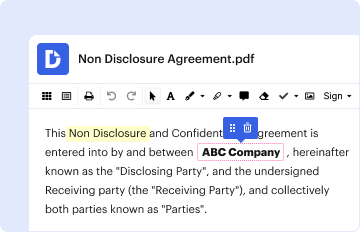
Type text, add images, blackout confidential details, add comments, highlights and more.
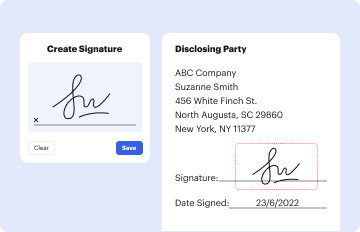
02. Sign it in a few clicks
Draw your signature, type it, upload its image, or use your mobile device as a signature pad.
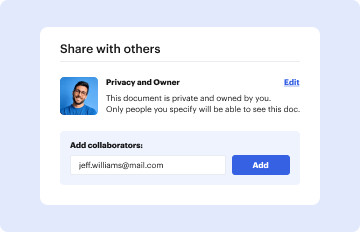
03. Share your form with others
Send ocf 1 2016 via email, link, or fax. You can also download it, export it or print it out.
How to use or fill out ocf 1 form with our platform
Ease of Setup
DocHub User Ratings on G2
Ease of Use
DocHub User Ratings on G2
Click ‘Get Form’ to open the OCF-1 form in the editor.
Begin by filling out Part 1, which requires your personal information such as name, gender, birth date, and contact details. Ensure all fields are completed clearly.
In Part 2, if applicable, provide details about your representative. This section is crucial if you are unable to complete the form yourself.
Move to Part 3 to describe the accident details and any health information. Include specifics like the date of the accident and whether it was reported to the police.
In Part 4, indicate your automobile insurance status. This helps determine which insurer is responsible for your benefits.
Complete Parts 5 through 10 by providing information about your employment status, caregiving responsibilities, income replacement details, and any other insurance coverage you may have.
Finally, review all sections for accuracy before submitting. Use our platform’s features to save a copy for your records.
Start using our platform today for free to simplify your OCF-1 form completion!
How do I write a letter to the insurance company for an accident claim?
How To Write a Professional Demand Letter for Car Accident Damage Organize Necessary Information. Provide Basic Information. Describe the Car Accident. Outline Injuries and Medical Treatment. Explain Impact on Your Life. List Financial Damages. List Your Total Demand for Compensation.
What is the best way to file a car insurance claim?
Contact your insurance company Whether you file your car insurance claim over the phone, online, through a mobile app, or with an agent, your insurer will likely request the following details: Location, date, and time of accident. Name, address, phone number, and insurance policy number for all involved in the accident.
What does OC stand for in insurance?
Over-collateralization (OC) is the provision of collateral that is worth more than enough to cover potential losses in cases of default.
What is the difference between OCF 18 and 23?
Parts 1 and 2 of the OCF-18 form must be completed by the patient and submitted to their auto insurance provider. OCF 18 is a treatment plan, while OCF 23 confirms treatment under the Minor Injury Guideline which automatically pays the treatment facility up to $3,500.
What is OCF 24?
The OCF-24 form is used to capture information about minor injuries sustained in a vehicle accident.
ocf forms
OCF-3OCF-2 formOCF-1 form PDFOCF-5 formOCF-23OCF FormsOCF-1 Fillable FormOCF 1 mva
Security and compliance
At DocHub, your data security is our priority. We follow HIPAA, SOC2, GDPR, and other standards, so you can work on your documents with confidence.
OCF forms (Ontario Claim Form) are standardized documents required in Ontarios auto insurance system, particularly for accident benefits claims.
What does OCF stand for in finance?
An OCF-18 is a treatment and assessment plan used for patients with injuries that are not suitable for treatment under the Minor Injury Guideline (MIG). To learn which patients are eligible for treatment under the MIG, refer to the Statutory Accident Benefits Schedule (SABS), Section 3 (Definitions and Interpretation).
ocf1
uc 1054809F
Justification for adding/changing course: to identify major or minor program; to more accurately reflect course content/level.
Page 1. Guidance Document. Contaminated Sediments Remediation. Remedy Selection for Contaminated Sediments. August 2014. Prepared by. The Interstate TechnologyRead more
Cookie consent notice
This site uses cookies to enhance site navigation and personalize your experience.
By using this site you agree to our use of cookies as described in our Privacy Notice.
You can modify your selections by visiting our Cookie and Advertising Notice.