
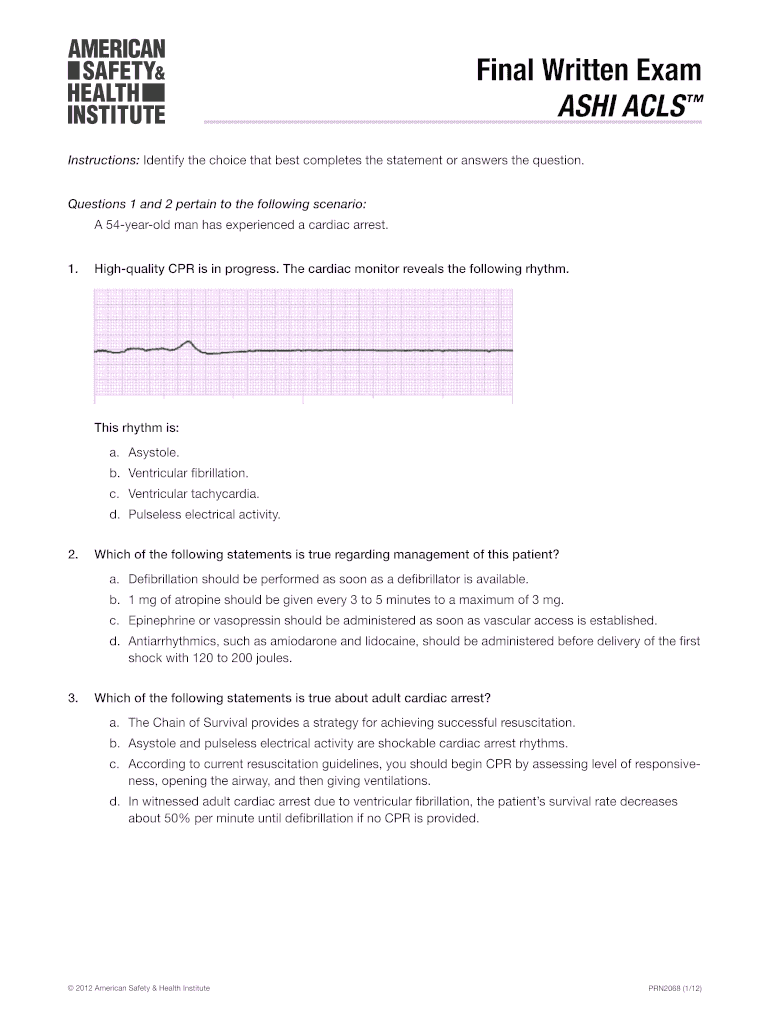







Overview of AHA ACLS Post Test Answer Key 2021
The AHA ACLS (Advanced Cardiovascular Life Support) Post Test Answer Key for 2021 is vital for healthcare professionals who have completed the ACLS course. This test evaluates one's understanding of advanced cardiac life support protocols, which include crucial life-saving techniques in emergency situations.
Content of the AHA ACLS Post Test
The post-test consists of multiple-choice questions that cover a variety of topics essential for effective patient management in life-threatening scenarios. Key areas of focus include:
- CPR Techniques: Knowledge of high-quality cardiopulmonary resuscitation, including proper hand placement and compression rates.
- Defibrillation Protocols: Understanding indications for use of an automated external defibrillator (AED) and how to operate it effectively.
- Medication Administration: Familiarity with various emergency medications, their indications, dosages, and side effects.
- Rhythm Identification: Ability to recognize and interpret cardiac rhythms on an ECG, including arrhythmias that may require intervention.
- Acute Coronary Syndromes: Approaches to identify symptoms and initiate treatment strategies for conditions such as myocardial infarction.
Structure of the ACLS Post Test
Typically, the AHA ACLS Post Test comprises approximately 50 questions designed to assess critical knowledge areas.
- Question Format: Each question presents a clinical scenario requiring the test taker to choose the correct response from several options.
- Scoring: A passing score usually requires correctly answering a minimum percentage of questions, often 70% or higher.
Importance of the Answer Key
Access to the answer key serves several purposes for participants:
- Self-Assessment: Allows individuals to gauge their understanding and identify areas of weakness to improve further.
- Study Aid: Supports ongoing education by providing correct answers that can be cross-referenced with study materials.
- Certification Requirements: Successful completion of the post-test, along with correct answers, is often necessary for obtaining or renewing ACLS certification.
How to Access the AHA ACLS Post Test Answer Key
The answer key for the ACLS post-test can typically be obtained through:
- Official AHA Website: Participants may find resources directly on the American Heart Association's website or through affiliated training organizations.
- Training Provider: Institutions offering the ACLS training course often provide the answer key as part of course materials or upon request.
Typical Questions Found in the Test
The AHA ACLS post-test generally contains questions similar to the following:
-
What is the recommended depth of chest compressions for an adult patient during CPR?
- A comprehensive understanding of the American Heart Association guidelines is required, as the standard is at least two inches in depth.
-
When should epinephrine be administered during cardiac arrest?
- Recognizing the urgency and frequency of epinephrine administration according to the latest ACLS guidelines demonstrates critical knowledge.
-
What is the first step in treating a patient presenting with a suspected stroke?
- Identification of stroke using the FAST method (Face drooping, Arm weakness, Speech difficulties, Time to call 911) is crucial.
Conclusion: Leveraging the AHA ACLS Post Test Answer Key
Healthcare professionals who engage with the AHA ACLS post-test and utilize the answer key can better prepare themselves for real-world emergency situations. This resource not only reinforces vital knowledge but also aligns with continued commitment to ongoing professional development in critical care.
Recommended Study Practices for ACLS Exam Preparation
Effective preparation strategies for the ACLS exam can enhance knowledge retention and confidence during the evaluation process:
- Review Course Materials Regularly: Frequent revisits to course handouts and guides solidify understanding of key concepts and protocols.
- Participate in Practice Scenarios: Engaging in simulation scenarios can help apply knowledge practically and develop critical thinking under pressure.
- Form Study Groups: Collaborating with peers allows for discussion and clarification of complex topics, fostering a deeper understanding.
By implementing these practices, test-takers can optimize their preparation and increase their chances of success in obtaining an ACLS certification.




