




01. Edit your mt 199 form online
Type text, add images, blackout confidential details, add comments, highlights and more.

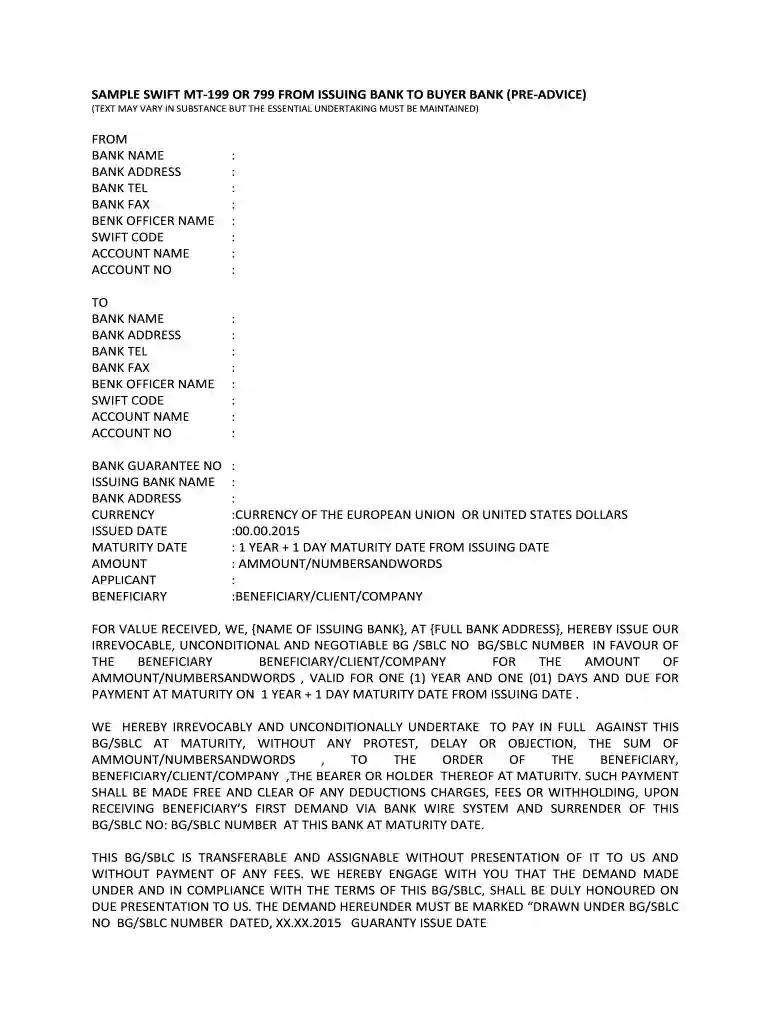
Type text, add images, blackout confidential details, add comments, highlights and more.

Draw your signature, type it, upload its image, or use your mobile device as a signature pad.

Send mt199 via email, link, or fax. You can also download it, export it or print it out.
The MT 199 format is a specific type of SWIFT message that financial institutions use for interbank communications related to treasury services, information requests, and various financial transactions. This message serves as a free-format text for messaging about specific instructions, queries, or updates that do not fit other standardized categories. Understanding the components and function of the MT 199 format is critical for banking professionals involved in international transactions.
The MT 199 message is characterized by certain features that distinguish it from other message types within the SWIFT network. Below are the core elements of this format:
Understanding these features is essential for drafting, interpreting, and processing MT 199 messages efficiently.
MT 199 serves several practical purposes in the banking and financial industry:
Practical scenarios involve banks using MT 199 to clarify transaction discrepancies or confirm changes in procedures due to regulatory changes.
The example structure of an MT 199 message illustrates how banks convey information effectively:
{1:F01BANKUS3NXXX0000000000}{2:O1991210120910BANKUS3NXXX0000000000000000}{4: :20:234567 :21:XYZ123 :79:Please confirm receipt of the payment. }
This structure allows for clear communication among financial entities across the globe, adhering to SWIFT standards.
While the MT 199 format is flexible in content, it must still comply with industry regulations and SWIFT messaging standards. Financial institutions should ensure that:
Institutions should be aware of any relevant compliance guidelines, such as those from the Financial Transactions and Reports Analysis Centre of Canada (FINTRAC) or the Financial Crimes Enforcement Network (FinCEN) in the United States.
Comparing MT 199 to similar message types, such as MT 103 and MT 202, highlights its unique role:
Understanding these differences assists banking professionals in selecting the appropriate message type for their communications.
Financial institutions preparing to use MT 199 should consider the following:
Adopting these practices helps banks utilize the MT 199 format effectively, ensuring seamless communication within the global banking network.
At DocHub, your data security is our priority. We follow HIPAA, SOC2, GDPR, and other standards, so you can work on your documents with confidence.
Including: MT Scope MT Format Specifications MT Network Validated 199 Free Format Contains information for Y 2,000 N Message which no otherRead more
MT 199 free format Society for Worldwide Interbank Financial Telecommunication (SWIFT) message from the remitting financial institution. The SWIFT messageRead more


