Ho chunk k nation form 2026

Get Form
ho chunk k nation form Preview on Page 1

Here's how it works

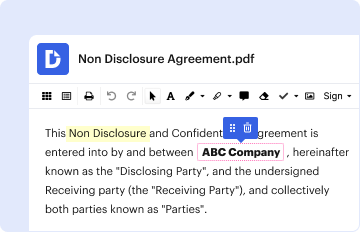
01. Edit your form online
Type text, add images, blackout confidential details, add comments, highlights and more.
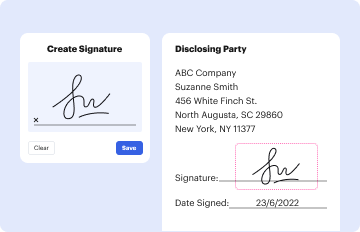
02. Sign it in a few clicks
Draw your signature, type it, upload its image, or use your mobile device as a signature pad.
03. Share your form with others
Send it via email, link, or fax. You can also download it, export it or print it out.

How to use or fill out ho chunk k nation form with our platform

Form edit decoration
9.5
Ease of Setup
DocHub User Ratings on G2
9.0
Ease of Use
DocHub User Ratings on G2
  1. Click ‘Get Form’ to open the ho chunk k nation form in the editor.
  2. Begin by entering the student's full name and Ho-Chunk Nation enrollment number in the designated fields. Ensure accuracy as this information is crucial for processing.
  3. Fill in the date of birth, date of application, and parent/guardian details. This section is essential for identifying the applicant's eligibility.
  4. Complete the mailing address, city, state, zip code, and school district fields. Providing accurate contact information ensures you receive all communications regarding your application.
  5. In the Grant Request Information section, specify the type of grant request (e.g., field trip fees) and enter the amount requested. Be clear about whether it’s a payment or reimbursement.
  6. For Household Information, check one box to indicate your relationship to the applicant and provide necessary details for each family member listed.
  7. Sign and date the Certification Statement and Program Compliance sections to confirm that all information provided is true and complete.

Start filling out your ho chunk k nation form online for free today!

be ready to get more

Complete this form in 5 minutes or less

Get form

Got questions?

We have answers to the most popular questions from our customers. If you can't find an answer to your question, please contact us.
Contact us
The Ho-Chunk Nation is comprised of twelve clans, or family groups, in two distinct moieties (complementary tribal subdivisions) Those-who-are above (Thunder, Warrior, Eagle and Pigeon), and Those-who-are-on-earth (Bear, Buffalo, Deer, Wolf, Elk, Fish, Water Spirit, and Snake) each with distinct responsibilities
Culture and beliefs have sustained the Ho-Chunk Nation for centuries and today make it one of the strongest Native American Tribes in the United States. The tribes elders and their devotion to passing along traditions to younger generations create a solid base for this group of 7,752 citizens.
The Winnebago Tribe of Nebraska (Ho-Chunk: Nįįoc Hoocąk) is one of two federally recognized tribes of Ho-Chunk, along with the Ho-Chunk Nation of Wisconsin. Tribe members often identify as Hoocągra, meaning People of the Parent Speech in their own language. It is a Siouan language.
Settled in permanent villages of dome-shaped wickiups (wigwams), the Ho-Chunk cultivated corn (maize), squash, beans, and tobacco. They also participated in communal bison hunts on the prairies to the southwest. Traditionally, the Ho-Chunk were divided into clans that traced membership through the male line.
The Winnebago Tribe of Nebraska has a written constitution and is governed by an elected nine-person council. Since 1992 the Winnebago tribe has owned and operated the WinnaVegas on its lands in Iowa.

Security and compliance

At DocHub, your data security is our priority. We follow HIPAA, SOC2, GDPR, and other standards, so you can work on your documents with confidence.

Learn more
ccpa2
pci-dss
gdpr-compliance
hipaa
soc-compliance

People also ask

The army attempted to remove the tribe to the Neutral Ground in 1841, but many Ho-Chunk simply came back to Wisconsin. The Ho-Chunk faction that did remove to the Neutral Ground later went to Minnesota, then South Dakota, and finally the government gave them a reservation in Nebraska in 1865.
Ho-Chunk can be glossed as either Big Voice or Big Fish, Ho being a homonym; the translation big really means ancestral or primordial. They also are closely related linguistically to the Quapaw, Omaha, and Ponca.

Related links