






Definition and Meaning of the Death Planning Workbook
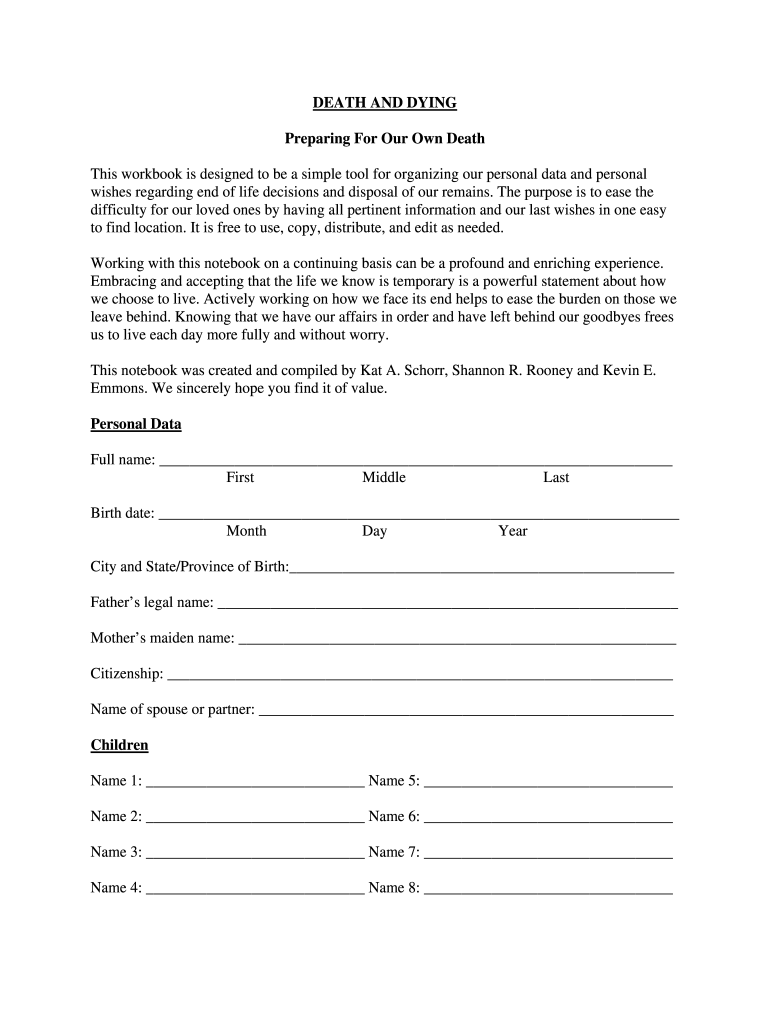
The death planning workbook serves as a comprehensive document designed to help individuals organize vital information related to their end-of-life wishes. This workbook consolidates critical details about medical decisions, financial data, funeral preferences, and postmortem arrangements, streamlining the planning process. It aims to ease future burdens on loved ones by ensuring that important decisions are documented and easily accessible.
Purpose and Importance
- Facilitates Decision-Making: The workbook encourages users to thoughtfully consider and articulate their end-of-life wishes, which helps in making informed choices regarding their care and legacy.
- Reduces Family Uncertainty: By consolidating pertinent information, it minimizes confusion and uncertainty for family members during difficult times, ensuring they can honor the individual’s preferences.
- Comprehensive Coverage: The resource encompasses various essential topics, including legal, medical, and financial aspects, ensuring a holistic approach to end-of-life planning.
How to Use the Death Planning Workbook
Using the death planning workbook involves a straightforward process aimed at capturing all necessary details concerning your preferences and wishes.
Steps to Follow
- Gather Documentation: Collect important documents such as medical records, financial statements, and legal documents (e.g., wills, advance directives).
- Complete Each Section: The workbook is structured into sections addressing different aspects of planning. Take your time to fill out each section thoroughly.
- Reflect on Your Wishes: Consider each question or prompt thoughtfully, ensuring you capture your true desires regarding medical care, funeral arrangements, and other end-of-life decisions.
- Share with Trusted Individuals: After completion, share the workbook with family members or trusted friends to ensure they are aware of your preferences.
- Review Regularly: Regularly revisit and update the workbook as circumstances change, such as changes in health or personal relationships.
Key Elements of the Death Planning Workbook
The death planning workbook typically includes several key components that help users articulate their preferences effectively.
Main Components
- Personal Information: Basic information, including your name, address, and emergency contacts.
- Medical Care Preferences: Detailed sections to outline your preferences for medical treatment, including do-not-resuscitate (DNR) orders and preferences for palliative care.
- Financial Matters: Spaces for recording financial assets, outstanding debts, and contact information for financial advisors.
- Funeral Instructions: Guidelines for your desired funeral arrangements, including location, type of service, and specific wishes for burial or cremation.
- Postmortem Wishes: Sections addressing what you wish to happen with your body and any specific rituals or traditions you wish to be followed.
Examples of Using the Death Planning Workbook
Real-world scenarios illustrate how completing a death planning workbook can be beneficial for various individuals and families.
Case Studies
- John, A Retiree: After completing his workbook, John detailed his desire for a simple cremation and memorial service, which minimized stress for his family during their time of grief. His clear instructions enabled his children to respect his wishes without legal disputes.
- Samantha, a Young Mom: Samantha used the workbook to outline not only her healthcare preferences but also to designate guardianship for her children, ensuring they would be cared for according to her wishes in case of an unexpected event.
- Tom and Lisa, a Married Couple: The couple completed the workbook together, which prompted discussions about sensitive topics they hadn’t considered before. This collaborative effort not only strengthened their relationship but also ensured they were aligned on their end-of-life plans.
Legal Use of the Death Planning Workbook
Understanding the legal implications surrounding the death planning workbook is crucial for ensuring that your wishes are respected.
Legal Considerations
- Binding Directives: While the workbook itself may not be a legally binding document, associated elements, like advance directives and medical power of attorney, should be legally executed to ensure compliance with state laws.
- State-Specific Requirements: Laws about end-of-life planning can vary significantly between states. Individuals should familiarize themselves with local regulations to ensure their plans are enforceable.
- Documentation Accessibility: It’s essential to inform designated family members or legal representatives where the completed workbook and associated documents are stored to ensure they are accessible when needed.
How to Obtain the Death Planning Workbook
Various methods exist to obtain a death planning workbook, with options to suit different preferences.
Acquisition Methods
- Online Downloads: Many organizations and websites offer free end-of-life planning workbook PDFs that you can download and print. These resources often come with step-by-step guidance.
- Local Organizations: Community centers, hospices, and healthcare facilities may provide physical copies or workshops on how to complete a death planning workbook.
- Professional Services: Individuals might choose to work with estate planning attorneys who can provide personalized workbooks tailored to specific needs and legal requirements.
Important Terms Related to the Death Planning Workbook
Familiarity with key terms can enhance understanding and usage of the death planning workbook.
Key Terms to Know
- Advance Directive: A legal document specifying an individual's healthcare preferences in the event they are unable to communicate those wishes.
- Power of Attorney: A legal authorization allowing someone to make decisions on your behalf in financial or medical matters.
- Living Will: A type of advance directive that outlines your wishes regarding medical treatment in case you are terminally ill or incapacitated.
- Beneficiary: An individual designated to receive assets or benefits from an estate following death.
State-Specific Rules for the Death Planning Workbook
Recognizing the variations in state regulations is critical for effective end-of-life planning.
Overview of State Rules
- Legal Standards: Each state has specific laws governing the validity of advance directives and powers of attorney. For example, some states require notarization or witness signatures, while others do not.
- Healthcare Proxy Requirements: Some states allow individuals to appoint a healthcare proxy to make medical decisions on their behalf if they become incapacitated.
- Availability of Forms: Many states provide standardized forms for advance directives and powers of attorney, which may be used in conjunction with a death planning workbook for comprehensive coverage.
The effective use of a death planning workbook not only enhances personal reflections and decisions but also significantly aids in reducing future challenges for loved ones during times of transition.