






Definition and Meaning of the Bill of Sale in Texas
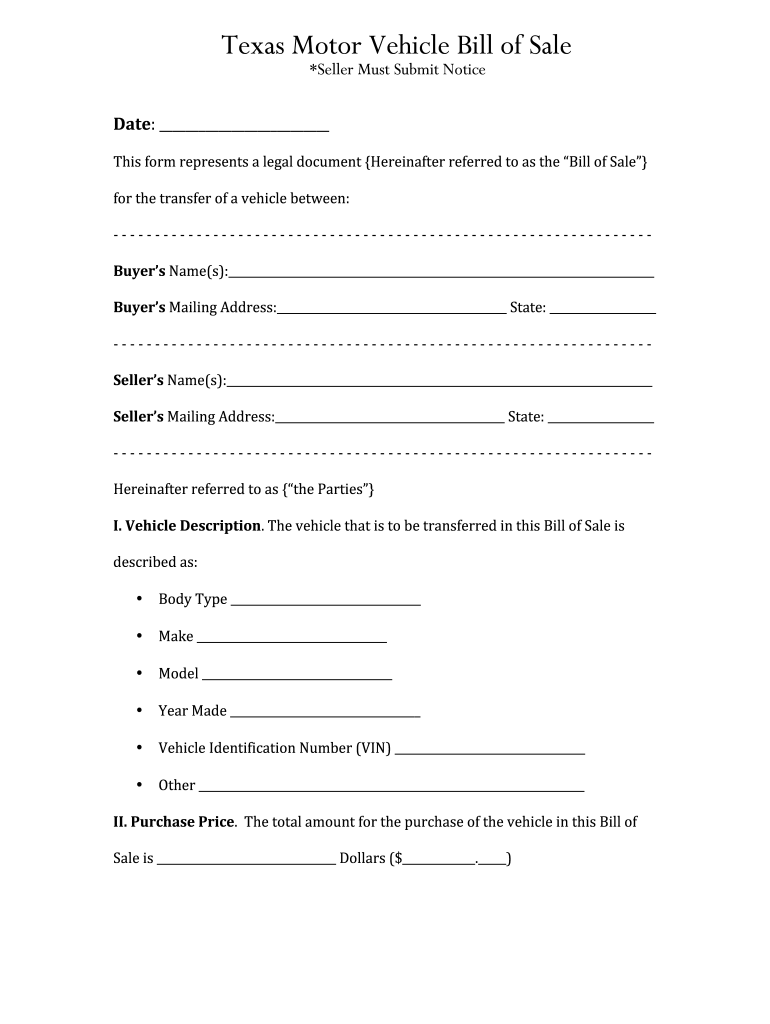
A bill of sale in Texas serves as a legal document that facilitates the transfer of ownership from a seller to a buyer for various items, most commonly vehicles, personal belongings, or real estate. This document is vital for recording essential details about the transaction and protects both parties in case of disputes.
Key components of a bill of sale include:
- Date of Sale: The exact date when the transaction occurs.
- Buyer and Seller Information: Names, addresses, and contact details of both parties.
- Description of the Item: A thorough description of the item being sold, including make, model, year, vehicle identification number (VIN) for cars, and specifics for other types of property.
- Purchase Price: The amount paid by the buyer for the item, which may be stated in digits and words.
- Signatures: The signature of both parties is required to validate the agreement.
The bill of sale may also incorporate warranties, stipulations about the condition of the item, and disclosure of any liens or encumbrances.
Steps to Complete the Bill of Sale in Texas
Completing a bill of sale in Texas requires careful attention to detail to ensure that all necessary information is included and accurately documented. Here are the essential steps to follow:
-
Gather Required Information:
- Start by collecting all necessary details, including the seller's and buyer's personal information.
- Ensure you have precise information about the item being sold, including its condition, and any relevant identification numbers.
-
Choose a Format:
- Bill of sale forms can be obtained online, or you may create a handwritten bill of sale. It's important to note that both formats are legally acceptable in Texas.
-
Fill Out the Document:
- Clearly write out all collected information, paying close attention to accuracy. Double-check details related to the item and terms of sale.
-
Review and Edit:
- Before signing, both parties should review the bill of sale to confirm that all information is correct. Make edits if necessary.
-
Sign the Document:
- Both the seller and the buyer must sign and date the document. This step formalizes the agreement and ensures each party acknowledges the terms.
-
Provide Copies:
- Each party should retain a copy of the signed bill of sale. This serves as proof of the transaction and may be particularly important for future reference or in case of disputes.
Legal Use of the Bill of Sale in Texas
In Texas, a bill of sale is legally recognized as a valid method to transfer ownership. While some items, like vehicles, require additional documentation for registration (such as an application for a title transfer), the bill of sale serves as proof of purchase and the terms of the agreement.
Factors influencing the legal validity of a bill of sale include:
- No Notarization Required: In Texas, notarization is not mandatory for a bill of sale to be considered valid. However, it may add an extra layer of security.
- Electronic Signatures: Electronic signatures are acceptable under Texas law, provided both parties consent to sign electronically, simplifying remote transactions.
- Retention of Records: It is advisable for both parties to keep their copies of the bill of sale for a minimum of four years, as this is the statute of limitations for contracts in Texas.
Key Elements of a Bill of Sale in Texas
A comprehensive bill of sale should encompass several key elements to be fully effective. These include but are not limited to:
- Identifying Information: Full names, addresses, and contact details of both parties.
- Item Description: A detailed description of the property being sold, including make, model, VIN for vehicles, or any other specific identifiers.
- Purchase Price: Clearly state the total sale price and any payment terms (e.g., full payment upon signing, or payment in installments).
- Signatures: The inclusion of both parties' signatures to confirm their agreement.
- Odometer Disclosure: For vehicles, an odometer disclosure statement may be included to ensure the mileage is recorded accurately at the time of sale.
These elements ensure that the bill of sale serves its legal purpose and protects both the buyer and the seller.
State-Specific Rules for the Bill of Sale in Texas
Texas has specific rules governing the use and requirements of a bill of sale, especially in relation to vehicle transactions.
- Document Requirement for Vehicle Sales: When selling a vehicle, the Texas Department of Motor Vehicles requires a bill of sale to complete the title transfer process.
- Odometer Disclosure: Texas law mandates that sellers provide a written odometer statement to indicate accurate mileage at the time of sale for motor vehicles.
- Liens and Encumbrances: Sellers must disclose any liens on the property being sold. Failure to do so may result in legal repercussions.
Understanding these rules can help ensure that the bill of sale adheres to legal expectations and protects the interests of both parties involved in any transaction.
Examples of Using the Bill of Sale in Texas
There are numerous scenarios where a bill of sale can be beneficial in Texas. Here are a few examples:
- Vehicle Transactions: When selling a car, the bill of sale can facilitate the transfer of ownership and protect both the seller and the buyer by documenting vehicle details and sale terms.
- Real Estate Sales: While a more complex document is typically involved in real estate transactions, a bill of sale may be useful for transferring personal property included in the sale.
- Sales of Goods: For any sales involving personal items, such as electronics or furniture, a bill of sale helps clarify conditions of sale and item specifics.
By utilizing a bill of sale in these scenarios, parties ensure clarity, protection, and documentation of their agreements, contributing to smoother transactions with less potential for conflict.
Who Typically Uses the Bill of Sale in Texas
The bill of sale in Texas is used by various individuals and organizations, including:
- Private Sellers and Buyers: Individuals selling personal items, vehicles, or goods often use a bill of sale for clarity and proof of transaction.
- Businesses: Companies involved in selling goods or services may require a bill of sale for inventory items or equipment sales.
- Estate Sales: Executors or beneficiaries managing estate sales may utilize a bill of sale to document the sale of items from an estate.
- Consignment Shops: Shops that sell items on behalf of the original owner often employ bills of sale to document transactions.
In essence, anyone engaged in the transfer of ownership of goods, whether individuals or businesses, can benefit from using a bill of sale to define the terms of their transactions.