




01. Edit your cna charting online
Type text, add images, blackout confidential details, add comments, highlights and more.

Type text, add images, blackout confidential details, add comments, highlights and more.

Draw your signature, type it, upload its image, or use your mobile device as a signature pad.

Send adl flow sheet via email, link, or fax. You can also download it, export it or print it out.
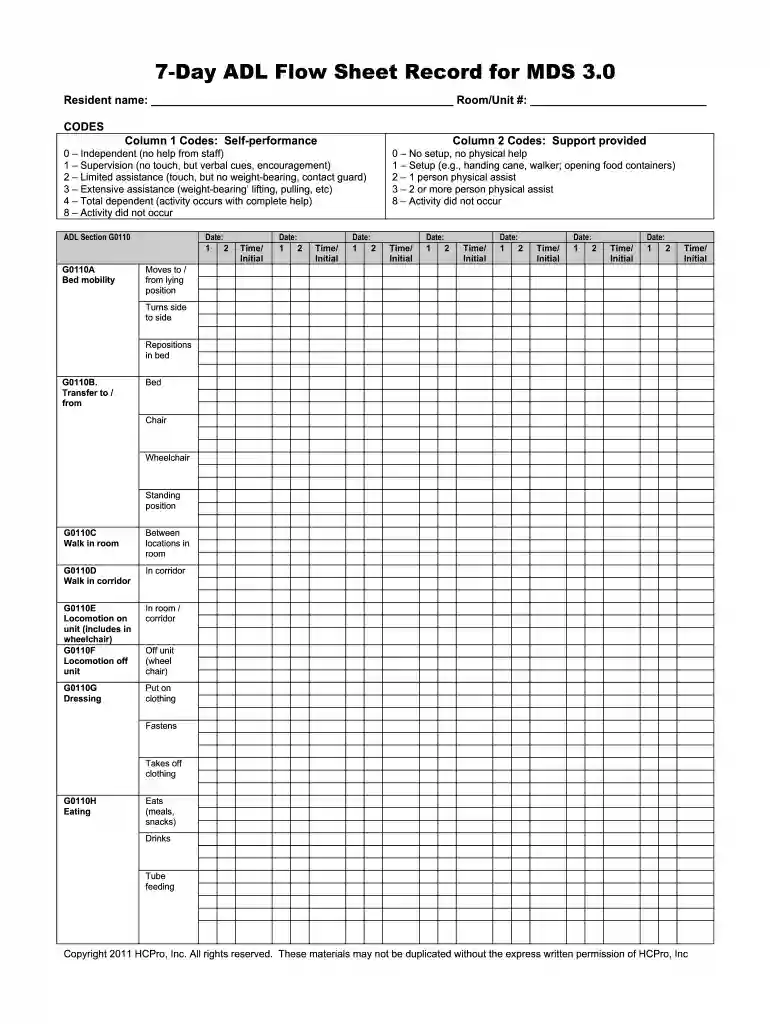
A CNA flow sheet template serves as a standardized document used by Certified Nursing Assistants (CNAs) to record essential information related to patient care within long-term care facilities. This template is designed to streamline the documentation process, ensuring that critical data regarding activities of daily living (ADLs) is accurately and efficiently captured. The flow sheet typically includes sections for bed mobility, transfers, mobility, dressing, eating, toileting, personal hygiene, and continence management. Each section allows CNAs to indicate the level of assistance provided, helping healthcare teams to monitor patient progress and care needs over time.
The use of these templates enhances the quality of care by:
Utilizing a CNA flow sheet template involves several key steps. The template is structured to enhance clarity and coherence in documenting patient information. Here is a step-by-step guide on how to effectively use the CNA flow sheet template:
Familiarize Yourself with the Sections: Understand the layout of the flow sheet, which typically includes different sections for each type of ADL. Each section is focused on specific tasks that the patient may require assistance with.
Daily Observation Recording: At the beginning of each shift, review the patient's care plan and observe their abilities. Record any changes in their condition or needs.
Indicate the Level of Assistance:
Sign and Date: After completing the charting for the day, sign and date your entries to ensure accountability.
Review and Adjust: Regularly review the completed flow sheets to identify patterns in patient behavior or health status. Make necessary adjustments to the patient care plan based on observations noted in the flow sheet.
Completing the CNA flow sheet template should be approached methodically to ensure comprehensive documentation. Follow these steps carefully:
Gather Necessary Information: Before filling out the template, gather all relevant patient information and care instructions. This includes the patient's medical history and current care plan.
Fill in Patient Details: Start by entering the patient's name, room number, and the date of the assessment.
Document Daily Activities: For each ADL:
Communicate Observations: If significant changes are noted, communicate these observations with the nursing staff and document the discussion.
Submit the Completed Sheet: After all entries are made, submit the flow sheet per your facility's protocol, ensuring it is accessible to the entire healthcare team.
The CNA flow sheet template is an essential tool within healthcare settings, particularly long-term care facilities. Key reasons for its usage include:
Enhancing Patient Care: By meticulously documenting ADLs, CNAs can ensure that all patient needs are met and that care is tailored according to their individual requirements.
Facilitating Communication: The flow sheet serves as a common reference point among the care team, improving communication and coordination among staff members.
Supporting Regulatory Compliance: Accurate documentation aids facilities in meeting regulatory standards and ensures a consistent level of care is maintained for residents.
Tracking Progress: Longitudinal data collected via flow sheets provides insights into patient progress over time, enabling better-informed care decisions.
A comprehensive CNA flow sheet includes several key elements that facilitate effective documentation. Familiarity with these components is vital for optimal use:
Patient Information Section: Contains core details such as the patient’s name, identification number, room number, and date of assessment.
Activities of Daily Living (ADLs): A designated space for each of the ADLs to be assessed, such as:
Performance Level Codes: Standardized coding system indicating the degree of independence or assistance required.
Notes Section: Space for additional remarks or observations that may impact patient care, such as changes in health status or mood.
Signature Line: A place for CNAs to sign and date each entry, ensuring accountability and traceability.
Each of these elements contributes to an efficient workflow and enhanced patient care in healthcare settings.
At DocHub, your data security is our priority. We follow HIPAA, SOC2, GDPR, and other standards, so you can work on your documents with confidence.
Feb 1, 2021 This compendium is not intended as guidance from CMS. It does not replace or serve as a substitute for. CMS requirements and policy.Read more
This template allows you to record and manage all the necessary patient information in one place. Designed for nursing assistants and healthcare professionals,Read more


