







Definition and Meaning of the Harassment & Title IX Complaint Form
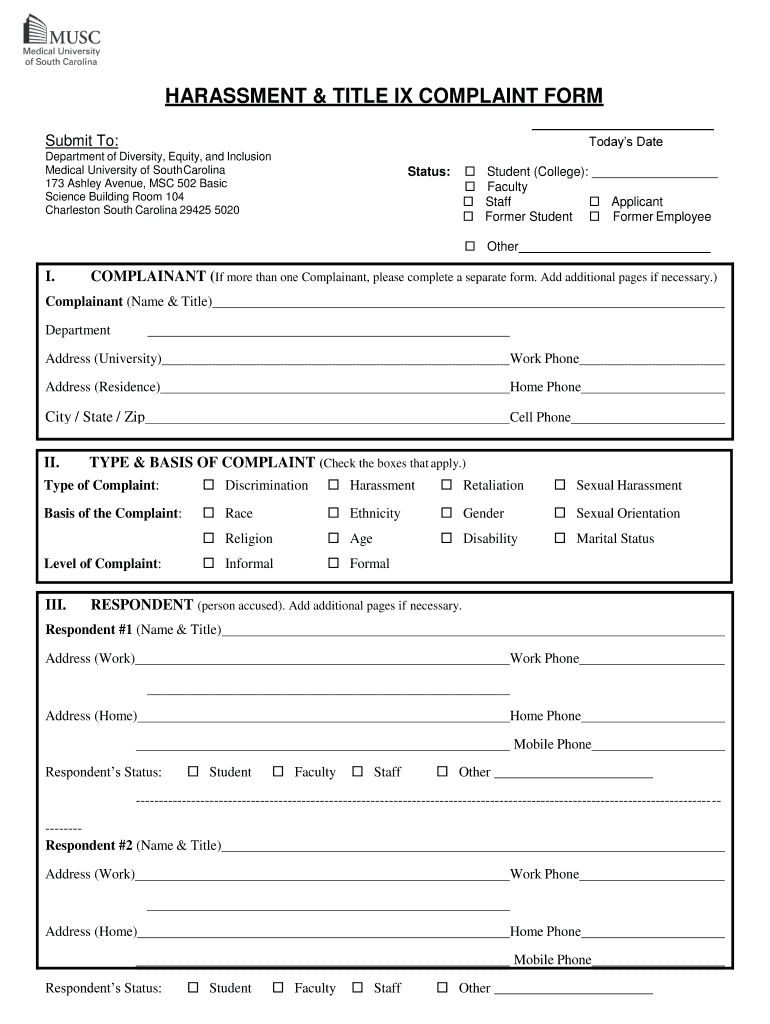
The Harassment & Title IX Complaint Form serves as an official document enabling individuals to report incidents of discrimination, harassment, or retaliation based on sex within educational institutions. The form is grounded in Title IX of the Education Amendments of 1972, which prohibits sex-based discrimination in any educational program or activity receiving federal financial assistance. Understanding the form's definition is crucial, as it lays the foundation for the procedures that follow in addressing complaints effectively.
This form typically encompasses:
- Complainant Information: Details about the individual filing the complaint, including contact information.
- Respondent Information: Information about the accused party, typically a student or staff member of the institution.
- Description of Incident: A section where the complainant describes the nature of the harassment or discrimination, including specific dates, locations, and witnesses.
- Supporting Documents: An area to attach any relevant evidence such as emails, text messages, or other documentation that supports the complaint.
The ultimate goal of this form is to facilitate a clear, organized method for reporting grievances while ensuring a thorough investigation.
How to Use the Harassment & Title IX Complaint Form
Utilizing the Harassment & Title IX Complaint Form involves a series of steps designed to ensure that your concerns are documented and addressed appropriately. The following outlines how to effectively navigate this process:
-
Preparation: Before completing the form, gather all relevant information, including details of the incidents and any supporting documentation. This preparation will provide clarity and strengthen your complaint.
-
Accessing the Form: Depending on the educational institution, the Harassment & Title IX Complaint Form can often be obtained online through the institution's website. Some may also provide hard copies available at designated offices.
-
Filling Out the Form: Carefully fill in each section of the form, ensuring accuracy. Focus on providing a detailed account of the incidents, including who, what, where, and when, as this information is vital for the investigation.
-
Submission: After completing the form, submit it as instructed. Different institutions may have varying methods of submission; options generally include online submission through the institution's portal, mailing it to the Title IX coordinator, or delivering it in person.
-
Follow-Up: After submission, it may be necessary to follow up with the institution to confirm that your complaint has been received and to inquire about the next steps in the investigation process.
Steps to Complete the Harassment & Title IX Complaint Form
Completing the Harassment & Title IX Complaint Form requires attention to detail and accuracy. Following these steps can facilitate a smoother filing process:
Step 1: Download or Obtain the Form
Visit your educational institution's website or designated office to download or request a hard copy of the Harassment & Title IX Complaint Form. Ensure you have the most current version to avoid any issues during submission.
Step 2: Read the Instructions
Carefully review any instructions provided with the form. Understanding the requirements and what information is needed will streamline the completion process.
Step 3: Fill Out the Complainant Section
Provide your personal information accurately. This section typically includes:
- Full Name
- Contact Information
- Relationship to the Institution (e.g., student, employee)
Step 4: Complete the Respondent Section
Fill out the details of the individual you are filing the complaint against. Include full names and specific roles within the institution whenever possible.
Step 5: Detail the Incident
In a comprehensive narrative, describe the incident that prompted your complaint. Include:
- Date(s) of Incident
- Location
- Specific Actions or Behaviors that Occurred
- Names of Any Witnesses
Step 6: Attach Supporting Documents
If you possess any evidence supporting your claim, such as text messages, emails, or documents, make sure to attach them consistently with the form’s guidance.
Step 7: Review and Make Copies
Before submitting, review the completed form to ensure all information is correct. Make a duplicate for your records to maintain a personal log of the formal complaint.
Step 8: Submit the Form
Follow the submission guidelines provided on the form. Ensure that you submit the form by any specified deadlines and via the correct method.
Important Terms Related to the Harassment & Title IX Complaint Form
Familiarizing yourself with key terms related to the Harassment & Title IX Complaint Form enhances understanding of the process and legal context. Some critical terms include:
- Complainant: The individual who files the complaint regarding harassment or discrimination.
- Respondent: The individual or entity against whom the complaint is filed.
- Investigation: The process undertaken by the institution to assess the validity of the claims made in the complaint.
- Retaliation: Any adverse action taken against a complainant for filing a complaint or participating in an investigation.
- Supportive Measures: Services or accommodations provided to students affected by harassment to help them continue their education.
Understanding these terms can clarify the legal and procedural frameworks guiding the filing and resolution processes.
Legal Use of the Harassment & Title IX Complaint Form
The Harassment & Title IX Complaint Form holds significant legal weight, as it is part of the institution's obligation to comply with Title IX regulations. Institutions must take all complaints seriously and ensure that the process adheres to legal standards. Key legal aspects include:
- Requirement for Fair Process: Institutions must investigate complaints promptly and impartially, ensuring all parties have the opportunity to present their cases.
- Protection Against Retaliation: The law prohibits retaliation against individuals who file complaints or participate in investigations, which helps encourage reporting.
- Document Retention: Institutions are typically required to maintain records of complaints, investigations, and outcomes to ensure compliance with federal regulations and institutional policies.
Understanding these legal frameworks is vital for both complainants and respondents in navigating the complaint process effectively.




