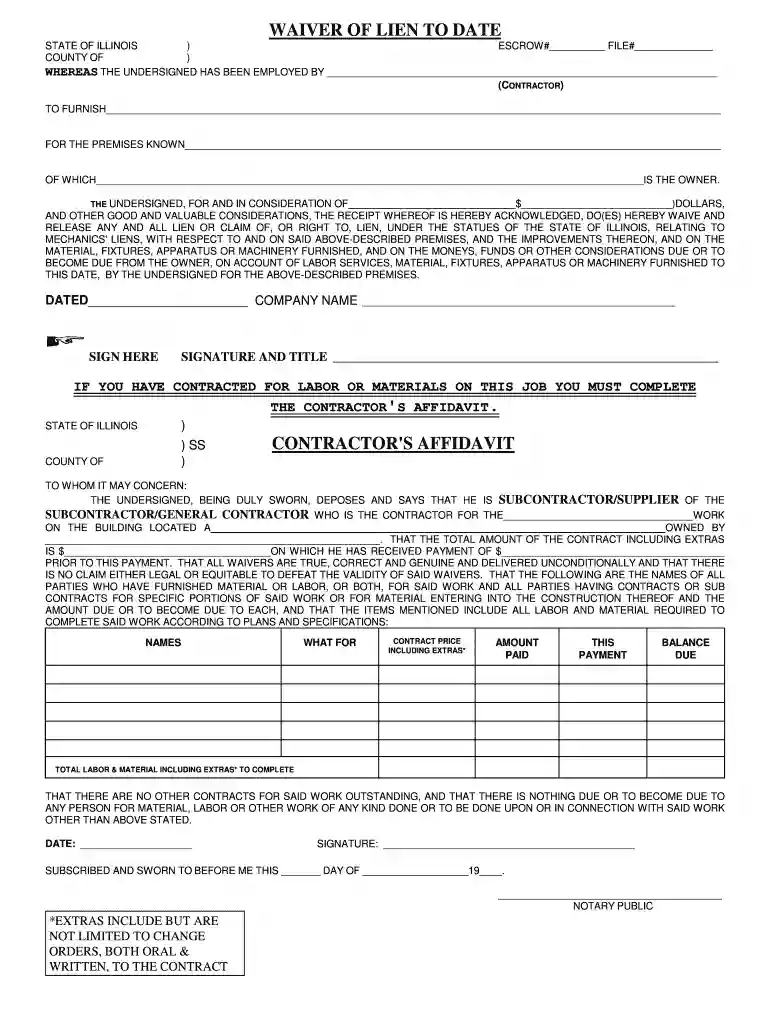
Definition and Purpose of the Waiver of Lien to Date
The waiver of lien to date is a legal document that allows a contractor or supplier to formally relinquish their right to place a mechanics' lien on a property for work performed or materials supplied up until a specified date. This waiver typically serves as a protection for property owners and developers, assuring them that they are not liable for any unpaid work or materials provided prior to that date.
- Mechanics' Lien Overview: A mechanics' lien is a security interest granted to contractors and suppliers in the event of non-payment. It allows them to claim a right against the property until payment is made. A waiver of lien to date specifically indicates that any rights to this claim up to a certain point are waived.
- Key Usage: The document is often used in construction projects to facilitate smooth transactions and clear any potential disputes regarding payment. By providing this waiver, contractors acknowledge they have been paid or agree not to pursue payment claims beyond the stipulated date.
This waiver ensures that property owners have peace of mind, knowing that they will not face future claims for any unpaid services or materials provided before the waiver date.
Essential Steps to Use the Waiver of Lien to Date
Utilizing a waiver of lien to date properly is crucial in construction and contracting scenarios. Here are the steps you need to follow to ensure it is used effectively:
- Identify the Parties Involved: Clearly identify the contractor, property owner, and any other relevant parties. This information should be present on the waiver.
- Specify the Payment Received: Include details about the payment that has been made, ensuring clarity on the amounts and the date.
- Draft the Waiver: Draft the waiver document, incorporating all necessary legal language. Many contractors can use templates that align with local laws, such as the Illinois conditional lien waiver form.
- Include a Notary Section: If required by state law, include a notary section to certify the signatures involved.
- Distribute the Waiver: Provide copies of the signed waiver to all parties involved, including the property owner, to ensure everyone has a record of the transaction.
Legal and Practical Implications of the Waiver of Lien to Date
Understanding the legal implications of a waiver of lien is paramount for contractors and property owners alike. The implications of the waiver can be summarized as follows:
- Legally Binding Nature: A waiver of lien to date becomes a legally binding document upon signature by all parties involved. Once signed, the contractor forfeits the ability to file a lien for any work performed leading up to the specified date.
- State Regulations: Each state may have specific regulations governing waiver forms. For instance, the rules in Illinois differ slightly from those in neighboring states, emphasizing the importance of using state-specific forms or guidelines.
- Contractual Obligations: The waiver can affect contractual obligations post-signing. If the project prompts further work beyond the waiver's cutoff date, a new waiver may be necessary to secure future payments and protect the right to claim for services beyond that point.
Important Terms Associated with the Waiver of Lien to Date
When dealing with waivers of lien, it is essential to understand the common terminology to prevent misunderstandings:
- Conditional Waiver: This indicates that the waiver only applies if the payment has been received. If payment is not made, the waiver does not take effect.
- Unconditional Waiver: An unconditional waiver means that the right to file a lien is revoked regardless of whether payment has been received.
- Partial Waiver: A partial waiver specifies that for a particular period or a specific amount, the contractor waives their lien rights but retains them for future claims.
Who Typically Uses the Waiver of Lien to Date
The waiver of lien to date is primarily used in the construction industry but extends to various parties involved in property development:
- Contractors and Subcontractors: They utilize the waiver to acknowledge payment received while protecting both their interests and the property owners against potential lien claims.
- Suppliers: Vendors supplying materials can also issue waivers to confirm they have received payment for provided goods.
- Property Owners: Homeowners and commercial real estate developers often request these waivers to ensure they retain clear title to their properties without the risk of unexpected lien claims.
Property owners and contractors alike benefit from understanding how to appropriately utilize these waivers within their contractual agreements. Proper execution ensures a smoother operational process and mitigates the potential for disputes over unpaid work or materials.

Examples of Situations Involving the Waiver of Lien to Date
Real-world scenarios illustrate the application and necessity of a waiver of lien to date:
- Construction Project Completion: A contractor completes a portion of work on a residential renovation and receives payment up to that date. They issue a waiver of lien to the homeowner to confirm that they cannot file a lien for services rendered before the date of the waiver.
- Supplier Payment Confirmation: A materials supplier delivers bricks and concrete for a commercial project, receiving payment on the delivery day. They provide a waiver of lien to the general contractor, ensuring that the project can continue without fear of liens on the property due to unpaid materials.
These instances underscore the importance of maintaining clear documentation and communication between all parties to foster transparency and legal compliance in construction and contracting.