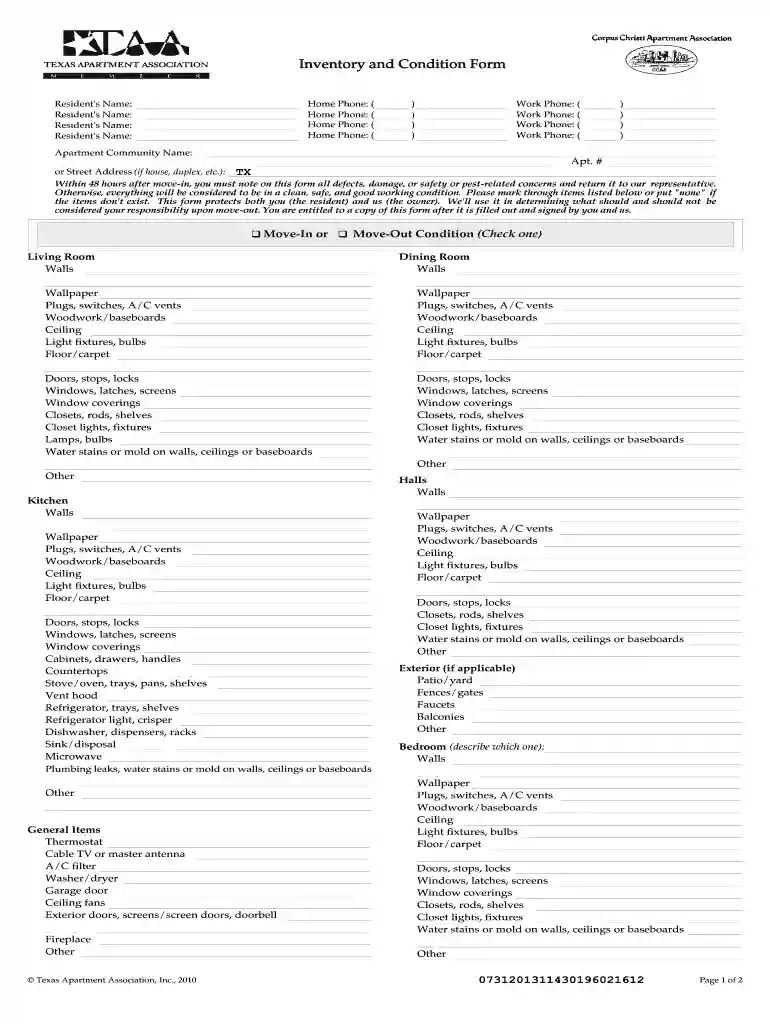
Taa inventory and condition form 2026

Get Form
taa inventory and condition form Preview on Page 1

Here's how it works

01. Edit your taa inventory and condition form online
Type text, add images, blackout confidential details, add comments, highlights and more.

02. Sign it in a few clicks
Draw your signature, type it, upload its image, or use your mobile device as a signature pad.

03. Share your form with others
Send texas apartment association inventory and condition form via email, link, or fax. You can also download it, export it or print it out.

Definition and Overview of the TAA Inventory and Condition Form

The TAA inventory and condition form is a critical document utilized by both residents and property owners in the state of Texas. It is designed to record the existing condition of a rental property at the time of a resident's move-in, ensuring that any pre-existing defects, damages, or safety issues are documented. This form serves to protect the interests of both parties by providing a clear reference point for the property's state at the beginning of the lease. By documenting the inventory and conditions, it helps prevent disputes regarding damages or issues that may arise during or after the lease term.

Purpose of the TAA Inventory and Condition Form

  • Documentation of Condition: The primary purpose is to create an official record of the property's condition. Residents are encouraged to note any damages or concerns within 48 hours of moving in.
  • Resident Protection: This documentation protects residents from being held liable for damages they did not cause.
  • Owner Accountability: Owners can use the form to ensure their properties are maintained and to assess if any repairs are needed after a resident moves out.

Steps to Complete the TAA Inventory and Condition Form

Filling out the form correctly is essential for both residents and owners. Here’s a step-by-step guide to ensure accuracy:

  1. Download the Form: Obtain the latest version of the TAA inventory and condition form, which is typically available as a PDF or can be accessed through a property management platform.
  2. Review Sections Carefully: Understand each section of the form, which typically includes room-by-room assessments and safety checklists.
  3. Assess the Property:
    • Walk through each area of the apartment.
    • Note any issues like scratches on walls, broken appliances, plumbing issues, etc.
    • Be sure to include any concerns regarding safety items such as smoke detectors and carbon monoxide alarms.
  4. Use Clear Descriptions: Clearly describe any damages or concerns, using detailed terms rather than vague descriptions.
  5. Document Findings: Where applicable, use photographs to support your findings. Attach these to the form if possible.
  6. Submit the Form: If required, submit the completed form to the property owner or manager by the specified deadline.

Importance of Thoroughness

Completing the TAA inventory and condition form in detail is essential. Failure to document existing issues appropriately can lead to disputes about security deposit deductions or liability for damages later in the rental period.

Key Elements of the TAA Inventory and Condition Form

Understanding the fundamental components of this form is crucial.

  • Room-by-Room Assessment: The form often includes specific sections for each room—living room, kitchen, bathroom, etc.—where residents can record conditions.
  • Safety Checks: Includes required checks for smoke detectors, carbon monoxide detectors, and emergency exits to ensure safety compliance.
  • Pest-related Concerns: Specific sections are dedicated to identifying any pest issues such as signs of rodents or insects, which can impact living quality.
  • Damages and Defects: Detailed areas are allocated for residents to describe any visible issues like cracks, stains, or malfunctions of fixtures and appliances.

Example of a Detailed Entry

In the kitchen section, instead of noting “stains,” a more precise entry would be: “There are several water stains on the ceiling above the sink, with a visible drip mark and sagging texture.” This level of detail helps in future assessments.

Legal Use of the TAA Inventory and Condition Form

The legal standing of the TAA inventory and condition form is significant in Texas rental agreements.

  • Legally Binding: The completed form serves as a binding document that reflects the agreed-upon condition of the property. Both parties should have copies for reference.
  • Compliance with State Laws: Adhering to this process ensures compliance with Texas law, which may require landlords to document the condition of rental properties prior to occupancy.

Protecting Interests

This form protects both residents and landlords. For residents, it provides a safeguard against unjust claims of damage. For landlords, it aids in maintaining property values and accountability.

Important Terms Related to the TAA Inventory and Condition Form

Familiarity with specific terminology used within the TAA inventory and condition form can facilitate better understanding.

  • Move-In Inspection: The initial evaluation conducted when a new resident takes possession of the property.
  • Security Deposit: A monetary amount collected from the resident to cover potential damages, which must be documented in connection with the inventory form.
  • Waiver of Liabilities: Terms within the lease that define the responsibilities of both parties regarding damages not documented in the inventory form.

Clarifying Terms

Understanding these definitions not only enhances comprehension of the form but also facilitates communication between residents and landlords, ensuring clarity about responsibilities.

Examples of Using the TAA Inventory and Condition Form

Practical applications of the TAA inventory and condition form illustrate its importance.

  • At Move-In: When a family moves into a rental property, they should complete the form within 48 hours. For example, if a family notes a faulty smoke detector, they can request repairs immediately, reducing liability in case of fire-related incidents.
  • Move-Out: Prior to departing, the landlord will often reference the initial document to assess any damages. Should a resident have recorded a damaged carpet at the time of move-in, it cannot be charged against them upon move-out.
  • Legal Disputes: In cases where disputes arise regarding alleged damages, having a detailed inventory and condition form can serve as a vital piece of evidence in legal proceedings.

Conclusion

The TAA inventory and condition form is an essential tool for rental transactions in Texas, ensuring that both residents and property owners are aware of the property’s condition. Understanding how to accurately complete and utilize this form can facilitate a smoother rental experience and minimize future conflicts.

be ready to get more

Complete this form in 5 minutes or less

Get form

Security and compliance

At DocHub, your data security is our priority. We follow HIPAA, SOC2, GDPR, and other standards, so you can work on your documents with confidence.

Learn more
ccpa2
pci-dss
gdpr-compliance
hipaa
soc-compliance