




01. Edit your imo dangerous goods declaration form excel online
Type text, add images, blackout confidential details, add comments, highlights and more.

Type text, add images, blackout confidential details, add comments, highlights and more.

Draw your signature, type it, upload its image, or use your mobile device as a signature pad.

Send imo dangerous goods declaration template via email, link, or fax. You can also download it, export it or print it out.
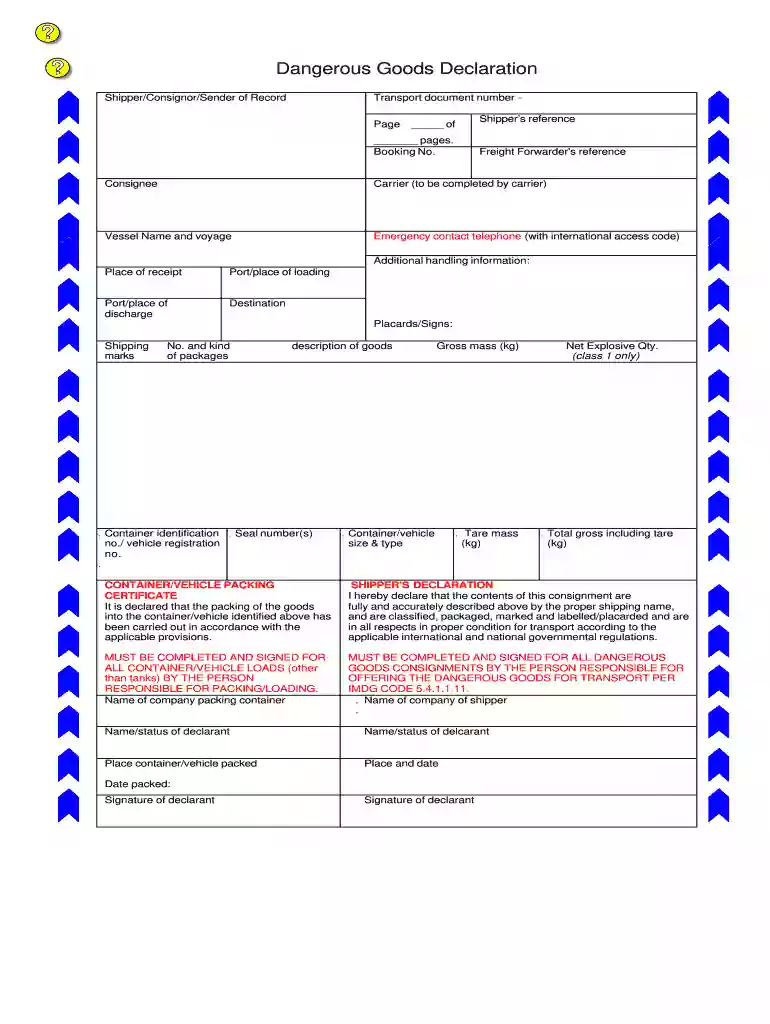
The IMO Dangerous Goods Declaration form is a critical document required for the transport of hazardous materials by sea. It is designed to comply with international maritime regulations established by the International Maritime Organization (IMO). This declaration ensures that all parties involved in the transportation of dangerous goods are informed about the nature of the materials being shipped. Proper completion of this form is essential for ensuring the safety of the vessel, its crew, and the environment.
Key components of the declaration include:
Accurate completion of the IMO declaration template helps prevent accidents and ensures compliance with safety regulations.
Completing the IMO Dangerous Goods Declaration form requires careful attention to detail and adherence to regulatory requirements. Here are the essential steps for ensuring your form is properly filled out and compliant.
Gather Required Information
Select the Correct Classification
Fill Out the Form Sections
Sign and Date the Form
Submit the Form to Appropriate Authorities
Ensuring each step is meticulously followed can significantly diminish risks associated with transporting hazardous materials.
Understanding the key elements included in the IMO Dangerous Goods Declaration form is crucial for those responsible for shipping hazardous materials. Each element contributes to the clarity and safety of the transport process.
These elements work collectively to provide a comprehensive overview of the materials being transported, thereby promoting safety and compliance.
Practical examples highlight how the IMO Dangerous Goods Declaration form is utilized in real-world scenarios. Understanding these examples can provide greater clarity for shippers and stakeholders.
Shipping Flammable Liquids: A company shipping gasoline must include the UN number (1203) and proper shipping name "Gasoline" on the declaration. Furthermore, they must specify the packaging type and quantity to comply with safety regulations.
Transporting Toxic Chemicals: If a shipment includes toxic substances such as cyanide, the declaration must capture the UN number (1586) and indicate emergency contacts who can provide information in case of an incident.
Multi-Modal Transport: When goods are transported via multiple modes, such as truck to port and then by sea, all previous forms must accompany the IMO declaration, maintaining a seamless documentation process.
These examples illustrate the critical nature of thoroughness and accuracy in completing the declaration form.
Completing the IMO Dangerous Goods Declaration form is not merely a procedural step; it is a legal requirement with significant implications for non-compliance. Failure to properly fill out and submit this declaration can result in:
Compliance with the relevant regulations significantly affects the reputation and operational efficiency of businesses involved in the transport of dangerous goods.
There are several variations and alternatives to the standard IMO Dangerous Goods Declaration form, tailored for different contexts or transport modalities. Recognizing these can help stakeholders choose the right documentation for their specific shipping needs.
Multimodal Dangerous Goods Form: This variant is used when goods are transported through different means (e.g., sea, land). It consolidates information and provides details pertinent to all transport modes in one document.
National Variations: Some countries may have specific forms based on local regulations that supplement or modify the IMO form. These must be understood and used in conjunction with international standards.
Each variation serves to address specific logistical challenges or regulatory environments while maintaining the core intent of ensuring safety and compliance during hazardous material transport.
At DocHub, your data security is our priority. We follow HIPAA, SOC2, GDPR, and other standards, so you can work on your documents with confidence.
General Information: The shippers declaration of dangerous goods is a formal, legal document. The hash lines on the side must be in red.Read more
This subpart contains requirements and procedures for submitting a notice of arrival (NOA), and a notice of hazardous condition.Read more


