Sample Monthly Air Quality Monitoring Report. AMD Toolbox 2026

Get Form
Sample Monthly Air Quality Monitoring Report. AMD Toolbox Preview on Page 1

Here's how it works

01. Edit your form online
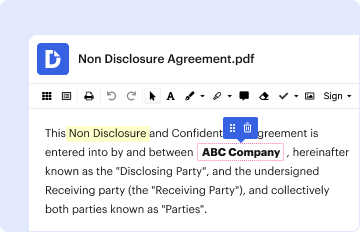
Type text, add images, blackout confidential details, add comments, highlights and more.
02. Sign it in a few clicks
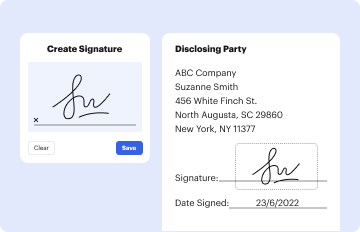
Draw your signature, type it, upload its image, or use your mobile device as a signature pad.
03. Share your form with others
Send it via email, link, or fax. You can also download it, export it or print it out.

How to use or fill out Sample Monthly Air Quality Monitoring Report. AMD Toolbox with our platform

Form edit decoration
9.5
Ease of Setup
DocHub User Ratings on G2
9.0
Ease of Use
DocHub User Ratings on G2
  1. Click ‘Get Form’ to open it in the editor.
  2. Begin by filling out the cover letter section, including the date and recipient information. Ensure that you include your organization’s name and contact details.
  3. In the 'Listing of Facilities' section, input the names and approval numbers of all facilities participating in the air quality monitoring program.
  4. For 'Continuous Monitoring Stations', list each station's name and location. This is crucial for tracking data accurately.
  5. Complete the 'Calibration and Data Submission' section by detailing any calibration reports submitted during the month.
  6. Document any notable events or exceedances in the 'Noted Events during the Month' section, providing specific dates and parameters affected.
  7. Fill out the 'Certification' section at the end of the report, ensuring that it is signed by an authorized representative.

Start using our platform today to streamline your reporting process for free!

be ready to get more

Complete this form in 5 minutes or less

Get form

Got questions?

We have answers to the most popular questions from our customers. If you can't find an answer to your question, please contact us.
Contact us
To monitor air quality, we use instruments like PM monitors, NO2 analyzers, SO2 detectors, CO sensors, and O3 monitors. And VOC analyzers, these instruments check for different pollutants in the air. Also, they are used in places like factories, cities, and indoors to keep track of air quality.
The U.S. Air Quality Index (AQI) is EPAs tool for communicating about outdoor air quality and health. The AQI includes six color-coded categories, each corresponding to a range of index values. The higher the AQI value, the greater the level of air pollution and the greater the health concern.
Particulate Monitors Also known as nephelometers, these instruments are used to monitor particulate matter such as dusts, smokes, mists, and fumes. They can be used for monitoring the respirable fraction of dust, and are small enough to use for personal exposure monitoring. Results are reported in g/m3 or mg/m3.
Air Quality Index Reports The AQI reports on five major air pollutants: ozone, particulate matter, sulfur dioxide, carbon monoxide and nitrogen dioxide. An AQI value is given for each monitoring site and pollutant.
Low-cost air pollution monitors use one or more sensors and other components to detect, monitor and report on specific air pollutants like particulate matter (PM) or carbon dioxide and/or environmental factors such as temperature and humidity.

Security and compliance

At DocHub, your data security is our priority. We follow HIPAA, SOC2, GDPR, and other standards, so you can work on your documents with confidence.

Learn more
ccpa2
pci-dss
gdpr-compliance
hipaa
soc-compliance

People also ask

The 12 parameters of ambient air monitoring typically include Particulate Matter (PM10 and PM2. 5), Nitrogen Dioxide (NO2), Sulfur Dioxide (SO2), Carbon Monoxide (CO), Ozone (O3), Ammonia (NH3), Lead (Pb), Benzene, Benzo[a]pyrene, Arsenic, Nickel, and Carbon Dioxide (CO2).
Air Pollution Detector Step 1: Materials. Control and Power. Step 2: Overall Circuit Diagram. Step 3: Particulate Matter Sensor. Step 4: Gas Sensor Circuit Board. Step 5: Ozone and NO2 Sensors. Step 6: MQ Toxic Gas Sensors. Step 7: Temperature and Humidity Sensors. Step 8: Power and Fan.

Related links