




01. Edit your non conformance report form online
Type text, add images, blackout confidential details, add comments, highlights and more.

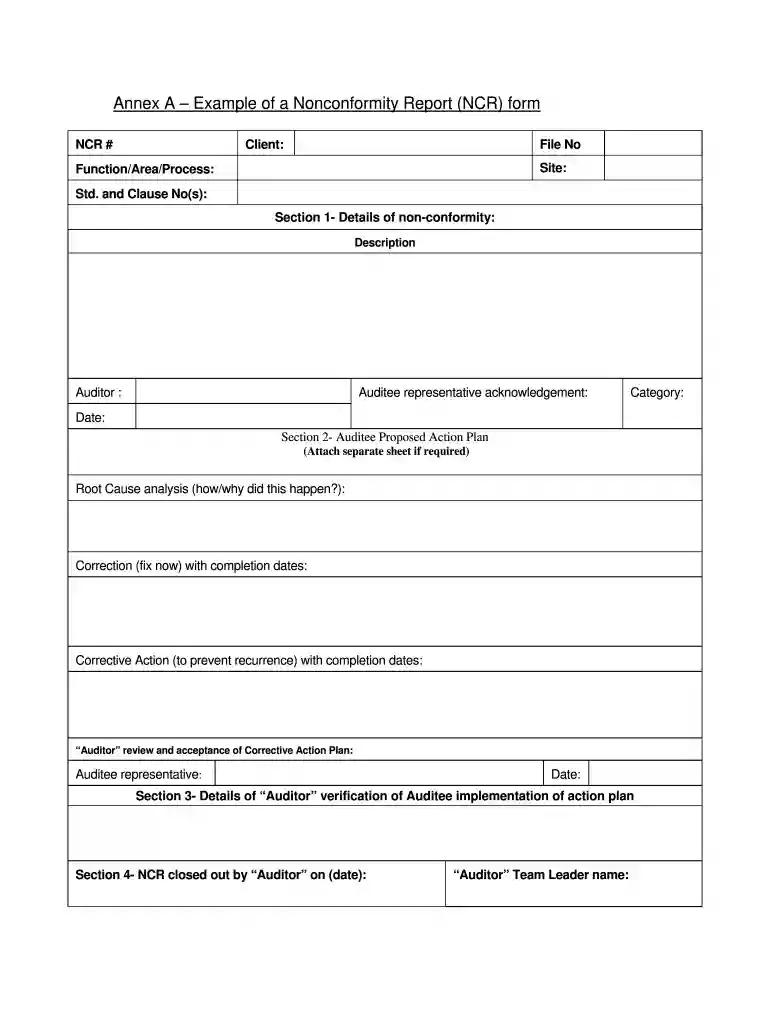
Type text, add images, blackout confidential details, add comments, highlights and more.

Draw your signature, type it, upload its image, or use your mobile device as a signature pad.

Send non conformance report template via email, link, or fax. You can also download it, export it or print it out.
Non-conformance reports (NCRs) are essential tools in quality management systems, particularly in the contexts defined by ISO 9001 standards. These reports serve to document instances where processes or products deviate from set standards, specifications, or requirements. The structured documentation in a non conformance report template enables organizations to identify issues, analyze root causes, implement correction actions, and verify that the issue has been resolved to prevent future occurrences. This thorough logging promotes accountability and continuous improvement within the organization.
The use of non conformance reports is critical in maintaining quality assurance protocols across various industries. Organizations benefit from the systematic approach that NCRs provide, enabling teams to:
Effective use of non conformance report templates ensures all necessary details are captured, facilitating smooth communication among stakeholders and enhancing overall operational efficiency.
Each non conformance report form contains distinct sections that must be completed to ensure comprehensive documentation. Key components typically include:
Including these components in a non conformance report not only enhances clarity but also supports effective follow-up and continuous improvement efforts.
Completing a non-conformance report necessitates a systematic approach to ensure accuracy and thoroughness throughout the process. The following steps outline how users can effectively fill out a non conformance report template:
These steps might seem straightforward but require diligence and open communication among team members for optimal outcomes.
Various industries utilize non conformance report templates to improve their processes, with specific documentation practices reflecting the unique needs of each field. Common examples include:
Each report serves as an essential instrument for systematic follow-ups and reviews, aiding in continuous quality improvement initiatives.
Organizations must ensure compliance with industry regulations and standards when documenting non-conformance reports. This consideration includes:
Incorporating these legal considerations within the template design facilitates adherence to broader organizational compliance frameworks. By implementing a robust non conformance reporting system, organizations bolster their quality management practices, ensuring consistent fidelity to standards and enhancing overall operational excellence.
At DocHub, your data security is our priority. We follow HIPAA, SOC2, GDPR, and other standards, so you can work on your documents with confidence.
Purpose: The forms purpose is to make sure that all non-conformances and adverse events are registered and dealt with in a proper manner.Read more
NON-CONFORMANCE REPORT FORM. Contract Information. Date. Contract/Project Number: Resident/Project Engineer. County: Facility Name: Division:.Read more
Jan 28, 2021 Xerox Accessibility Section 508 Conformance Report. Voluntary Product Accessibility Template (VPAT) V2.4. Xerox VersaLink C505/C605 MFP.Read more


