
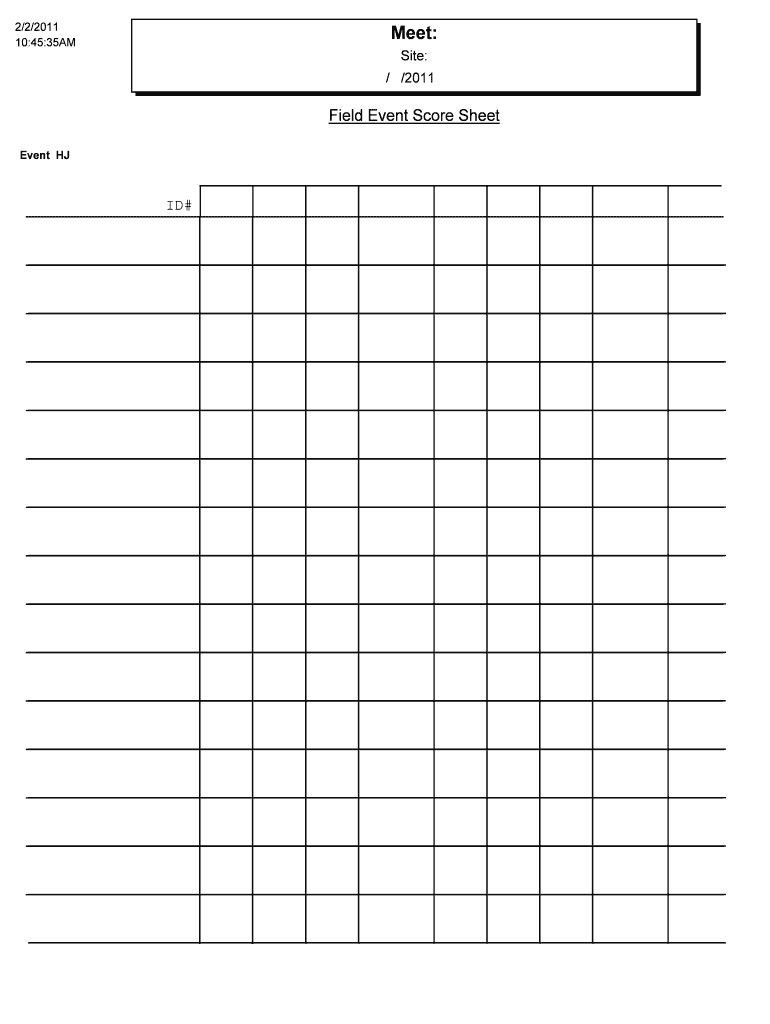







Definition and Meaning of the Field Event Score Sheet
The Field Event Score Sheet is a crucial document used in track and field competitions to accurately record the performances of athletes in various field events, such as high jump, long jump, shot put, and more. Each score sheet captures relevant details including the athlete's name, event type, results, and any notes on attempts. The primary purpose of this score sheet is to ensure that the scoring for the event is organized and transparent, providing a clear record that can be referenced during and after the competition.
Field event score sheets come with standardized formats, allowing for quick reference and consistency across different meets. They can be printed as PDFs for physical distribution or utilized digitally through platforms that support filling out forms online. These documents not only serve as immediate scorekeeping tools but also as historical records for athletes, coaches, and event organizers.
How to Use the Field Event Score Sheet Effectively
Using the Field Event Score Sheet effectively requires a clear understanding of its structure and the specific events being scored. Below are the steps for utilizing the score sheet during an event:
- Preparation: Ensure that the score sheet is printed or accessible in its electronic form before the competition begins. Familiarize yourself with the format and required fields.
- Participant Information: Write down the names and other relevant details of all participating athletes in the designated sections of the score sheet.
- Recording Performance: As the events progress, record each athlete's performances accurately. Include details such as the distance or height achieved, the number of attempts, and any fouls associated with the jumps or throws.
- Annotations: Use the comment section to denote any specific observations, such as weather conditions or equipment used, which can be beneficial for later evaluations or for future events.
- Finalization: After all attempts for an event are recorded, evaluate the scores and ensure that they are correctly totaled and verified by a designated official before announcing the results.
Using the score sheet efficiently contributes to the integrity of the competition and ensures that athletes receive accurate credit for their performances.
How to Obtain the Field Event Score Sheet
Acquiring a Field Event Score Sheet can be done through several methods, depending on convenience and accessibility:
-
Download from Official Sources: Many sports associations and federations provide downloadable templates on their official websites as PDFs. This ensures that you have the most accurate and appropriate format for your specific competition or event.
-
Create a Custom Score Sheet: For unique events, organizations might consider designing their own score sheets using document editing software, ensuring that they meet specific needs and have custom fields pertinent to the event.
-
Utilize Online Platforms: Some digital document management systems can provide pre-made templates or allow users to create and modify score sheets in real-time.
-
Request from Event Organizers: If participating in a larger event or meet, reach out to the event organizers. They may have a standardized score sheet they use for all participants.
Having the right form readily available helps streamline the scoring process and ensures accuracy during competitions.
Steps to Complete the Field Event Score Sheet
Completing the Field Event Score Sheet involves several detailed steps to ensure that all necessary data is accurately captured. Here’s a structured approach:
-
Fill in Basic Information:
- Start with the date of the event.
- Include the event type (e.g., long jump, shot put).
- Record the venue information if applicable.
-
Athlete Details:
- Input each athlete’s name, team affiliation, and any assigned identifier (e.g., bib number).
- Ensure correct spellings to avoid confusion later.
-
Performance Recording:
- For each attempt made by the athlete, record:
- The result (distance or height achieved).
- The order of attempts (first, second, third).
- Any fouls or invalid attempts, if applicable.
- For each attempt made by the athlete, record:
-
Final Scoring:
- At the end of the event, locate the best performance of each athlete.
- Calculate final standings based on recorded scores.
-
Verification and Submission:
- Double-check entered data for accuracy.
- Submit the completed score sheet to the event officials for official recording and announcement.
By following these steps meticulously, scorekeepers can maintain high standards of accuracy and reliability in competitive settings.
Key Elements of the Field Event Score Sheet
Understanding the key elements of the Field Event Score Sheet is essential for its effective use. Here are the integral components:
- Event Identification: Each score sheet should clearly indicate the type of field event being contested to avoid confusion.
- Athlete Information Areas: This includes space for basic details about each competitor, ensuring all entries are properly identified.
- Performance Tracking Fields: Sections to record each athlete's attempts and results, often structured in a tabular format for easy reading.
- Scoring Summary: A portion for final scores, rankings, and potentially comments or notes for the scoring officials.
- Official Signatures: Space for signatures from relevant judges or officials to validate the results after final submissions.
These elements work cohesively to ensure that all necessary information is documented succinctly and can be easily interpreted by other stakeholders such as coaches and meet organizers.
Examples of Using the Field Event Score Sheet
Field Event Score Sheets have numerous practical applications across various competitions. Here are some illustrative examples:
-
High Jump Competitions: In a typical high jump event, each athlete’s attempts are recorded on the score sheet, including the height they cleared and any failed attempts. The scorekeeper annotates whether the jumps were successful or not, providing a complete picture of each competitor's performance.
-
Long Jump Events: For long jump, the score sheet can capture both the distance achieved and any fouls. This requires precise measurements that are carefully noted to maintain accurate records for future reference and athlete assessments.
-
Multi-Event Meets: In a track and field meet featuring multiple field events, score sheets can be adapted to manage various disciplines concurrently. This involves ensuring each type of event has its own section within the score sheet for streamlined data recording.
-
Training Sessions: Coaches may use score sheets during practice sessions to monitor athlete progress over time, allowing for tailored coaching strategies based on recorded results.
These examples highlight the versatility and importance of the Field Event Score Sheet in various scenarios, making it an invaluable tool within the realm of track and field sports.




