

Healthcare Utilization and Cost 2026

Get Form
Healthcare Utilization and Cost Preview on Page 1

Here's how it works

01. Edit your form online
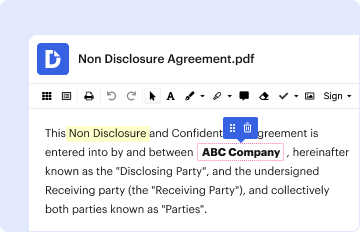
Type text, add images, blackout confidential details, add comments, highlights and more.
02. Sign it in a few clicks
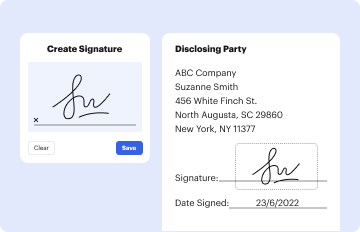
Draw your signature, type it, upload its image, or use your mobile device as a signature pad.
03. Share your form with others
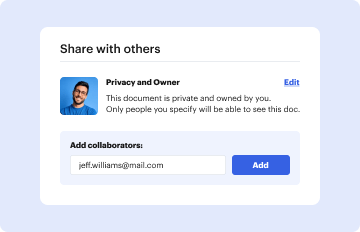
Send it via email, link, or fax. You can also download it, export it or print it out.

How to use or fill out Healthcare Utilization and Cost with our platform

Form edit decoration
9.5
Ease of Setup
DocHub User Ratings on G2
9.0
Ease of Use
DocHub User Ratings on G2
  1. Click ‘Get Form’ to open the Healthcare Utilization and Cost document in the editor.
  2. Begin with the Executive Summary section. Review the key findings regarding healthcare utilization patterns for adults with severe mental illness (SMI) in Texas Medicaid.
  3. Move to the Introduction section. Fill in any required fields that pertain to your specific data or insights related to SMI and Medicaid.
  4. In the Data Acquisition and Linkage section, input relevant data sources you have accessed or linked for your analysis.
  5. Proceed to the Utilization Analyses section. Here, you can enter detailed statistics on hospitalizations and emergency room visits, ensuring accuracy in your entries.
  6. Finally, review the Conclusion and Discussion section. Summarize your findings and insights based on the data you've filled out, ensuring clarity for stakeholders.

Start using our platform today for free to streamline your document editing and form completion!

be ready to get more

Complete this form in 5 minutes or less

Get form

Got questions?

We have answers to the most popular questions from our customers. If you can't find an answer to your question, please contact us.
Contact us
1988 to present. Annual. The Healthcare Cost and Utilization Project (HCUP) is a family of health care databases and related software tools developed through a federal-state-industry partnership to build a multistate health data system for health care research and decision making.
HCUPs Nationwide databases can be used to identify, track, and analyze national trends in healthcare utilization, access, charges, quality, and outcomes. HCUPs State-specific databases can be used to investigate State-specific and multi-State trends in healthcare utilization, access, charges, quality, and outcomes.
HCUP Fast Stats is an online query tool that uses visual displays to compare national or State statistics on a range of healthcare topics.
Various factors, including population aging, disease prevalence, cost of care, and technology, have been implicated as factors that can increase health spending.
Health Care Utilization is the quantification or description of the use of services by persons for the purpose of preventing and curing health problems, promoting maintenance of health and well-being, or obtaining information about ones health status and prognosis.

Security and compliance

At DocHub, your data security is our priority. We follow HIPAA, SOC2, GDPR, and other standards, so you can work on your documents with confidence.

Learn more
ccpa2
pci-dss
gdpr-compliance
hipaa
soc-compliance

People also ask

Overview of HCUP Produced annually, these databases enable research on a broad range of health policy issues, including cost and quality of health services, medical practice patterns, access to healthcare programs, and outcomes of treatment at the national, state, and local market levels.
The Healthcare Cost and Utilization Project (HCUP, pronounced H-Cup) is a family of healthcare databases and related software tools and products developed through a Federal-State-Industry partnership and sponsored by the Agency for Healthcare Research and Quality (AHRQ).
In 2019, hospital care spending (37.2%) made up the largest share of personal health care expenditures, followed by spending on physician and clinical services (24.1%), prescription drugs (11.5%), nursing care facilities and continuing care retirement communities (5.4%), dental services (4.5%), and home health care (

Related links