




Definition and Significance of an Authorized Signatory Letter
An authorized signatory letter is a formal document that designates individuals with the legal authority to sign documents and contracts on behalf of an organization. This letter serves as evidence of the signatory’s power, typically granted by a company’s board of directors or its governing body. The letter outlines the specific powers conferred and may detail the conditions under which the signatory can act, thereby ensuring compliance with corporate governance.
- Scope of Authority: The authorized signatory can enter into agreements, manage banking transactions, and represent the organization in legal matters.
- Importance in Transactions: This document is crucial in business dealings as it confirms the legitimacy of transactions and protects the organization from unauthorized actions.
The authorized signatory letter format often varies, but key elements must always be included to ensure its effectiveness and validity, especially when presenting it to financial institutions or in legal scenarios.
Key Components of an Authorized Signatory Letter
When drafting an authorized signatory letter, specific components must be included to convey the necessary information clearly and correctly. This ensures the document fulfills its function and can be trusted by third parties.
- Company Letterhead: The top of the document should display the company's name, address, and contact information to validate the origin of the letter.
- Date: Clearly indicate the date the letter is issued, as this establishes the validity of the authorization.
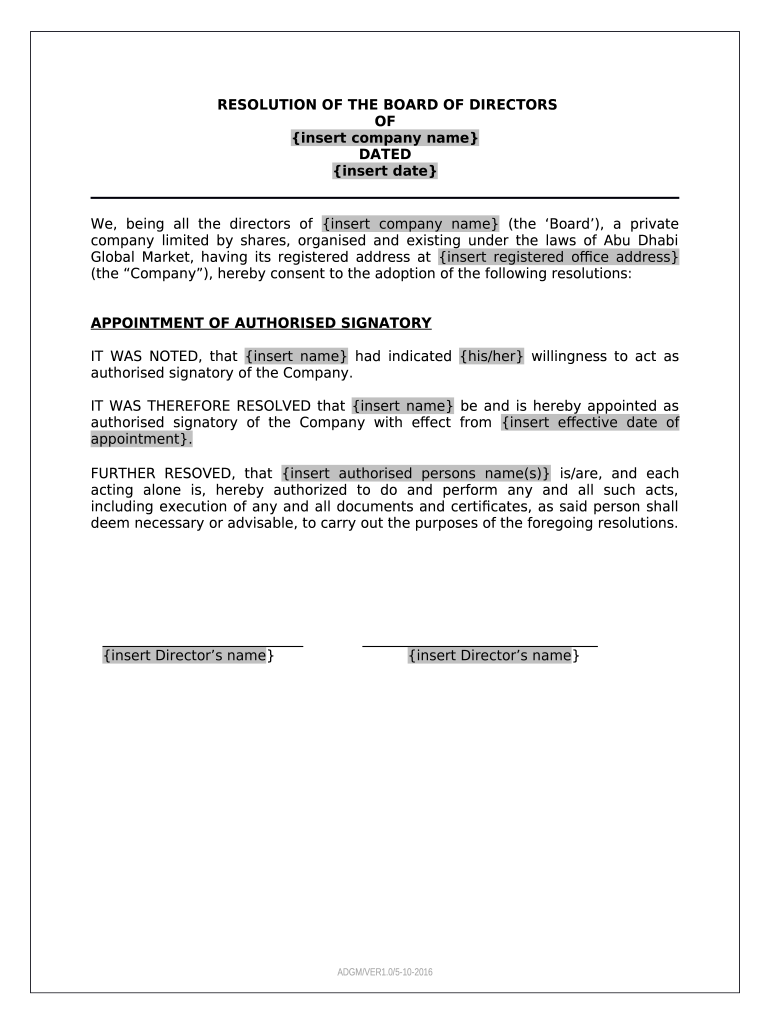
- Director's Resolutions: Include a statement indicating that the decision was made by the board of directors or the relevant authority.
- Authorized Signatory Details: Provide the full name, title, and any pertinent identification details of the individual being authorized.
- Scope of Authority: Clearly state the scope of the authority granted, such as the types of transactions the signatory can perform.
- Signature of the Authorizing Person: The document must include the signature of the person granting the authority, which often is a company secretary or another director.
This careful structuring ensures that the authorized signatory letter is both comprehensive and clear, reducing the risk of disputes or confusion.
Examples of Authorized Signatory Letters
Illustrating the concept with actual examples provides clarity on how to structure an authorized signatory letter.
Example One: Basic Company Authorization
[Company Letterhead]
Date: [MM/DD/YYYY]
To Whom It May Concern,
We, the Board of Directors of [Company Name], hereby appoint [Full Name] as the authorized signatory for the company. [He/She/They] is authorized to execute documents and bind the company according to the terms outlined. This authorization remains in effect until revoked in writing.
Sincerely,
[Signature]
[Name]
[Title]
Example Two: Banking Authorization
[Company Letterhead]
Date: [MM/DD/YYYY]
To [Bank Name],
This letter serves to confirm that [Full Name], holding the position of [Job Title], is an authorized signatory for [Company Name]. [He/She/They] may sign cheques, open accounts, and conduct transactions on behalf of the company. This authorization is valid until further notice.
Best Regards,
[Signature]
[Name]
[Title]
These examples showcase how the letter can vary based on context while ensuring all vital elements remain present.
Steps to Create an Authorized Signatory Letter
Creating an authorized signatory letter requires a systematic approach to ensure all necessary components are accounted for and accurately presented.
- Gather Necessary Information: Collect details about the company and the individual being authorized.
- Use Official Letterhead: Start typing the letter on the official company letterhead, which enhances credibility.
- Draft the Content: Follow a clear structure, as discussed, and include all key components.
- Review for Accuracy: Ensure the information is correct and clear, focusing on the scope of authority to prevent ambiguity.
- Seek Necessary Approvals: Before finalizing, ensure that the letter is reviewed and signed by the appropriate authority, such as the board or company secretary.
- Distribute the Letter: Provide copies to all relevant parties, including banks and other institutions where the signatory may need to act.
Implementing these steps will streamline the process of preparing a valid and effective authorized signatory letter.
Legal Considerations in Authorized Signatory Letters
When issuing an authorized signatory letter, it’s essential to consider legal ramifications to safeguard the organization.
- Compliance with Regulations: The letter must comply with local laws and corporate regulations to be enforceable.
- Duration of Authority: Clearly specify if the authority is temporary or permanent, and outline any processes for revocation.
- Implications of Misuse: Organizations should be aware of the risks associated with granting signing authority, ensuring due diligence in appointing trustworthy individuals.
By understanding these legal dimensions, companies can prevent potential disputes and ensure that the authorized signatory letter operates effectively within legal parameters.