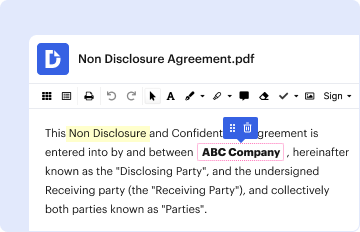
Type text, add images, blackout confidential details, add comments, highlights and more.
02. Sign it in a few clicks
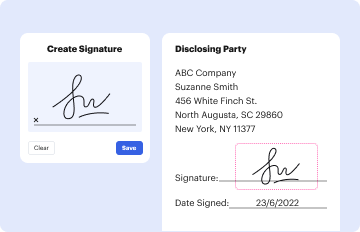
Draw your signature, type it, upload its image, or use your mobile device as a signature pad.
03. Share your form with others
Send it via email, link, or fax. You can also download it, export it or print it out.
How to use or fill out Confusion Assessment Method with our platform
Ease of Setup
DocHub User Ratings on G2
Ease of Use
DocHub User Ratings on G2
Click ‘Get Form’ to open the Confusion Assessment Method in the editor.
Begin by assessing Element 1: Indicate if there is an acute onset of mental status change from baseline or fluctuating mental status. Use the checkbox feature to mark your response.
Proceed to Element 2: Assess inattention. You can select 'Yes' or 'No' using the radio buttons provided.
For Element 3, evaluate the altered level of consciousness. Use the dropdown menu to select the appropriate RASS score that reflects the patient's condition.
Finally, for Element 4, determine if disorganized thinking is present. Choose from the options available and ensure all selections are clearly marked.
Start using our platform today for free to streamline your form completion process!
Fill out Confusion Assessment Method online It's free
The 3D-CAM is a 3-Minute Diagnostic Interview for the Confusion Assessment Method (CAM). The 3D-CAM is a brief assessment tool that can be used to test patients for delirium, which can be completed in an average of 3 minutes, and performs very well compared to an expert evaluation.
What are the 4 features of CAM?
The CAM-ICU tool assesses four features: (1) the acute onset of mental status changes, or a fluctuating course (Feature 1), (2) inattention (Feature 2), (3) altered levels of consciousness (Feature 3), and (4) disorganized thinking (Feature 4).
What are the 4 features of the Confusion Assessment Method?
The Confusion Assessment Method criteria Presence of acute onset and fluctuating course and. Inattention, plus either. Disorganised thought processes, or. Altered level of consciousness.
How is confusion assessed?
Confirm a diagnosis of delirium by carrying out a cognitive assessment based on the Diagnostic and Statistical Manual of Mental Disorders (DSM-5) criteria, the short Confusion Assessment Method (short-CAM), or the 4As test. The CAM criteria for delirium: Confusion that has developed suddenly and fluctuates, and.
What is the 4AT Confusion Assessment Method?
In 2011, the Edinburgh Delirium Research Group (Scotland, UK) developed the 4AT delirium screening scale, which consists of four items: an assessment of the level of alertness, an orientation test, an attention test, and finally an item determining acute change or fluctuating course (19).
The CAM diagnostic algorithm evaluates four key features of delirium: 1) Acute Change in Mental Status with Fluctuating Course, 2) Inattention, 3) Disorganized Thinking, and 4) Altered Level of Consciousness.
Related links
The Confusion Assessment Method (CAM)
by CM Waszynski 2003 Cited by 16 The CAM was designed and validated to be scored based on observations made during brief but formal cognitive testing, such as brief mental status evaluations.
Cookie consent notice
This site uses cookies to enhance site navigation and personalize your experience.
By using this site you agree to our use of cookies as described in our Privacy Notice.
You can modify your selections by visiting our Cookie and Advertising Notice.