





Oxford Knee Score Overview
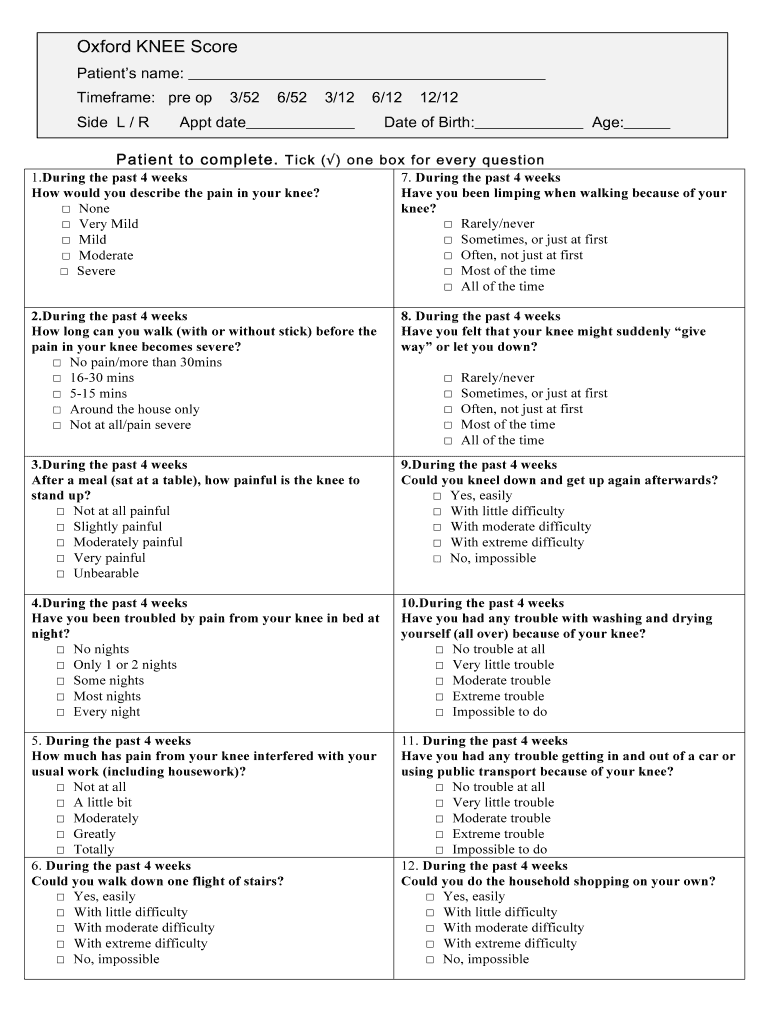
The Oxford Knee Score (OKS) is a specific questionnaire used to evaluate knee pain and functional ability in individuals who may be experiencing issues related to their knees. This instrument is particularly valuable in clinical settings, helping healthcare professionals assess the impact of knee problems on a patient’s quality of life. The assessment spans the past four weeks, providing a snapshot of the patient's discomfort and functional limitations.
Structure of the Oxford Knee Score Questionnaire
The OKS typically includes a series of questions designed to gauge both pain levels and the degree of mobility. Respondents indicate their experiences across various physical activities, which allows for a nuanced understanding of how knee issues affect daily life. Common areas explored include:
- Pain during specific movements (e.g., walking, bending).
- Ability to engage in various activities (e.g., climbing stairs).
- The impact of knee health on overall daily functioning.
Each of these elements is scored, facilitating a comprehensive evaluation of the patient's condition.
Interpretation of the Oxford Knee Score
Interpreting the results from the OKS is essential for effective patient care. The total score ranges from zero to forty-eight, with lower scores indicating more significant problems with knee pain and function. The interpretation may include:
- Higher Scores (40-48): Indicate good knee function and low levels of pain.
- Moderate Scores (20-39): Reflect moderate pain and some functional limitations.
- Lower Scores (0-19): Suggest severe knee issues, high levels of pain, and significant restrictions in daily activities.
Understanding these scores helps in formulating treatment strategies and setting appropriate care goals.
Creating and Using an Oxford Knee Score PDF Form
Having the OKS in a PDF format makes it easily accessible and printable for both healthcare providers and patients. To create a usable PDF, consider the following steps:
- Drafting Questionnaire Content: Ensure all necessary questions are included clearly and concisely.
- Design and Layout: Utilize a standard format conducive to easy filling and scoring.
- Securing the Document: Protect sensitive patient information through encryption and restricted access where necessary.
- Options for Distribution: The PDF can be shared electronically or printed for in-office use, allowing flexibility depending on the patient’s needs.
Creating a comprehensive and accessible PDF version of the OKS enhances its usability and strengthens patient assessment practices.
Additional Resources for the Oxford Knee Score
In addition to the standard questionnaire, there are several supportive resources available that can enhance understanding and application of the OKS:
- Online Calculators: Tools for calculating the OKS score quickly can streamline the evaluation process.
- Printable Scoring Guides: Offering easy reference for interpreting scores can help in patient management.
- Case Examples: Sharing scenarios can provide context for how the OKS is applied in real-world clinical settings.
These resources ensure that both patients and providers maximize the benefits derived from the Oxford Knee Score.
Related Scoring Instruments
Other scales that complement the OKS in assessing knee health include:
- The Knee Society Score (KSS): Focuses on functional outcomes and pain levels.
- Western Ontario and McMaster Universities Osteoarthritis Index (WOMAC): Specifically centered on osteoarthritis-related knee issues.
Using multiple assessment tools may provide a more comprehensive perspective on a patient’s knee health, facilitating informed decision-making for treatment paths.
The Oxford Knee Score stands as an essential tool within orthopedic and rehabilitation practices, providing crucial insights into patient-specific knee concerns and guiding tailored treatment strategies.