




01. Edit your 42 month asq online
Type text, add images, blackout confidential details, add comments, highlights and more.

Type text, add images, blackout confidential details, add comments, highlights and more.

Draw your signature, type it, upload its image, or use your mobile device as a signature pad.

Send asq 3 42 months via email, link, or fax. You can also download it, export it or print it out.
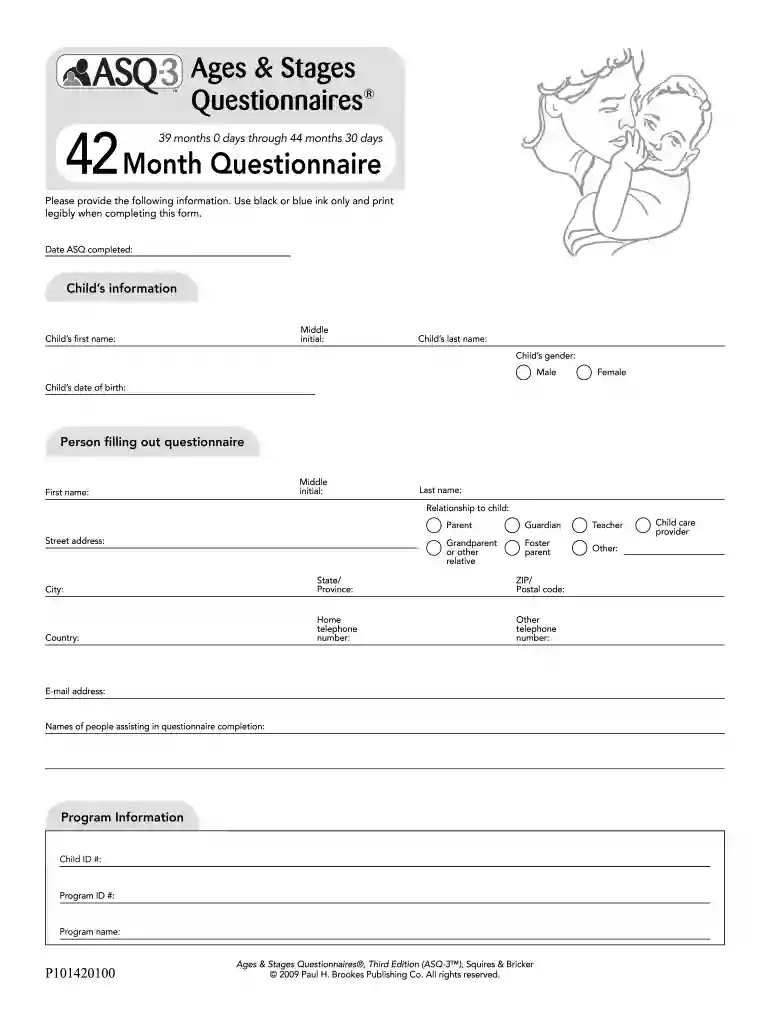
The Ages & Stages Questionnaire for 42 months (ASQ-3™) serves as a significant tool for evaluating the developmental milestones of children between thirty-nine and forty-four months old. This standardized questionnaire involves specific, structured activities aimed at assessing a child's growth across various domains.
The ASQ-3 consists of several sections, designed to inspect different aspects of a child's development:
It is crucial for parents or guardians to actively participate in the ASQ 42 months. The questionnaire should be completed based on genuine observations of the child's abilities. After filling out the relevant sections, it's advisable to review the responses carefully.
When completing the ASQ-3 42 months, parents are required to provide personal information. This includes:
The ASQ 42 months is not merely a developmental assessment tool; it plays a crucial role in early intervention. Identifying potential delays in development can lead to timely interventions, which are essential in supporting a child's growth.
Once the filled questionnaire is assessed, it is essential to utilize the results effectively:
This comprehensive understanding of the ASQ 42 months questionnaire enables families, caregivers, and professionals to work together in supporting the child's developmental journey effectively.
At DocHub, your data security is our priority. We follow HIPAA, SOC2, GDPR, and other standards, so you can work on your documents with confidence.
2 to 24 months. 2 month intervals. 27 to 36 months. 3 month intervals. 42 to 60 months. 6 month intervals. Tips for effective administration. Select the correct.Read more
Jun 2, 2015 This document presents current technical recommendations of the U.S. Environmental. Protection Agency (EPA) based on our currentRead more
Oct 11, 2010 48 Month/4 Year ASQ:SE. Questionnaire. (For children ages 42 through 53 months). Please provide the following information. Childs name: EmilyRead more


