






Definition and Meaning of Allodial Title
Allodial title refers to a form of land ownership where the property is owned free and clear of any obligations or feudal duties to a superior authority, such as a government or landlord. This concept stands in contrast to traditional property ownership, where the government retains a degree of control, typically through property taxes and zoning laws. An allodial title signifies full sovereignty over land, which means the owner can use, lease, sell, or transfer the property without interference from governmental authorities. This type of ownership is important in understanding individual freedoms regarding land rights and property use.
Historical Context of Allodial Title
The origins of allodial title date back to feudal societies, where landownership was tied to loyalty and service to a lord or monarch. As society evolved, the concept of allodial land emerged, allowing individuals to hold land without any such obligations. This historical background is crucial for understanding the legal and cultural significance of allodial title, especially within the United States, where property ownership is a foundational aspect of freedom and personal rights.
How to Obtain an Allodial Title
Obtaining an allodial title involves a series of legal steps, and it varies by state. The process typically begins by identifying the current status of your property rights and any existing liens or encumbrances. Here are key steps to follow:
-
Research Property Ownership: Determine if your property is eligible for a shift to allodial title by examining the current ownership documents and ensuring there are no outstanding taxes or mortgages.
-
Gather Necessary Documentation: Collect relevant documentation, including your original land patent, survey details, and any existing deeds.
-
File for Land Patent: In many cases, securing an allodial title requires applying for a land patent. This process often requires legal assistance to navigate state-specific laws and paperwork.
-
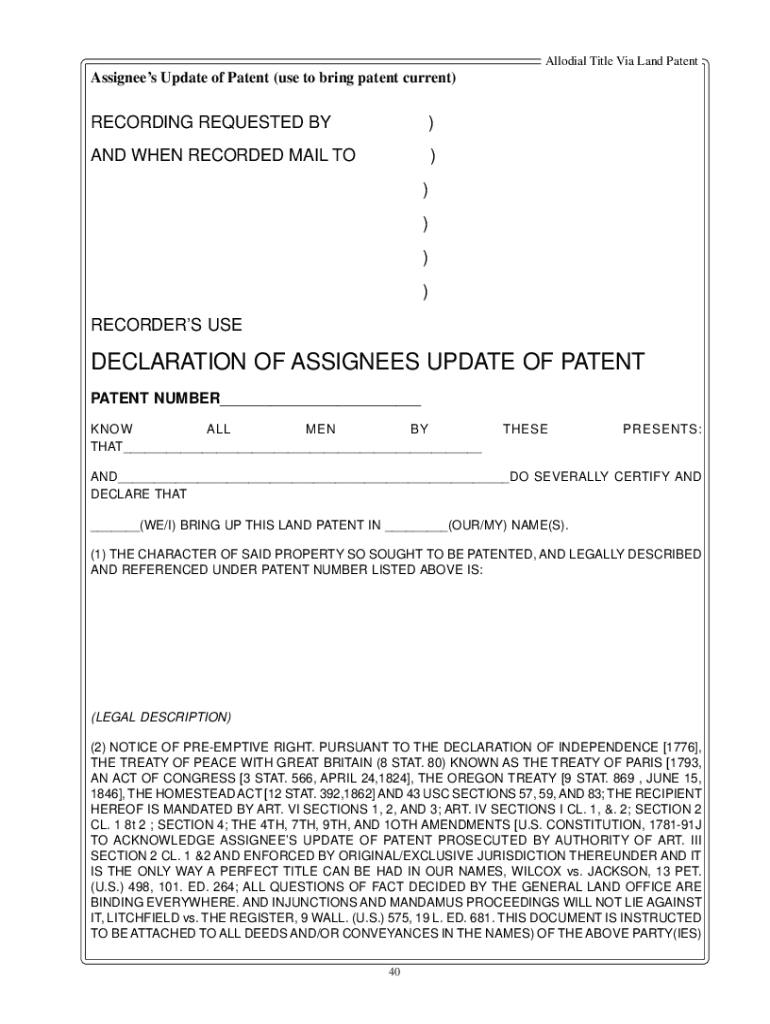
Include a Declaration of Intent: When applying, include a declaration outlining your intention to claim allodial title, emphasizing your understanding of the associated rights and responsibilities.
-
Complete the Process: After submission, monitor the application status. Depending on the state, approvals may take time, requiring patience and potentially additional documentation.
Important Considerations
- State-Specific Rules: Understand that laws regarding allodial title differ significantly from state to state. For example, some states have explicit legal frameworks supporting allodial claims, while others may not recognize them at all.
- Legal Assistance: Consulting with a property attorney familiar with allodial titles can significantly streamline the process and ensure compliance with legal standards.
Steps to Complete the Allodial Title Process
Completing the process for establishing an allodial title typically involves several structured steps to ensure legality and compliance with state regulations. These steps may include:
-
Title Search: Conduct a comprehensive search of the title records to confirm you have clear ownership.
-
Contact Local Authority: Engage with your local county recorder or land office to understand the required forms and specific processes unique to your location.
-
Submit Complete Application: Ensure that all documents, including identification and evidence of ownership, are properly prepared and submitted according to the instructions provided by the authorities.
-
Pay Applicable Fees: Be prepared to pay any processing or legal fees associated with your application.
-
Wait for Approval: Once submitted, the approval process may take several weeks or even months, depending on the volume of applications and the state’s bureaucracy.
Factors Influencing Approval
- Completeness of Application: Submissions must be complete and accurate to avoid delays.
- State Regulations: Each state imposes its own criteria and review timelines, impacting how quickly the request can be processed.
Why Should You Consider an Allodial Title?
Adopting an allodial title offers several potential benefits, primarily because it enhances property rights and autonomy. Key advantages include:
-
Tax Exemption: Properties held under an allodial title may be free from property taxes, providing substantial financial relief and promoting an individual's financial independence.
-
Sovereignty: An allodial title empowers property owners, granting them the ability to manage their property without governmental intrusion.
-
Investment Security: Holding an allodial title can serve as a safeguard against future legal claims or governmental actions, ensuring long-term security and stability in property investments.
Personal and Legal Considerations
- Understanding Responsibilities: While the allodial title is beneficial, it also requires that the owner understand and fulfill any remaining responsibilities under state requirements.
- Potential for Complications: It is essential to recognize that moving to an allodial title can complicate other legal matters such as estate planning.
Examples of Using the Allodial Title
Implementing allodial title can manifest in various practical scenarios, particularly in states where this ownership type is acknowledged. Some examples include:
-
Residential Property: Homeowners seeking greater control over their property may pursue an allodial title, enabling them to avoid property taxes altogether.
-
Agricultural Land: Farmers may find value in leveling allodial claims for their land, leading to unencumbered use for cultivation and improvement without state interference.
-
Investment Properties: Real estate investors can utilize allodial titles to strengthen their asset portfolios, providing stable foundations for future investment strategies.
Summary of Potential Applications
The application of allodial title can vary across different types of properties, each offering unique benefits depending on local laws and individual circumstances.