
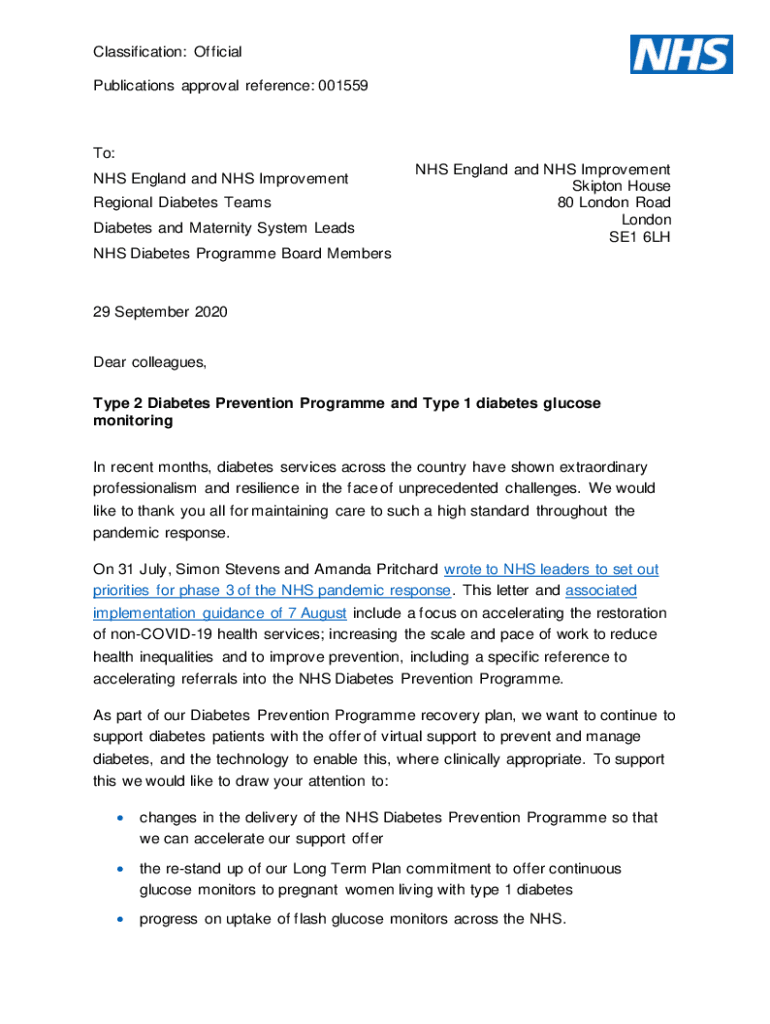







Definition and Meaning of NHS Letter Head
The NHS letter head is a designated format utilized by the National Health Service (NHS) in the United Kingdom for official communications. This customized header often includes the NHS logo, the organization's name, and contact details. It serves as an official identification tool, ensuring that all documents, including letters, appointments, and notifications, appear credible and trustworthy. The standardization of the NHS letter head aids in recognition and provides consistent branding across various health communications.
An NHS letter head typically incorporates essential information such as:
- NHS organization name
- Address and contact information
- Official logo
- Document reference numbers when applicable
- Date of issuance
These elements collectively establish the authenticity of the document and ensure it complies with legal and organizational standards.
How to Use the NHS Letter Head
Using the NHS letter head involves several considerations to maintain professionalism and clarity. The letter head is essential for various communication forms, such as appointment letters, discharge papers, referrals, and official correspondence to patients.
Proper Formatting
- Ensure that the letter head features prominently at the top of the document.
- Maintain consistent font styles and sizes as specified by NHS guidelines.
- Follow the NHS branding policies to ensure uniformity in presentation.
Content Guidelines
- Begin with a clear subject line if applicable (e.g., “Appointment Confirmation”).
- Include the recipient's details beneath the letter head to personalize the document.
- Structure the body of the letter clearly, outlining the message succinctly while adhering to professional language.
Compliance
- Confirm that the content adheres to data protection regulations to safeguard patient information.
- Include reference numbers and the date clearly to facilitate tracking and response.
How to Obtain the NHS Letter Head
Acquiring the NHS letter head requires following institutional guidelines set by various NHS entities or divisions.
Official Access
-
Institutional Resources:
- Employees can access the letter head through internal resources such as the NHS intranet or shared directories.
-
Designated Templates:
- NHS organizations often provide standard letter head templates in document formats like Word or PDF. These templates are crafted to meet organizational branding and data standards.
-
Requesting from Design Teams:
- In instances of needing a customized letter head, departments can submit requests to their respective design teams to create or modify existing templates.
Steps to Complete the NHS Letter Head
Completing documents using the NHS letter head involves several systematic steps to ensure professionalism and accuracy.
-
Select the Right Template: Ensure you have the latest version of the NHS letter head template.
-
Customize Recipient Information:
- Insert the patient's name, address, and relevant details.
-
Draft the Body of the Letter:
- Clearly articulate the purpose of the letter, maintaining a polite and informative tone.
-
Review for Compliance:
- Check for adherence to NHS guidelines, including safeguarding patient information.
-
Finalize and Distribute:
- Save the document in the desired format, such as PDF or DOCX, for printing or digital distribution.
Example Scenario: For a patient appointment confirmation, the document would be structured with the NHS letter head at the top, followed by the patient details, the appointment information, and contact instructions for any inquiries.
Key Elements of the NHS Letter Head
The key elements of an NHS letter head are pivotal for ensuring clarity and professionalism.
Primary Components
- NHS Logo: Represents the organization’s identity and is placed prominently.
- Contact Information: Essential for facilitating easy communication, including phone numbers and email addresses.
- Address: Physical location of the NHS organization for official correspondence.
Supporting Information
- Reference Codes: Useful for administrative tracking and record-keeping.
- Date of Document: Establishes the timeliness of the correspondence.
These elements are not only crucial for presentation but also enhance trust and recognition among users receiving NHS communications.
Examples of Using the NHS Letter Head
The NHS letter head is utilized in various scenarios, each requiring adherence to specific protocols and formats.
Common Applications
- Appointment Letters: Frequently sent to patients confirming their clinic visits or surgery dates.
- Discharge Letters: Issued to patients when they are released from healthcare facilities detailing follow-up care and instructions.
- Referral Letters: Used to communicate patient referrals between NHS providers, ensuring continuity of care.
Detailed Scenarios
- An NHS appointment letter may notify a patient of a scheduled visit while advising them to bring relevant documentation such as identification or test results.
- A hospital discharge letter can summarize a patient's treatment, provide follow-up care instructions, and list medications, ensuring a smooth transition back to home care.
By understanding and utilizing the NHS letter head effectively, healthcare providers can enhance communication and ensure compliance with professional standards.




