







Definition & Meaning
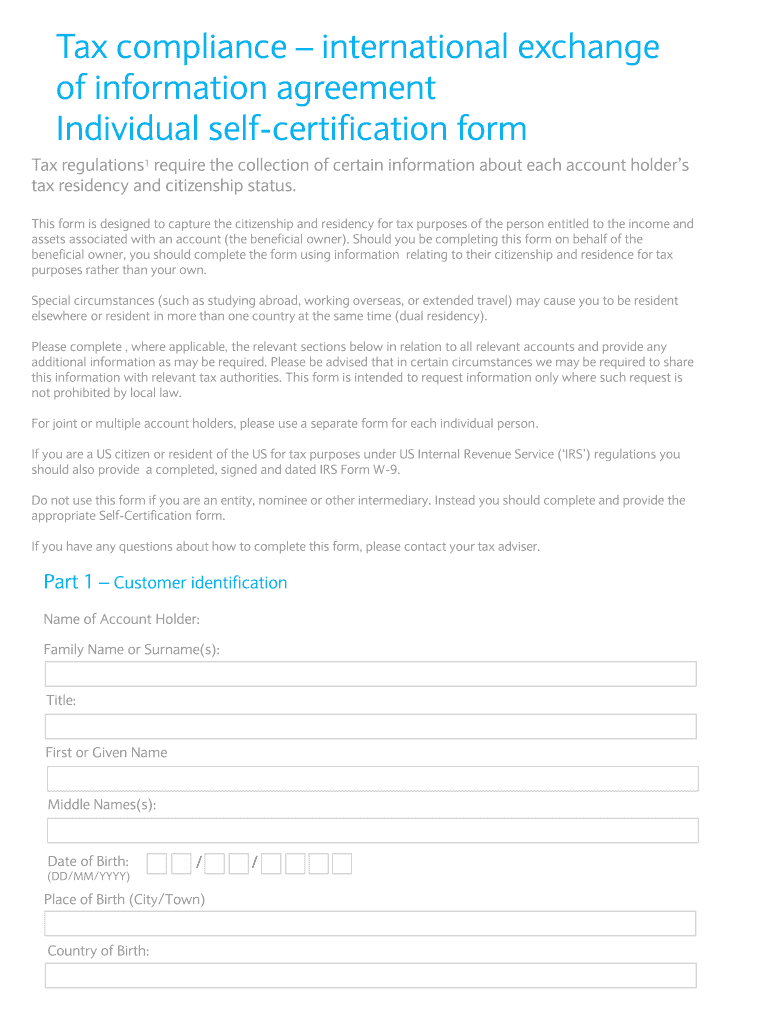
The CRS FATCA Individual Form for Barclays serves as a self-certification document for tax compliance under international agreements regarding information exchange. The primary purpose of this form is to collect vital information about an individual’s tax residency and citizenship, which includes their Tax Identification Numbers (TINs) when applicable. This documentation is essential for Barclays, which operates under the Common Reporting Standard (CRS) and the Foreign Account Tax Compliance Act (FATCA), to comply with regulations set forth by tax authorities.
The CRS allows for streamlined reporting and sharing of financial information among participating countries, helping combat tax evasion. By accurately completing the form, individuals provide the necessary declarations needed for tax reporting purposes as mandated by both the IRS and the respective tax authorities in their country of residence.
Steps to Complete the CRS FATCA Individual Form for Barclays
Completing the CRS FATCA Individual Form for Barclays requires careful attention to detail to ensure all necessary information is accurately provided. Follow these steps to complete the form:
- Personal Information: Begin by inputting your personal data, including full name, date of birth, and residential address. Ensure that your residence is consistent with the country for which you are claiming tax residency.
- Tax Residency: Clearly indicate your tax residency status. This includes specifying your country of residence and providing your TIN associated with that country.
- Citizenship Information: List all citizenships you hold, confirming whether any of these are relevant to your tax obligations.
- Warning Information: Review the warnings about penalties for providing inaccurate information. Ensuring your disclosures are correct is crucial for compliance.
- Signature and Date: Finally, sign the document to certify that all content is true to the best of your knowledge and submit the date.
Double-check each section for completeness before submission to avoid delays or requests for additional information from Barclays.
Important Terms Related to the CRS FATCA Individual Form for Barclays
Understanding key terminology associated with the CRS FATCA Individual Form enhances comprehension of the form's purpose and requirements. Here are some important terms:
- CRS (Common Reporting Standard): An international standard developed by the OECD for the automatic exchange of financial account information between countries to combat tax evasion.
- FATCA (Foreign Account Tax Compliance Act): A U.S. law aimed at ensuring U.S. taxpayers with foreign accounts report those accounts to the IRS.
- Tax Identification Number (TIN): A unique identification number assigned to individuals for tax purposes.
- Tax Residency: The status distinguishing an individual’s primary residence for tax obligations, which impacts their tax liabilities.
Grasping these terms is essential when navigating the form and understanding its implications financially.
Who Typically Uses the CRS FATCA Individual Form for Barclays
The CRS FATCA Individual Form is typically used by international investors, expatriates, and U.S. citizens living abroad who maintain accounts with Barclays. Here are some scenarios in which individuals might need to complete this form:
- U.S. Citizens Living in Foreign Countries: They need to disclose their tax residency status to comply with FATCA rules.
- Foreign Nationals Holding Accounts in the U.S.: Individuals who have financial accounts in the U.S. through Barclays must provide their tax residency information per CRS obligations.
- Expatriates: Those who may have dual citizenship or are residing in countries other than their country of citizenship must accurately report their tax situations to avoid issues.
These users must ensure their tax obligations are met to maintain compliance with both U.S. and international laws.


Key Elements of the CRS FATCA Individual Form for Barclays
The CRS FATCA Individual Form encompasses several critical components that must be accurately completed to fulfill compliance requirements. Key elements include:
- Account Holder Information: This section includes identifying details such as full name, address, and date of birth for the account holder.
- Tax Residency Status: Individuals must declare their tax residency, including all relevant TINs and supporting documentation.
- Declaration and Signature: A section where the individual certifies the accuracy of their provided information, acknowledging potential penalties for false statements.
- Instructions for Submission: Guidelines on how to properly submit the form to Barclays, including any required supporting documents.
Understanding these elements is essential for ensuring the form is filled out correctly and submitted in a timely manner.
Legal Use of the CRS FATCA Individual Form for Barclays
The CRS FATCA Individual Form serves an essential legal function in the realm of international finance and taxation. The completion and submission of this form are crucial for:
- Compliance with Tax Laws: By accurately reporting residency and income, individuals ensure compliance with both their home country's and the U.S. tax regulations.
- Avoiding Penalties: Errors or omissions in the form can lead to substantial fines and penalties, making it crucial to provide precise information.
- Facilitating Information Exchange: The form supports the legal exchange of information between tax authorities, which helps combat tax evasion and increases transparency in international financial transactions.
For users, understanding the legal implications of completing the CRS FATCA Individual Form is vital to ensure responsible management of their financial accounts.
Filing Deadlines / Important Dates
It is crucial to be aware of key filing deadlines associated with the CRS FATCA Individual Form to ensure timely compliance. Generally, the following dates may be relevant:
- Annual Self-Certification Deadline: Depending on your situation, you may need to submit the form annually by a specific date, often aligning with your tax filing deadline.
- Change Reporting: If there are significant changes to your tax residency or other relevant details, you may be required to inform Barclays within a specified period after the change occurs.
These deadlines are essential to ensure consistent compliance with both international and U.S. tax regulations, as failure to meet them could trigger penalties.
Required Documents
When filling out the CRS FATCA Individual Form for Barclays, certain documents may be required to substantiate the information provided. These typically include:
- Proof of Identity: Such as a passport or government-issued ID to validate your identity and citizenship.
- Documentation of Tax Residency: This could be a tax residency certificate or documents showing your address.
- Completed Version of the Form: A fully filled-out CRS FATCA Individual Form, correctly signed and dated.
Having these documents readily available can streamline the process and help avoid complications or delays in form submission.




