



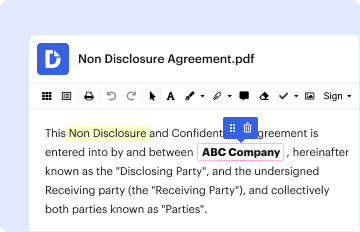
01. Edit your farm lease termination letter online
Type text, add images, blackout confidential details, add comments, highlights and more.

Type text, add images, blackout confidential details, add comments, highlights and more.
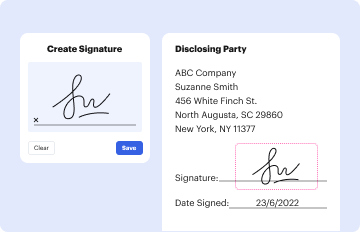
Draw your signature, type it, upload its image, or use your mobile device as a signature pad.

Send farm lease termination letter example via email, link, or fax. You can also download it, export it or print it out.
A farm lease termination letter is a formal document that notifies a tenant of the landlord's decision to end their tenancy under a specific lease agreement. This document serves a legal purpose and must adhere to state laws, making it essential for both landlords and tenants to understand its implications. The termination letter typically includes critical information such as the effective date of termination, reasons for termination, and relevant legal references.
Each state may have different laws regarding the notice period and required contents of a lease termination letter. For example:
Understanding these differences can help landlords communicate effectively with tenants while adhering to legal obligations.
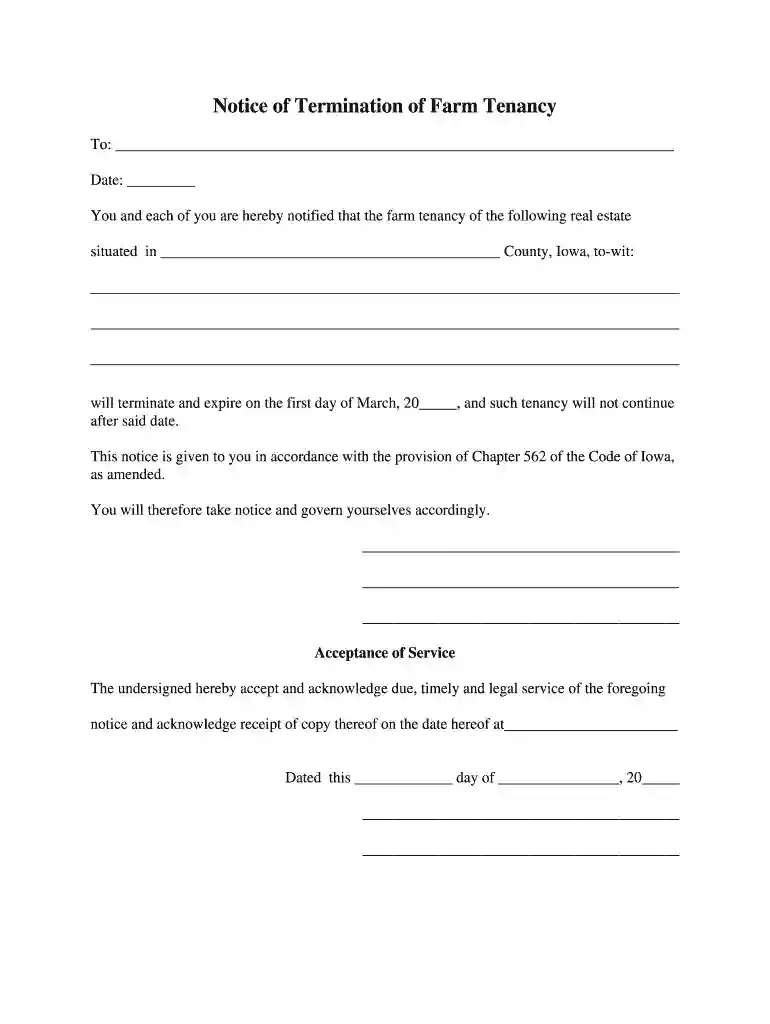
Iowa Farm Lease Termination Letter Example: This document might specify compliance with Chapter 562 of the Iowa Code, listing all necessary details clearly to avoid ambiguity.
Kansas Farm Lease Termination Letter Example: A sample could illustrate how to state the lease end date and include a brief reasoning aligned with Kansas law.
Nebraska Farm Lease Termination Letter Example: This example can emphasize the importance of ensuring the notice aligns with Nebraska's unique stipulations regarding agricultural leases.
A properly executed termination letter is legally binding and can serve as evidence in disputes related to the lease agreement. Failure to adhere to state-specific regulations regarding notice periods and content can lead to legal complications, including potential lawsuits for wrongful eviction. It is crucial that landlords and tenants understand their rights and obligations under the lease, as well as applicable state laws, to ensure compliance and minimize risks.
Farm lease termination letters are often employed in various situations, such as:
Recognizing these contexts can help landlords prepare for potential disputes and ensure they proceed in accordance with the law.
A farm lease termination letter is a crucial tool that provides both landlords and tenants with clarity and security regarding the end of a lease agreement. Properly understanding its contents, following the correct procedures, adhering to state regulations, and utilizing examples specific to each region can benefit all parties involved, ensuring that their rights are protected throughout the process.
At DocHub, your data security is our priority. We follow HIPAA, SOC2, GDPR, and other standards, so you can work on your documents with confidence.
Feb 13, 2020 I am writing to you to give notice that The Abalone Farm, Inc. would like to terminate our leases on kelp beds 204 and 207. The Abalone FarmRead more
expiration or earlier termination of the Letter of Credit. Seller shall cause the renewal or extension of the Letter of Credit for additional consecutiveRead more


