Type text, add images, blackout confidential details, add comments, highlights and more.
02. Sign it in a few clicks
Draw your signature, type it, upload its image, or use your mobile device as a signature pad.
03. Share your form with others
Send event planning template via email, link, or fax. You can also download it, export it or print it out.
How to use or fill out State of Utah COVID-19 Event Planning Template
Ease of Setup
DocHub User Ratings on G2
Ease of Use
DocHub User Ratings on G2
Click ‘Get Form’ to open the State of Utah COVID-19 Event Planning Template in our editor.
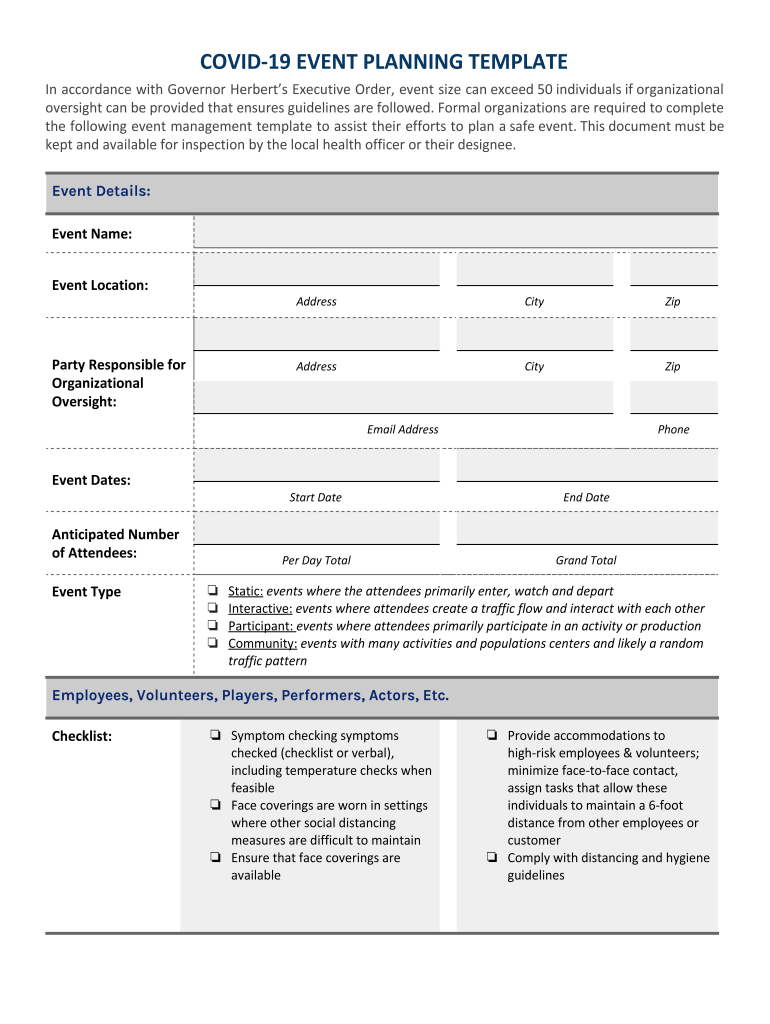
Begin by filling in the 'Event Details' section. Enter the event name and location, along with the contact information for the party responsible for organizational oversight, including their address, email, and phone number.
Next, specify the event dates and anticipated number of attendees. Choose the event type from the provided options: Static, Interactive, Participant, or Community.
Complete the 'Checklist' section by confirming that all necessary health measures will be implemented, such as symptom checking and face coverings.
Describe your plan for tracking attendance to support contract tracing in the designated area.
Outline your strategies for maintaining social distancing throughout the event and accommodating high-risk attendees.
Detail your plans for signage, payment options, hygiene & sanitization practices, concessions protocols, and any additional safeguards you intend to implement.
Finally, provide a signature from the organizational representative responsible for ensuring compliance with these guidelines.
Start using our platform today to streamline your event planning process!
Fill out State of Utah COVID-19 Event Planning Template online It's free
Formal organizations will complete event management template. This document must be kept and available for inspection by the local health officer orRead more
In accordance with the state of Utah COVID-19 Transmission Index, formal organizations are required to complete the following event management template toRead more
Toolkit on State Actions to Mitigate COVID-19 Prevalence in
Feb 1, 2021 is a step by step plan from the Utah Department of Health created to prevent the spread of. COVID-19. This guide provides guidance that canRead more
Cookie consent notice
This site uses cookies to enhance site navigation and personalize your experience.
By using this site you agree to our use of cookies as described in our Privacy Notice.
You can modify your selections by visiting our Cookie and Advertising Notice.