





Definition and Meaning of the Right of Survivorship Form
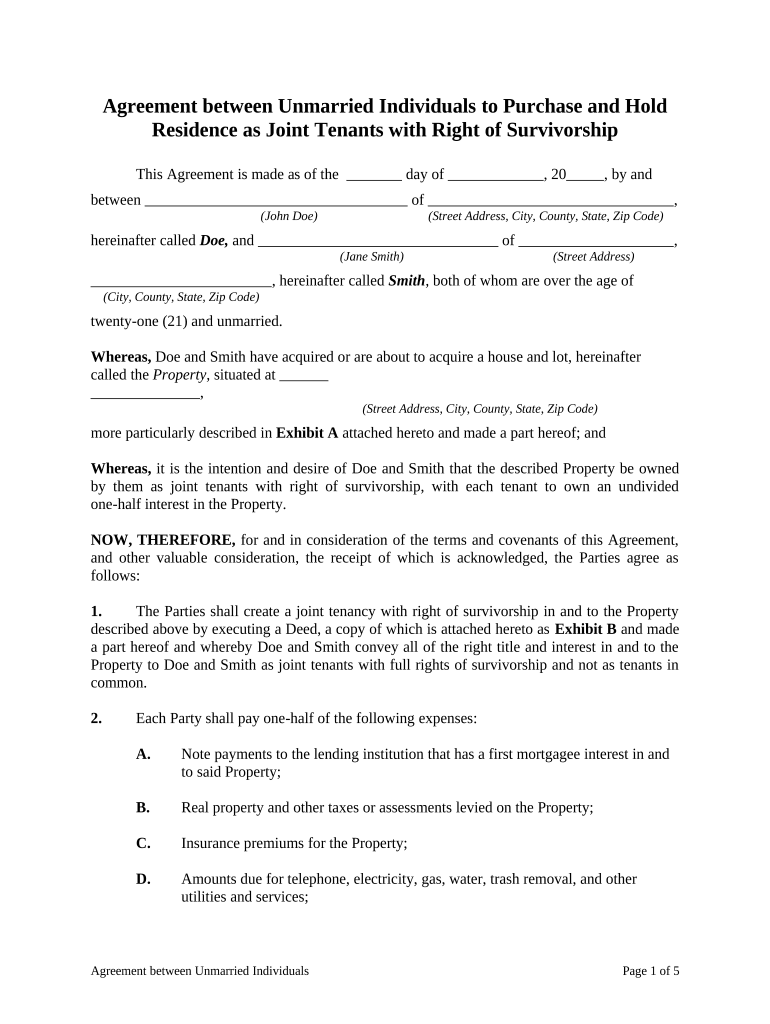
The right of survivorship form is a legal document used to establish ownership rights for joint tenants regarding property, which allows the surviving tenant to inherit the deceased tenant's interest in the property. This form emphasizes that when one co-owner passes away, their share automatically transfers to the surviving co-owner, bypassing probate. This legal arrangement is often utilized in situations such as real estate ownership among partners, family members, or business associates.
Key Features of the Right of Survivorship
- Joint Tenancy: The form formalizes the joint tenancy arrangement, which must include specific terms, including equal ownership shares and rights of survivorship.
- Automatic Transfer: It ensures a seamless transition of ownership, allowing the remaining tenant to retain full control of the property.
- Probate Avoidance: By utilizing this form, co-owners can avoid lengthy and costly probate proceedings, simplifying the process of transferring ownership.
Understanding the right of survivorship provides clarity on property rights after the death of an owner, making it a crucial document for joint property holders.
How to Use the Right of Survivorship Form
Using the right of survivorship form involves several steps that ensure both co-owners understand their rights and responsibilities. After preparing the form, it needs to be executed according to state laws to ensure its validity.
Step-by-Step Process
- Complete the Documentation: Fill out the form accurately, ensuring all details regarding the property and owners are correct.
- Signatures: Both parties must sign the document in the presence of a notary public to validate the agreement legally.
- File the Document: Depending on state requirements, the completed form may need to be filed with the county recorder's office or kept in a secure location.
This process helps shield the interests of both co-owners and confirms their intent to share ownership while providing for the automatic transfer of rights upon death.
Key Elements of the Right of Survivorship Form
The right of survivorship form contains several essential elements to ensure that it meets legal standards and explicitly conveys the intentions of the owners.
Detailed Elements
- Property Description: The form should include a comprehensive description of the property, such as the address and legal description, to avoid any ambiguity.
- Owner Information: Full names and contact information of both joint tenants must be recorded to establish clear identities.
- Intent Statement: A statement expressing the intent of the parties to create joint tenancy with the right of survivorship should be included to clarify the arrangement.
- Signatures and Notarization: A notarized signature section ensures that the document is legally binding and compliant with local regulations.
These elements are critical for the enforceability of the agreement, ensuring that there are no misunderstandings about ownership rights.
Important Terms Related to the Right of Survivorship Form
Understanding pertinent legal terms is crucial for anyone working with the right of survivorship form. Familiarity with these terms can enhance comprehension and application of the form.
Common Terminology
- Joint Tenancy: A form of property co-ownership where each owner has equal rights, and the survivor inherits the deceased's share.
- Tenancy in Common: Unlike joint tenancy, this form allows co-owners to have unequal shares and does not include the right of survivorship.
- Probate: The legal process of validating a will and distributing a deceased person’s estate.
- Lien: A legal right or interest that a lender has in the borrower's property, granted until the debt obligation is satisfied.
These terms represent key concepts related to joint ownership and property rights, which are fundamental in discussions surrounding the right of survivorship.
State-Specific Rules for the Right of Survivorship Form
It is essential to recognize that the right of survivorship form may vary by state, as laws governing property ownership differ across jurisdictions. Understanding these state-specific rules ensures compliance and helps avoid legal complications.
State Considerations
- Applicable Laws: Each state may have its own requirements regarding joint tenancy, including documentation and witness signatures.
- Tax Implications: States may also impose different tax obligations on transfers of property after the death of a co-owner.
- Legal Recognition: Ensure the form is compliant with local statutes regarding property transfers and survivorship rights.
Adhering to the specific legal requirements of each state can prevent disputes and offer clarity regarding ownership and transfer processes.
Examples of Using the Right of Survivorship Form
Real-world scenarios provide insight into how the right of survivorship form operates within various contexts. This section illustrates specific situations and the advantages they confer.
Practical Applications
- Married Couples: A common use case is between spouses who wish to ensure that upon one spouse's death, the surviving spouse automatically retains full ownership of their home.
- Business Partners: Two individuals co-owning a business property can use the right of survivorship to secure their investment and streamline ownership transition in case of death.
- Family Members: Siblings who inherit a family property may utilize the form to express their intention for shared ownership and to avoid disputes.
These examples highlight the utility of the right of survivorship form in preserving ownership interests and facilitating the transfer of property among owners.