
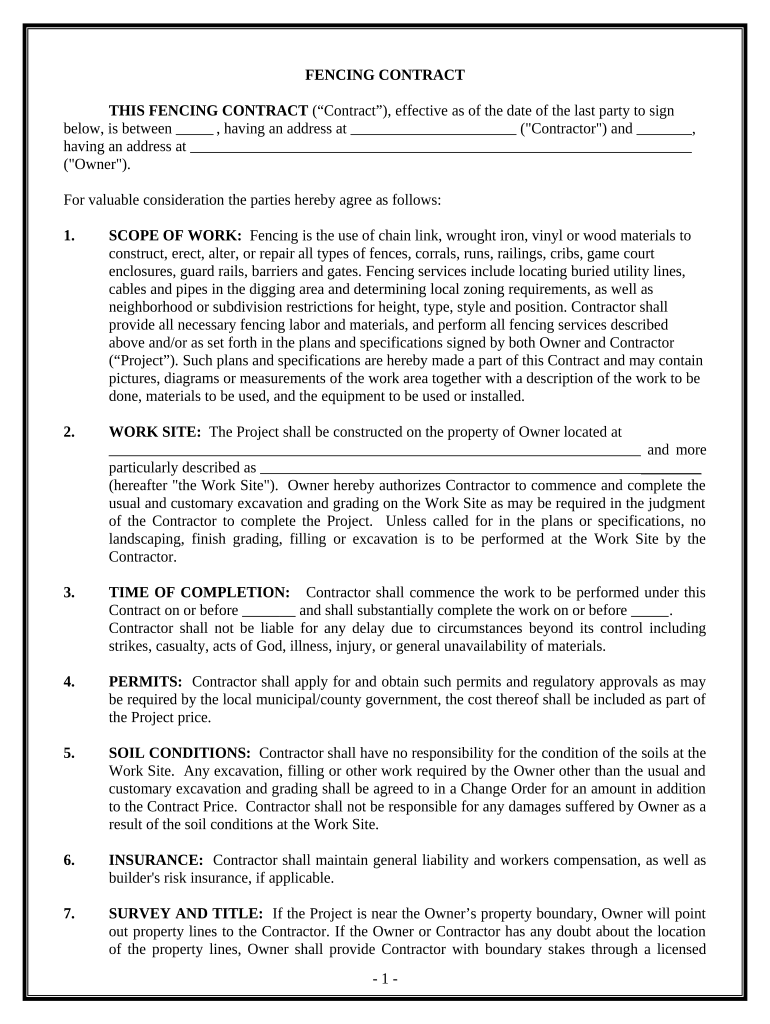







Definition and Importance of a Fencing Contract
A fencing contract is a formal agreement between a contractor and an owner, detailing the terms for the construction, alteration, or repair of fencing on the owner's property. This contract specifies essential elements such as the scope of work, project timeline, and payment structure.
It typically includes provisions addressing:
- Insurance requirements: Ensuring that the contractor has sufficient coverage to protect against accidents and damages during the project.
- Permits and local regulations: Outlining the responsibilities regarding obtaining necessary permits and adhering to local zoning laws.
- Soil conditions: Discussing how different soil types may affect the installation or repair of fencing, thus influencing construction methods and durability.
Fencing contracts are crucial for protecting both parties' interests, ensuring clarity in expectations, and providing a legal framework for potential disputes. By formalizing these arrangements, both contractors and owners can work more efficiently and mitigate misunderstandings.
Key Elements of a Fencing Contract
Understanding the key elements of a fencing contract is essential for both homeowners and contractors. These components lay out the framework of the agreement, ensuring all parties are aligned.
Scope of Work
This section details what work will be performed, such as:
- Type of fencing to be installed (e.g., wooden, vinyl, chain link)
- Dimensions and layout of the fencing
- Additional features like gates or decorative elements
Payment Terms
A clearly defined payment structure is vital. Consider including:
- Total cost of the project
- Payment schedule (e.g., deposit, milestone payments, final payment)
- Acceptable payment methods
Timeline
This outlines the expected start and completion dates. It may also include:
- Milestones for each phase of the project
- Conditions that may alter the timeline, such as weather delays
Change Order Procedures
This section should detail how changes to the scope of work are managed, including:
- How change requests are submitted and documented
- Fees associated with changes
Warranty Information
Incorporating warranty details protects the owner against defects or failures. This section may cover:
- Length of warranty period
- Coverage specifics (e.g., workmanship, materials)
Dispute Resolution
Including a clause for resolving disputes can prevent potential litigation. Common methods include:
- Arbitration procedures
- Mediation options
Steps to Complete a Fencing Contract
Completing a fencing contract involves several sequential steps to ensure clarity and legal compliance.
-
Determine Requirements: Identify the specific fencing needs, including the type, size, and location.
-
Gather Necessary Information: Both parties should compile relevant details, including project timelines, budget constraints, and structural considerations.
-
Select a Contractor: Research and interview contractors to find the right fit. Check references and past work to ensure quality.
-
Negotiate Terms: Discuss key elements of the contract, such as scope, payment, and timeline, ensuring mutual agreement.
-
Draft the Contract: Utilize templates or legal professionals to create a comprehensive fencing contract incorporating all agreed-upon terms.
-
Review: Prior to signing, review the contract thoroughly to understand all obligations and rights.
-
Sign and Date: Both parties should sign and date the contract, making it legally binding.
-
Retain Copies: Ensure both the contractor and owner have copies of the signed document for their records.
Examples of Using a Fencing Contract
Fencing contracts can be applied in various scenarios, providing structured agreements for all parties involved. Consider the following examples:
Residential Fencing Installations
Homeowners seeking to enhance privacy or security might engage a contractor to install a wooden privacy fence. This contract would outline specific dimensions, styles, and payment plans, ensuring both parties have clarity on expectations.
Commercial Property Security
Businesses often require fencing for security measures. A contract could specify the installation of chain-link fencing around a facility, with clear terms regarding installation timelines and warranty coverage for durability.
Repair and Maintenance Agreements
A fencing contract can also encompass repair work. For instance, a property owner may contract a service to replace damaged slats on an existing fence, detailing the extent of repairs and timelines to complete the work.
Legal Use of Fencing Contracts
Fencing contracts must comply with local and state laws to be legally enforceable. Understanding local regulations ensures that your contract is valid and protects both parties.
Licensing and Regulations
Contractors often require specific licenses to operate legally within their jurisdiction. The contract should stipulate compliance with local laws, ensuring that the contractor is licensed and insured.
State-Specific Guidelines
Each state may have specific requirements concerning fencing, such as property line regulations. Research local laws to incorporate necessary provisions into the contract, avoiding future disputes over property boundaries.
Compliance with State Law
Ensure that the language within the fencing contract aligns with state law, particularly concerning permits or easements related to fencing work. Failing to include these can invalidate the contract or lead to costly fines.
Important Terms Related to Fencing Contracts
Familiarity with terminology associated with fencing contracts can enhance understanding and communication between parties. Some key terms include:
Scope of Work
Defines precisely what the contractor is expected to accomplish, minimizing confusion and outlining responsibility.
Change Order
A written document that specifies changes to the original contract, detailing additional costs and adjustments to timelines.
Force Majeure
This clause addresses unforeseen circumstances that might hinder the ability to complete the work, such as natural disasters or severe weather conditions.
Release of Liability
A provision that protects the contractor from claims arising from problems that may occur outside their control, such as faulty materials provided by the owner.
Indemnification
This clause outlines the responsibilities of each party in the event of a claim against one party as a result of the other party's actions during the project.
Conclusion
These aspects highlight the essential features and terms associated with fencing contracts, ensuring both contractors and owners can navigate the complexities of fencing projects effectively. Proper understanding and execution of a fencing contract play a critical role in successful fencing projects and foster trust between parties involved.




