




01. Edit your emergency custody order idaho forms online
Type text, add images, blackout confidential details, add comments, highlights and more.

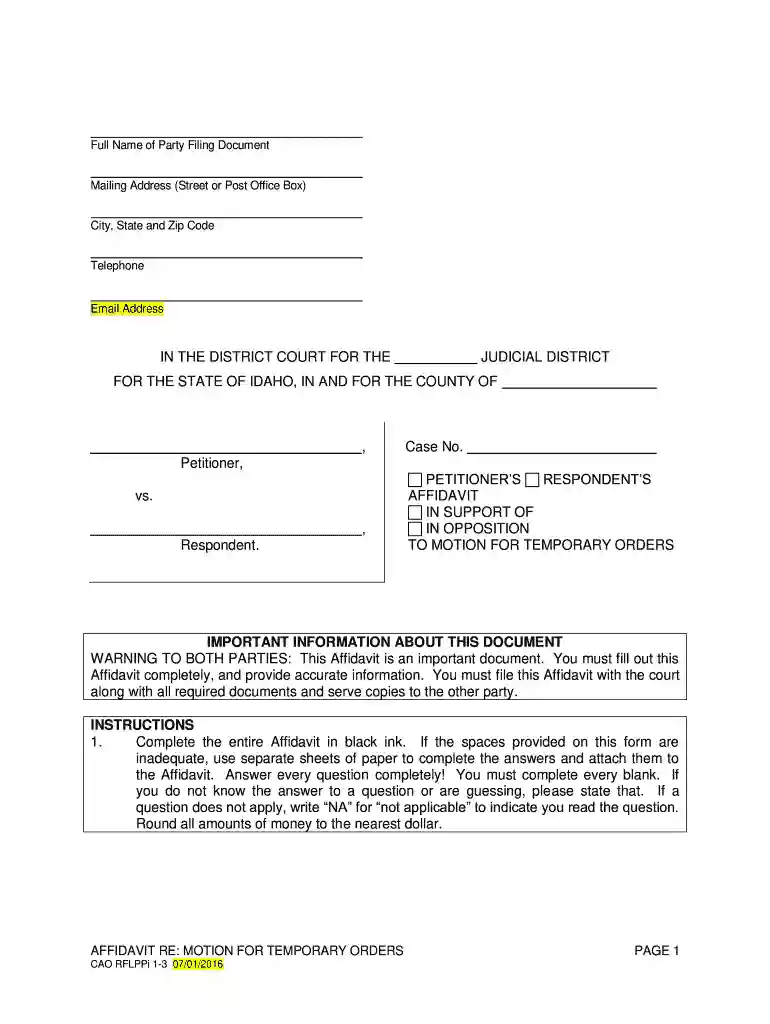
Type text, add images, blackout confidential details, add comments, highlights and more.

Draw your signature, type it, upload its image, or use your mobile device as a signature pad.

Send emergency custody order idaho via email, link, or fax. You can also download it, export it or print it out.
An emergency custody order in Idaho serves as a legal directive permitting immediate changes to the custody arrangement of children when there is an imminent risk to their safety or well-being. This type of order is distinguishable from regular custody orders due to its urgent nature; it is typically sought when there are immediate threats such as domestic violence, substance abuse, or other situations that could harm the child. In effect, this order allows for protective measures to be enacted swiftly to ensure the child's safety until a more formal custody arrangement can be established through the court system.
When a party files for an emergency custody order, they usually need to demonstrate that delays in securing temporary custody could result in significant harm to the child. This could involve presenting evidence of prior incidents of abuse, threats from a parent, or other distressing circumstances. Once the order is granted, it is generally valid until a subsequent court hearing is convened to evaluate the necessity of ongoing custody changes.
Gather Necessary Information
Collect personal information about both parents, children involved, and the circumstances prompting the emergency filing. This includes names, addresses, dates of birth, and details regarding allegations of endangerment.
Complete the Required Forms
File the Forms with the Court
Serve the Other Parent
Upon filing, you must ensure that the other parent is served with a copy of the emergency custody order forms. This allows them a chance to respond within the timeframe stipulated by the court.
Prepare for the Hearing
Attend the scheduled court hearing where both parties can present evidence. Be prepared to clarify why you seek the emergency custody order and provide supporting documentation.
Affidavit of Need: A sworn statement detailing the reasons for seeking emergency custody, including specifics about the risks faced by the child and any history of domestic violence or substance abuse.
Petition for Temporary Custody: This form outlines the request for temporary custody, highlighting the immediate reasons your request aligns with Idaho custody laws.
Evidence Submission: Any documents supporting your case, such as police reports, medical records, or witness affidavits should be attached.
Service of Process: Confirm that you have legally notified the other parent about the filed orders, as failure to do so can lead to complications in court proceedings.
Return Date: Note the specific date your emergency custody order will be reviewed by the court, which determines how long the order will remain effective until further hearings.
Temporary Custody: A short-term custody arrangement that can be established rapidly to protect the child's welfare.
Guardian Ad Litem: A court-appointed person tasked with representing the child's best interest during custody proceedings.
Visitation Rights: The legal entitlement of a non-custodial parent to visit their child, which may be affected by emergency custody situations.
Best Interest of the Child: The legal standard used by courts to make custody determinations, focusing on the child's welfare and safety.
Petition: A formal request filed with the court seeking an emergency custody order based on established legal grounds.
Emergency custody orders are predominantly sought by parents or guardians who believe that a child is in immediate danger or at risk of significant harm if not removed from a potentially hazardous environment. Common scenarios include:
Survivors of Domestic Violence: A parent may seek emergency custody if they fear for their child's safety due to a partner's abusive behavior.
Substance Abuse Issues: Cases may arise where a caregiver's drug or alcohol addiction poses risks to the child.
Neglect Situations: Parents may pursue emergency orders when a child is being neglected or is living in unsanitary or unsafe conditions.
This process may also be utilized by extended family members, such as grandparents, who believe the child needs immediate protection from a problematic home environment.


Filing for an emergency custody order in Idaho must adhere to specific legal frameworks and standards outlined in state laws. The legal concepts guiding this procedure are designed to protect the child's best interests. When seeking an emergency order:
Legal Grounds: Your application must establish legitimate cause, often based on evidence of immediate threats or harm to the child.
Court Deliberations: The court examines your evidence critically and evaluates whether issuing the temporary order is necessary.
Compliance with State Laws: Ensure that all procedural requirements for filing and serving notice are meticulously followed to uphold the validity of the order and prevent any legal challenges.
Understanding these legal parameters is crucial for effectively navigating the process and ensuring protection for the child in urgent situations.
At DocHub, your data security is our priority. We follow HIPAA, SOC2, GDPR, and other standards, so you can work on your documents with confidence.
Welcome to the Idaho Court Assitance Office Self-help Center! Popular Forms: Court Forms, Idaho Guide and File, Complete and E-file CAO Forms.Read more
Apr 29, 2015 RESIGNATION AS MEMBER OF. COMMITTEE. ON. FINANCIAL. SERVICES. The SPEAKER pro tempore laid be- fore the House the following resigna-.Read more
(5) An ex parte temporary protection order shall be effective for a fixed period not to exceed fourteen (14) days, but may be reissued. A full hearing, asRead more


