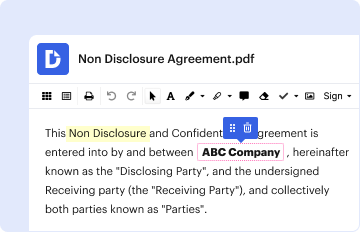
Type text, add images, blackout confidential details, add comments, highlights and more.
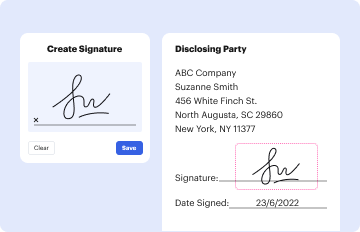
02. Sign it in a few clicks
Draw your signature, type it, upload its image, or use your mobile device as a signature pad.
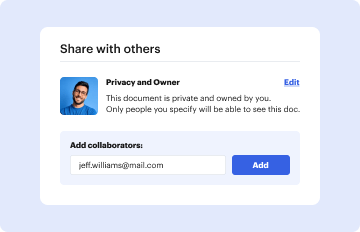
03. Share your form with others
Send it via email, link, or fax. You can also download it, export it or print it out.
How to use or fill out transfer death with our platform
Ease of Setup
DocHub User Ratings on G2
Ease of Use
DocHub User Ratings on G2
Click ‘Get Form’ to open the transfer death deed in the editor.
Begin by filling in your name, firm/company, address, and contact information at the top of the form. This ensures that all parties are clearly identified.
In the section labeled 'KNOW ALL MEN BY THESE PRESENTS THAT:', enter your name as the Grantor and the beneficiary's name as Grantee. Make sure to specify their marital status.
Provide a detailed legal description of the property being transferred. Attach any necessary documents as Exhibit A if required.
Fill in prior instrument reference details, including book, page, and document number for accurate record-keeping.
Sign and date the document where indicated. Ensure that a notary public acknowledges your signature for it to be legally binding.
Lastly, provide contact information for both Grantor and Grantee, including where tax statements should be sent.
Start using our platform today to complete your transfer death deed online for free!
Transfer death formProblems with transfer on death deedsTransfer death vs beneficiaryWhat states allow transfer on death accountsProblems with Transfer on Death deeds CaliforniaPOD transfer on deathTransfer on death bank accountCan a Transfer on death deed be contested
Security and compliance
At DocHub, your data security is our priority. We follow HIPAA, SOC2, GDPR, and other standards, so you can work on your documents with confidence.
Cookie consent notice
This site uses cookies to enhance site navigation and personalize your experience.
By using this site you agree to our use of cookies as described in our Privacy Notice.
You can modify your selections by visiting our Cookie and Advertising Notice.