




01. Edit your asthma action plan pdf online
Type text, add images, blackout confidential details, add comments, highlights and more.

Type text, add images, blackout confidential details, add comments, highlights and more.

Draw your signature, type it, upload its image, or use your mobile device as a signature pad.

Send asthma action plan pediatric pdf via email, link, or fax. You can also download it, export it or print it out.
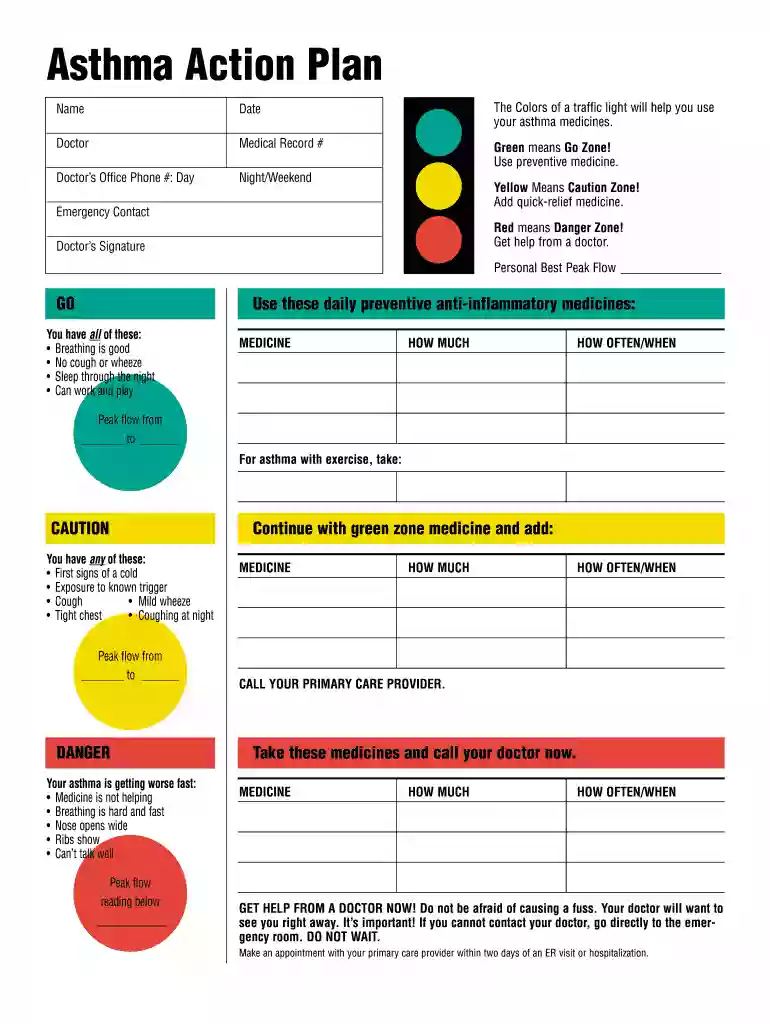
An asthma action plan is a critical tool in managing asthma effectively, outlining specific steps for individuals to follow in various situations. The document categorizes symptoms and response strategies into three zones:
Green Zone (Go Zone): This indicates the individual is in a stable condition, typically requiring preventive medication only. A filled-out example may include daily routine for medication adherence and lifestyle tips to maintain good control.
Yellow Zone (Caution Zone): The individual may begin to experience early warning signs of an asthma flare-up, such as increased coughing or wheezing. The action plan would suggest the use of quick-relief medications and a review of triggers.
Red Zone (Danger Zone): This zone signifies severe symptoms that require immediate medical assistance. A filled-out example should contain clear instructions for calling emergency services and what to do while awaiting help.
Understanding the definition and components of an asthma action plan allows individuals and caregivers to manage asthma proactively.
Creating a comprehensive asthma action plan involves systematic steps to ensure that all relevant information is captured. Here’s how to complete the form effectively:
Gather Patient Information: Start by collecting essential details such as the patient’s name, contact information, date of birth, and emergency contacts.
Identify Triggers: List known asthma triggers, which might include allergens, exercise, weather changes, or stress. Keeping track of these elements can help avoid exacerbations.
Document Symptoms and Medications: Outline the symptoms associated with each zone and specify the medications to be taken at each stage, including dosage and frequency.
Provide Emergency Instructions: Include clear steps for actions to take in case of an asthma exacerbation or severe symptoms. This may involve calling emergency services or visiting the nearest hospital.
Review with Healthcare Providers: Ensure the completed plan is reviewed by a healthcare professional to validate the strategies and recommendations.
Distribute the Plan: Share copies of the completed asthma action plan with caregivers, schools, and family members to maintain awareness and preparedness.
By following these steps, individuals can ensure they have thoroughly filled out their action plan, essential for effective asthma management.
The key elements of an asthma action plan form must be tailored to meet the specific needs of the patient while ensuring clarity and usability. Here are the crucial components:
Medication Regimen: Specific details about long-term control medications and quick-relief inhalers. Each medication should include dosages, timing, and specific situations for use.
Zone Descriptions: Clear definitions for green, yellow, and red zones, with warnings and recommended actions for symptoms experienced in each zone.
Checklists: An action checklist for daily management, which may include steps for environmental control and reminders for medication adherence.
Contact Information: Accessibility of healthcare providers, emergency contacts, and relevant medical history that can support immediate action in crisis situations.
Emergency Procedures: Detailed instructions regarding when and how to seek immediate medical assistance, emphasizing preparedness for possible exacerbations.
Incorporating these elements ensures that the asthma action plan is comprehensive and useful for day-to-day and emergency situations.
The filled-out example of the asthma action plan serves various individuals and entities that require tailored strategies for asthma management. Typical users include:
Families with Children Who Have Asthma: Parents typically handle the planning and implementation to ensure their children's welfare, especially in school settings.
Adults with Chronic Asthma Conditions: Individuals managing their own health must adapt an action plan that suits their lifestyle, work environment, and physical activities.
Healthcare Providers and Educators: Doctors, nurses, and school staff rely on these action plans to understand each patient's unique situation, ensuring they can provide appropriate support during emergencies.
Caregivers and Guardians: Those responsible for individuals with asthma need to understand the plan's details to recognize symptoms and administer medication correctly.
The flexibility of the asthma action plan means it can be customized for various users and circumstances, enhancing its effectiveness in managing asthma.


Understanding how to implement an asthma action plan in real-life situations can enhance its practicality. Here are a few examples:
Daily Management: A child with asthma may follow the green zone guidelines, which state to take preventive medications daily. Parents review the action plan regularly to ensure adherence and track any changes in symptoms.
School Scenarios: Teachers can utilize the action plan form during school hours to monitor a child's health condition. If a student exhibits symptoms noted in the yellow zone, such as wheezing during recess, the teacher is equipped to provide the necessary quick-relief medication.
Emergency Response: In the event of a severe asthma attack (red zone), the caregiver can reference the action plan to quickly discern the steps, such as administering a rescue inhaler and contacting emergency medical services if the condition does not improve.
These examples illustrate the significance of a well-structured asthma action plan in day-to-day decision-making and responding effectively during acute situations.
Familiarity with important terminologies associated with the asthma action plan is critical for effective communication and understanding. Key terms include:
Bronchodilator: A class of medication that relaxes the muscles around the airways, providing relief from asthma symptoms. This is often used in the yellow zone.
Asthma Triggers: Specific factors that can provoke asthma symptoms, including allergens, smoke, and physical exertion. Identifying these in the action plan aids in prevention.
Peak Flow Meter: A device used to measure the maximum speed of expiration, helping to monitor asthma control and detect changes in lung function.
Long-Term Control Medications: Daily medications taken to maintain asthma control and minimize symptoms, implying importance in the green zone.
Understanding these terms can enhance the comprehension of the action plan and promote proactive asthma management.
The legal implications surrounding the asthma action plan must not be overlooked. They ensure that both individuals and healthcare providers adhere to recognized standards and practices:
Compliance with Healthcare Regulations: Action plans developed under professional guidance comply with healthcare laws, including the Health Insurance Portability and Accountability Act (HIPAA). This ensures patient privacy and confidentiality must be respected.
School Policies: Schools typically require a documented action plan for students with asthma to comply with health and safety policies, ensuring that all staff understand the protocols for managing asthma emergencies.
Insurance Requirements: Some health insurance providers may request copies of the asthma action plan to verify coverage for prescribed medications and treatments.
Legal compliance ensures that the action plan is not only a beneficial management tool but also fulfills the required responsibilities of various parties involved in the patient’s health care.
At DocHub, your data security is our priority. We follow HIPAA, SOC2, GDPR, and other standards, so you can work on your documents with confidence.
Aug 7, 2019 EVER GIVEN AN ASTHMA ACTION PLAN. Column: 102. Type of Variable: NUM. SAS Variable Name: MGTPLAN. Prologue: An asthma action plan, or asthmaRead more
Keep your kitchen clean and store food and garbage in closed containers. Dont leave out any standing water or other liquids. Seal cracks or openings inRead more
Page 1. Asthma Action Plan.Read more


